
50 WORD MICROFICTION
One of the Most Contentious Desserts in History
Thrifty Words Challenge #15: Transformation
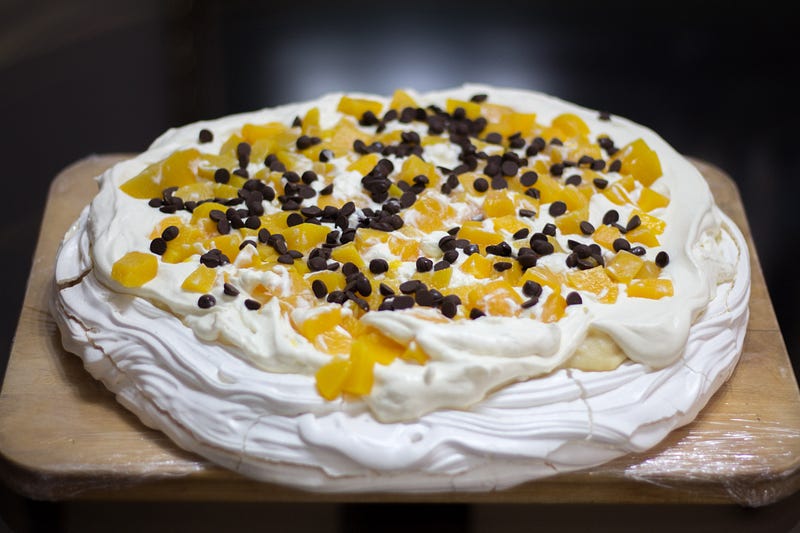
The egg whites glistened in the bowl.
The whisk thrashed air and sugar through the mix, turning the clear liquid into a silky white foam.
Heat made it hard on the outside and soft in the middle.
Whipped cream, passion fruit, and banana made it Pavlova.
The transformation was complete.
Why contentious? Get an Australian and a New Zealander in a room and ask them — both will claim the Pavlova was invented in their country.
Food writer, TV personality, and all-round food celebrity Matt Preston wrote,
Sure, Australian chef Bert Sachse, from Perth’s Esplanade Hotel, might have made this baked meringue dessert famous in 1935 as a homage to ballerina Anna Pavlova (who, some six years earlier, had stayed at the hotel on her second Australian tour in 1929). The trouble, however, is that the same meringue homages to the Russian prima ballerina had already appeared in New Zealand in 1929.
Furthermore, when Pavlova first toured Australia and New Zealand in 1926, recipes for topping a fat pat of soft-hearted but crunchy-crusted meringue with billowing whipped cream and fresh fruit first appeared in a New Zealand recipe book — even if they weren’t named after her. Sachse himself admitted that his dish was actually based on a meringue recipe of New Zealand origin — not that any other Australian ever wants to admit that.
The truth, and I say this as an Australian, is that Pavlova wasn’t really an Australian or New Zealand recipe. Meringue Cakes were a big food craze all around the world in the early part of the 20th century and many of them were delicious. The pavlova is a particularly fluffy and sweet version. Other recipes included different substances in the meringue base to create a denser, more cake-like texture.
My wife did a meringue cake last Christmas with rose water, halva, and pistachio nuts folded through the meringue mix, and topped it with edible rose petals and pomegranate molasses. It was rich and wonderful.
Last week I made a flourless chocolate cake that used a meringue base with chocolate ganache folded through it — yet another variation on the meringue cake.
As for the Pavlova — maybe Anna Pavlova enjoyed it so much in New Zealand that she requested one when she got to Perth.
A quick tip for good meringues: always use old eggs. The water content of fresh eggs will make your meringue foam a bit sloppy and you’ll struggle to achieve soft peaks. Eggs can easily last up to six weeks, without spoiling, so there’s little risk to keeping them around for a while. Put them in the refrigerator for a week, or buy the eggs in the supermarket that are approaching their best before date. For best results, let your eggs come up to room temperature before whipping them, and ensure your whisk is spotless — any traces of oil will compromise your foam. A pinch of cream of tartar will prevent you over beating them.
Copyright © Damian Clarke 2020.
On Medium, Damian Clarke writes for The Bad Influence and An Idea, 97 Things I Learned as a Stay-at-Home Dad and Our Albion. In the outside world, he writes for The Fifth Estate, The Green List, various other publications from time-to-time, and a range of corporate clients.