
How Omega-3 DHA Safeguards Your Brain Against Alzheimer’s
Great news. We are all living longer lives, well into our 80s and 90s.
But will our brain stay healthy till that age?
Probably not.
Can we safeguard our brain health?
Yes. Common sense nutrition added to our daily diet can prevent brain health diseases like Alzheimer's.
Alzheimer's disease is the number one brain health concern staring at our faces. As a degenerative brain disease, it is the most common form of dementia. A silent but rapidly growing epidemic with no known cure, vaccine, or drug to slow its progress.
Brain — An intricate factory of nerve cells
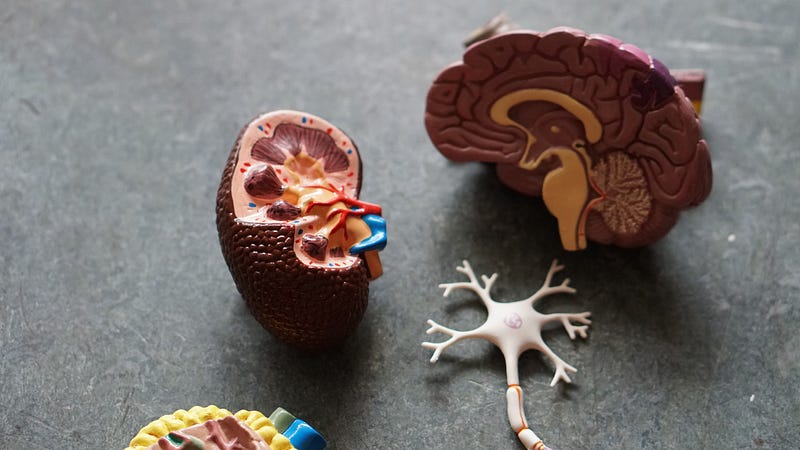
Our brain is an intricate factory of hard-working neurons (nerve cells). There are 100 billion of these neurons interconnected with each other to form communication links. Each neuron group performs a specific set of tasks. Some are involved in thinking, learning, and recollection. While others help us see, hear, and smell.
Like every part of our body, neurons are prone to wear and tear. At times they break down faster than normal and are unable to repair themselves. That’s when trouble begins. When neurons lose their ability to function and, eventually die, it causes an irreversible change in our brain. Scientists are still muddled over when and why this happens, but we have some emerging clues.
Brain cell murderers — Plaques and tangles
Two abnormal structures called plaques and tangles are primary suspects in damaging and killing our neurons.
Plaques are deposits of a protein fragment called beta-amyloid that build up in the spaces between nerve cells. Something like brain gingivitis.
While tangles are twisted fibers of another protein called tau that builds up inside cells.
Until now, most research around Alzheimer’s points a finger at the buildup of beta-amyloid in our brain. How it gets there and why remains a mystery.
Alzheimer’s and Dementia — A growing epidemic
CDC reports, in 2020, as many as 5.8 million Americans are living with Alzheimer’s disease. This number is projected to triple to 14 million people by 2060.
The worldwide figures are worse.
The World Health Organization reports that there are more than 55 million people living with dementia (60 -70% of which are Alzheimer’s cases) worldwide, and nearly 10 million new cases are added yearly.
With such a rapid growth of this disease, WHO recognizes dementia as a public health priority. And it is a grave cause of concern.
Why?
Because dementia has substantial social and economic, medical, and social care costs. In 2019, the estimated total global societal cost of dementia was US$ 1.3 trillion, and these costs are expected to surpass US$ 2.8 trillion by 2030 as both the number of people living with dementia and care costs increase.
For Brain Health — Fats matter
The human brain is nearly 70 percent fat, so it needs a constant supply of healthy fats to stay functional.
Since there are no approved treatments to cure Alzheimer’s, it’s important to keep this disease at bay with healthy nutrition and a balanced lifestyle.
Two polyunsaturated fatty acids (PUFAs) play a pivotal role in brain health — Omega-3 EPA and DHA. Of the two, DHA is the dominant nutrient for healthy brain function.
DHA is the building block of the human brain
Our brain is naturally comprised of DHA, generously given to us by our mothers via the placenta and later through breast milk.
Docosahexaenoic acid (DHA) is a polyunsaturated fatty acid composed of 22 carbon atoms and six double bonds. It is the main structural component of the human brain, cerebral cortex, skin, and retina, playing an important role in their development and function throughout life.
While our body and brain need this nutrient, they cannot make it on their own. This means we must replenish the supply through food (fatty fish) and supplements.
Emerging research finds a new culprit for Alzheimer’s
Dr. Hussein Yassine, associate professor of medicine and neurology at the Keck School of Medicine of USC has spent the past decade studying the role of a specific variant of the apolipoprotein E (APOE) gene called APOE4, which is involved in fat absorption in our bodies.
His research shows, APOE4, is a dominant risk factor for developing Alzheimer’s and is present in up to 50% of all people with Alzheimer’s dementia.
By analyzing the variety of ways APOE4 may initiate brain failure, his study hopes to discover ways to curb the death of neurons thereby preventing the development of Alzheimer’s and other dementias.
The role of Omega-3 fatty acids in curbing APOE4
It has been proven that APOE4 depletes our brain’s omega-3 levels hence increasing the risk of Alzheimer’s disease.
Dr. Yassine has launched a clinical trial, called PREVENTE4, to test whether giving people with APOE4 high doses of omega-3 fatty acid supplements can prevent or curtail cognitive decline before Alzheimer’s disease develops.
This is where it gets interesting. Since our brain is mostly made of fats (specifically DHA) and studies show that people with Alzheimer’s have a lower reserve level of DHA, it’s a no-brainer that feeding our brain this vital nutrient is a logical step in keeping it healthy.
In earlier studies, Yassine’s team found that cognitively healthy participants who took omega-3 supplements had 200% more DHA in their blood compared to the control group. In other words, healthy brain participants had a higher level of DHA in their brains.
It’s not too early — Protect your brain with DHA now
Defending your brain health is paramount, and there’s no time to waste. Embrace the power of DHA-rich foods or supplements immediately to fortify yourself against the devastating grip of Alzheimer’s and other dementia-related conditions. Don’t wait until it’s too late — act now to protect your most valuable asset.


