
One Night In The Fight
What you can do now to help us fight COVID-19
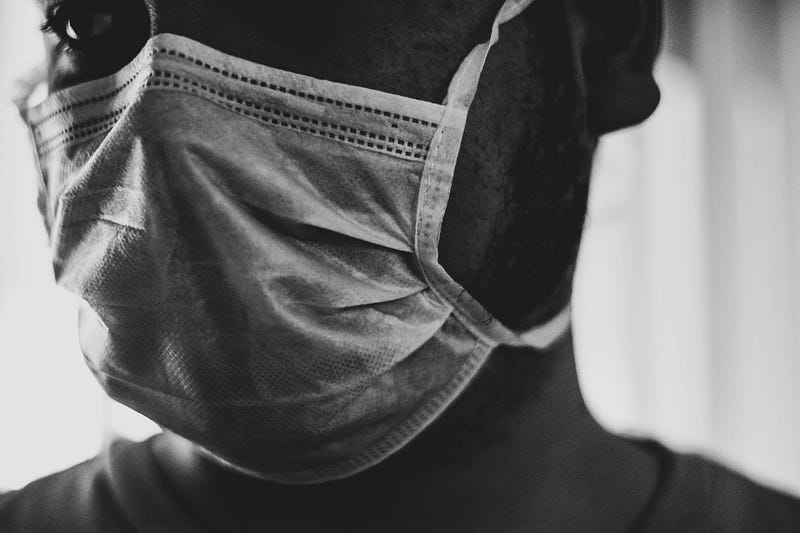
Daytime during the quarantine it’s so quiet out, the air is still, almost preternaturally calm. For a moment you almost forget that the second worst pandemic in history is going on out there, that people are gasping for life and breath out there.
And then you walk into an emergency room in New York City.
Let me tell this story from the point of view of a surgical sub-specialist who chose her field particularly to avoid emergency rooms in New York City. Let me tell you what the difference is, briefly, because I have many friends and family members who assume that a doctor is a doctor is a doctor. In small ways, this is true. We are all trained similarly in medical school and have a general knowledge of medicine. After four years of that, the similarities end. Sure, we can all treat a urinary tract infection or uncomplicated sinusitis to some degree. But we don’t all treat everything because there is just too much information, too many things to learn. So some of us are primary care providers who have a broad but shallow range of knowledge, and some of us are specialists who have a narrow but deep range of knowledge. My particular specialty is that I cut guts and butts (see my blog or my instagram page), and though I actually think there’s a lot of variety within this field, enough to keep me interested, I rarely deal with the other end of the human body, ie the nose and the mouth. Those are not my orifices of choice. But since we can’t do the surgeries we usually do because there aren’t enough ventilators (patients needs to be ventilated during longer procedures under general anesthesia), we are being deployed/volunteered/pimped out to other places where we might be useful. Usually, these days, that is an ICU or an ER, where I may have to stick something in the opposite end of where I usually look.
There are stretchers littered around the room, all holding a person curled up or coughing, vital oxygen carried to their noses through thin plastic tubes, a surgical mask over that, usually eyes closed in an attempt to sleep or forget the terrorizing fact that they’re there. A few have been intubated, attached to a ventilator that breathes for them, medicated so that they don’t struggle with having a pipe in their throats. Their chest x-rays, a fast and easy thing to get as soon as a patient hits the emergency room, all look like crap. They have fluffy white patches in place of air in their lungs. It’s damage caused by the body trying to fight off the virus, is what our current hypothesis is. All of them have tested positive for COVID-19; the only ones who haven’t tested positive, haven’t been tested yet.
I am immediately sweating. I have on scrubs and on top of that a non-breathable Tyvek suit. On top of that, I wear a yellow paper gown to see patients. On my head, I have a bouffant cap (I am not sure who decided we need to cover our hair, but I was happy to cover everything), an N95 mask rubber-banded to my face, then a surgical mask with plastic eye shield over that. I can’t breathe but I quickly adapt, certain that the alternative, catching a virus that would make it impossible for me to breathe, would be worse. Oh yeah, and shoe covers over my shoes, and nitrile gloves, and a baggie over my cell phone and a glove tied over my plastic pen. Too much? Perhaps, but I doubt it. Even with all of this, the virus has gotten through and infected healthcare workers. They’ve carried it home to their families. So no, maybe not too much. Not enough.
We swiftly check patients’ oxygen levels, administer fluids and medications, draw blood, and yes, hold hands and bring blankets and help them to the bathroom. We start IVs and call the transfer center and then we, the doctors, are bringing them upstairs to their rooms. Down in the ER, intubated patients can’t have arterial lines, a way of invasively monitoring blood pressure, because we don’t have the monitors. We don’t have enough people to push stretchers or run blood up to the lab, or give report to the nurses on the floor. We are filling the gaps in a leaky boat the best way we can.
The nurses tell me, though, that last week, patients were piled up in the hallway. Just one week ago, a patient started dying on one side of the room and then a patient died on the other side of the room. Last week, they almost ran out of medication to keep the patients asleep while they were intubated. They had to call families to tell them their loved ones had suddenly died. At their worst, 27 people died in the hospital in one day.
This week, it’s a lot better. We have enough ventilators, and we might even have enough beds, now that patients are getting transferred to Javits and Comfort. We have N95 masks and gowns (though now we’re short on goggles and eye shields). I have to say, it seems like we’re doing better. We sheltered in time, social distanced with rigor, took it upon ourselves to do our part to stop the spread. And the numbers are getting better. But I, along with the government leaders and healthcare leaders, urge you: don’t stop now. I have a lot of patients who come in and tell me they stopped taking their blood pressure medication because they don’t have high blood pressure anymore. They don’t have high blood pressure anymore because the medication was working. As soon as they stopped, the high blood pressure came back.
So, our strategies were working, and with every sweat-stained moment, I pray that it was enough to flatten the curve or stop the line all together. I pray that I won’t have to go back to the emergency room tonight, or another night, or ever. And I can get back to cutting butts and guts.
The outpouring of gratitude has been immense and I am often floored or flooded with tears. The daily 7pm cheers, the free pizza and ice cream and shoes and shirts (though I have yet to partake in any of these things, it just seems I’m always a bit too late learning of them). Friends are sending me boxes of disposable masks and homemade cloth masks. My sister sent me face shields. Then today, my Uber driver insisted on getting out of the car and opening the door for me, because I had passed out on the way home from the hospital. That shook me.
So I thought, people want to help. They want to do something. So what can I tell people to do, now, that would be the most helpful? We’re already doing great at social distancing, which we need to continue, and now we’re masking, which I consider a personal victory (#MaskorTest). The answer is: push for testing. I’m getting a little greedy and changing it to (#MaskandTest). That’s the only way we’re going to see an end to this, is to test as much people as possible and continue to quarantine the positive COVID patients, even if they are asymptomatic. That’s the only way to stop the spread. It’s also the only way to address the health disparities that have always existed in our system and are compounded when a crisis arises. I’ve said this before. Yes, keep making masks and donating to small businesses (there are so many ways to help!), but go ask to be tested, and, better still, write or call your local government officials and push for widespread testing, contact tracing, and epidemiological surveillance. Thank you.


