
One Key Question Every Fiction Writer Should Be Asking Themselves Before They Start Writing
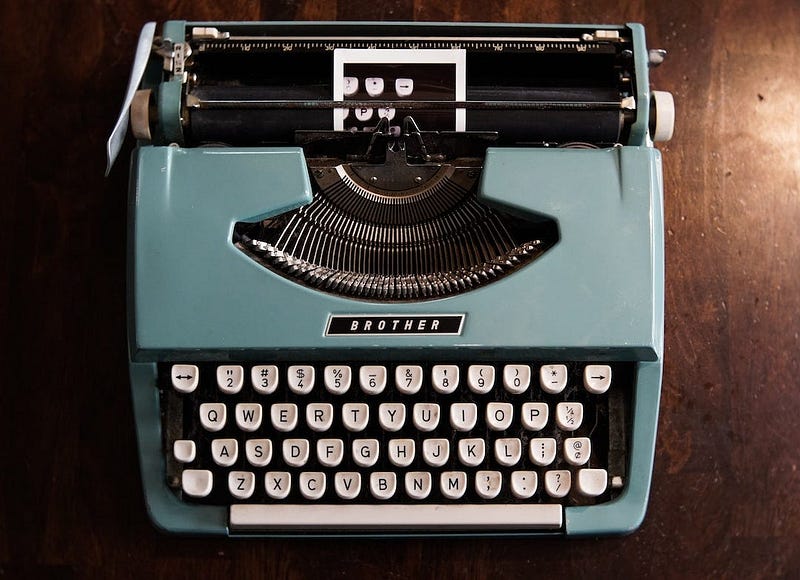
Finding one’s creative voice can be a challenge.
I myself am still in the process of fine-tuning my own, but through each piece I write, I feel myself moving closer and closer to a consistent style and approach that I enjoy.
The sort of “practicing in public” mentality I’ve been embodying through my personal newsletter is one of the key reasons I began writing through these Platforms in the first place, and it has been a pleasure so far. Though, one of my intentions in doing so is to take what I learn from my online writing and apply it to other projects currently being worked on behind the scenes (like my first fiction novel, which is currently in progress).
It was this back-and-forth between learning, experimenting, and applying my findings that recently brought me to a fork in the road with one of my own larger-scale projects — the question of whether or not to outline.
Any novel writers out there are likely quite familiar with the discussion surrounding the practice of outlining, and the wide array of opinions that surround it.
For others, maybe the idea of writing an outline hasn’t been a relevant thought since high school or university essay assignments.
For myself, when it comes to any form of non-fiction writing, like essays or reports, outlines are a godsend. I’m not sure how anyone could sit down and draft any sort of long-form nonfiction piece without a concrete plan of what to say, and when/how to say it.
Contrary to this though, I’ve recently learned that when it comes to my fiction writing, outlines seem to do more harm than good.
My first thought upon realizing the outlining process was appearing to dampen my creativity was that I was probably just doing outlines wrong.
“Outlining is the key to successful storytelling,” every writing guide online seemed to be telling me, yet here I was, finding entirely different results.
Disregarding the wealth of evidence I had encountered, though, seemed like a poor choice. Albeit, I hadn’t considered that maybe there was some contradicting evidence for the other side of the discussion that I hadn’t run into yet, as my research had up until that point been somewhat biased in favour of the outlining process.
Plotters versus Pantsers
I was fairly shocked to find out that there exists a considerably large sub-community of writers who, much like myself, find outlining to be detrimental to the creative writing process.
I seemed to have found my people! I was overjoyed! Maybe now I could finally get some advice that catered more to my own writing style?
It was at this point that I started to run into some amusing labels that these various groups used to differentiate themselves. Plotters, as the name would lead one to believe, plot out their writing like an architect laying out a blueprint. Pantsers, on the other hand, fly by the seat of their pants, letting stories naturally grow out of the seeds of their ideas, much like a gardener getting to work.
I believe it was actually George R. R. Martin who first used the terms ‘architect’ and ‘gardener’ to discuss the two camps, but plotters and pantsers go by many different names throughout the writing community.
But it doesn’t end there — subcommunities within subcommunities exist within these groups, and the naming conventions only get more nuanced from there.
It goes without saying that this concept of discovering writing, rather than plotting it, is an artistic method that goes back centuries.
It was Michelangelo who first expressed that “every block of stone has a statue inside it and it is the task of the sculptor to discover it.”
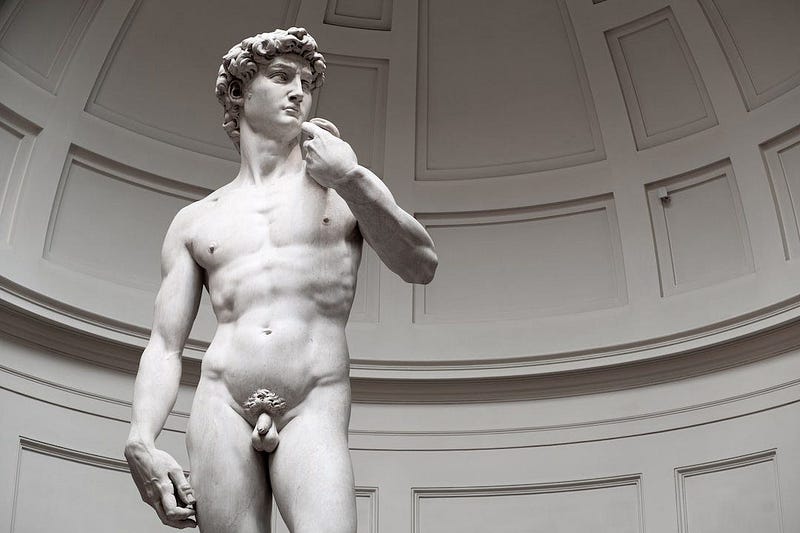
Personally, I find fiction writing to be a similar process, where the characters exist somewhere in some capacity already, and it’s my job as the artist, or in this case, the writer, to go about trying to find them.
While it may sound counter-intuitive to some, it just seems to be the way that my creative mind works, and instead of forcing myself to draft outlines that will deter from that process occurring naturally, I’d rather allow myself the space to experiment with artistic discovery, and see where it leads me.
For more bite-sized philosophy and introspective thoughts, check out the Philosobites Substack! Casual, raw, and sent straight to your inbox. New free posts every Thursday morning!
You can find more of me and my work by clicking here, or simply by following me here on Medium.


