
LIFE LESSONS
One Devastating Lesson People Learn Too Late In Life
Strategies and mindsets for reclaiming your time and living the life that you deserve

Important Life Lessons
The faster we learn the hard lessons, the easier our lives will be. Life lessons are like shortcuts. If we can learn them quickly, and based on the mistakes of others, we can add years to our lives — and happier years at that.
Put your hand on a hot stove. Burn your fingers. Think twice about touching a hot stove again. The lesson? Fool me once, shame on you. Fool me twice, shame on me.
Lock your key inside the house. Pay a locksmith $200 that you didn’t have in the first place. Never forget your keys again. The lesson? Measure twice, cut once.
Storm out of an important meeting at work. Get fired. Bite your tongue and stay calm the next time your emotions get in the way of your judgment. The lesson? Patient man ride donkey (translation provided upon request.)
Which important life lesson would you add to this list?
Though I’m a huge proponent of equality, let me just say what most of us already know: all life lessons are not created equal.
Some life lessons are manageable. We learn them quickly and move on.
Others are more like a punch in the face, a kick in the gut, and a knee in the groin, all at the same time, and all happening over the course of several years (for some) or a lifetime (for others.)
These are what I call devastating life lessons.
Devastating life lessons:
- kick you while you’re up and while you’re down
- take longer than average to learn
- create a lifetime of damage, leaving us without hope for repair
Sometimes, devastating life lessons don’t scream at us initially. They can at times feign shyness. Even then, their subdued whispers over time often become a full-fledged shout, like a lion’s roar, no longer willing to be ignored.
This article outlines what I have found to be the most devastating life lesson that people learn too late. It also includes a few strategies and mindsets that, if applied, will prevent a lifetime of regret and propel us towards change.
The Most Devastating Life Lesson That People Learn Too Late

Nothing is worth more than your time
Nothing is worth more than time. Period.
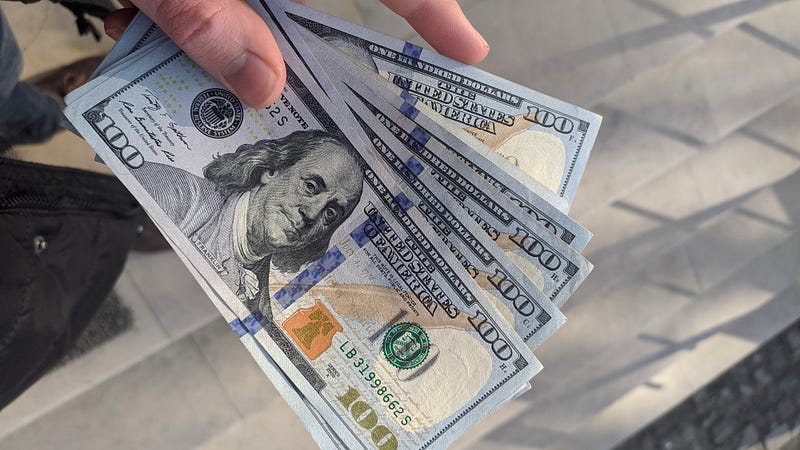
- Money? Nope. Need time to make, spend, or invest it. If you think I’m kidding try not showing up for work and see what happens.
- Love? Nope. Need time to water and nourish it. If you don’t believe me think back to the last time you told your loved ones that you didn’t have time and wouldn’t be able to attend an important event. Remember that reaction?
- Looks? Nope. Need time to maintain it. Maybe not as much time as the Kardashians, but even for regular Joes and Janes like us, there is some level of commitment involved.
Time is what we want most, but what we use worst. — William Penn
If you’re still not convinced by this list, let’s try something else.
How frequently do you feel busy, swamped, maxed out, or flat-out done? During those moments do you wish you had a bigger house? More money? More friends? Or do you simply desperately crave a bit more time? Time to put your feet up, time to sleep a few more hours, time away from all of your responsibilities?
We can re-discover, re-build, and replenish almost everything else in life, except for our time. And unfortunately, due to work, school, kids, bills, responsibilities, and all things adult, most of us simply don’t seem to have enough of it.

We wake up, go to work, and go back to bed with almost no intentionality. We’re on auto-pilot, just hoping to make it through the next day.
We have lofty goals and never-ending to-do lists; to-do lists that are winning the addition game, with no opportunity to practice subtraction.
We see our time slipping away. But we feel powerless to direct it. Guilt becomes our best friend and task avoidance a consistent companion. We become so overwhelmed that paralysis, never one to turn down a good opportunity, invites itself in.
Despite our struggles, we must refuse to surrender. We must be determined to get a hold on time, instead of allowing it to keep its crabby claws on us. We must reclaim our power to determine how to best use our time or prepare to live the consequence of regret.
Our first step in reclaiming our power is a commitment to clarity. We can talk the talk, but to achieve true mastery at prioritizing our time, we must walk the walk.
Here are a few questions to consider on the path to reclaiming your time:
- What do I value most?
- Who (or what kind of people) do I want to spend the most time with?
- What’s the biggest impact that I would like to have on the world?
- What are the biggest obstacles in my way?

Successful lifestyle design requires clarity.
Clarify your values and celebrate the new time intentional you.
Clarify your values and find joy in screaming YES to living your values-driven time plan and saying NO to all deterrents.
“If you don’t design your own life plan, chances are you’ll fall into someone else’s plan. And guess what they have planned for you? Not much.” Jim Rohn
Now that we’ve answered these questions, we can create an ideal use of time list. Here’s mine.
Ideal use of time:
- Connecting: Spending time with my family, friends, and my loved ones
- Contributing: Engaging in meaningful work (leading, giving back, etc)
- Growing: Reading, writing, thinking
- Exercising: Walking (coming soon — trampolining)
- Investing: Real estate investing, asset allocation, etc
Now it’s your turn — what is on your ideal use of time list?
- Think about it for a moment
- Write it down
- Put it somewhere that forces you to look at it every day (your bathroom mirror, screensaver, etc.)
What are your biggest obstacles to execution?
List up to three possible solutions or work-around for each obstacle and commit to implementation. Your present and future self depends on it!
Don’t Waste Your Time

Nothing is worth more than your time. Based on the 2019 American Time Use Survey Americans ages 15–44 spend on average more than 20 hours per week watching TV. That’s the equivalent of a part-time job.
And based on research done by Statista, Americans ages 16–64 spend 17.5 hours per week on social media.
Now there’s nothing inherently wrong with TV or social media. I spend approximately two hours per month watching trash TV with my mom (filed under my “connecting” value) and I periodically use social media for laughter, contribution, and inspiration (yes — it’s all in who you choose to friend or follow.)
There is, however, a lot of things wrong with spending 15–20 hours per week on TV or social media if it’s to the detriment of the things that matter most to you in life (see your time use list.)
“There is one kind of robber whom the law does not strike at, and who steals what is most precious to men: time.” — Napoleon I
Time Prioritization: Mindset Strategies
For those of you who are more driven by pain than pleasure, here are a few tough-love strategies to remind you to treat your time like gold.
- Deathclock: Go to deathclock.com, enter the required credentials, and access the prediction for how many seconds you have left to live. (It’s morbid and somewhat depressing but can also be an excellent wake-up call)

- Top Five Regrets of the Dying: Read Top Five Regrets of the Dying by Bronnie Ware. Use your existing time intentionally in order to avoid some of these regrets
- Dock Your Pay: Set a weekly hourly limit on TV and social media use (or whatever your time-sucking vice may be.) Calculate your hourly wage. Dock your pay for every hour above the weekly limit set and give that money away.
For example, you commit to watching no more than 5 hours of TV per week. At the end of the week, you calculate that you watched 15 total hours of TV. You take your hourly wage (let’s assume $20/hour) and multiply it by 10 since you exceeded your TV watching limit by 10 hours.
This means that for this week you will need to reduce your paycheck by $200 and give that money away — to charity, your neighbor, whoever. (Most of you probably won’t do this but if you did it wouldn’t take long for you to start using your time more effectively. I challenge you!)
Conclusion and Call to Action

Since there’s nothing more important than time, we must use it today as a tool to stave off tomorrow’s regrets. And there’s no greater regret than the evidence that we didn’t take good enough care of ourselves in our youth, that we did not cultivate quality relationships with our kids and loved ones; that our goals and dreams were never prioritized and now will never come to fruition.
Our world shatters when we wake up to find that we no longer have the opportunities to read the bedtime stories, or write the book that was always in our hearts to write.
The good news is that if you’re reading this you’re still here, and you still have time left. You may choose to use that time to ignore these truths, or you may choose to take action.
My sincerest hope is that you will choose the latter.
After all, we are here to:
- discover our talents, and maximize them
- figure out who we love, and relish our time with them
- identify the cause that makes our heart cry, and build a legacy around our commitment to it
There are many different ways to find time to live your ideal life. Do whatever works best for you, as long as it yields the desired results. But don’t just think about it — DO IT.
Here’s what I recommend:
- Respond to the questions above for reclaiming your time (values, obstacles, etc)
- Create your ideal use of time list (and commit to implementing the solutions to some of the obstacles)
- Post it in a visible location (i.e. bathroom mirror, screensaver, closet door)
- Reflect weekly on your ideal use of time versus your actual use of time
- Make adjustments as needed
If we take care of the moments, the years will take care of themselves. Maria Edgeworth
Craft the life of your dreams. Dare to live it. Celebrate your intentionality. And give wasted time the middle finger. This I promise, you will never regret.


