
On Writing Without Solitude
Or: Is it possible to be a real writer when you have small children?
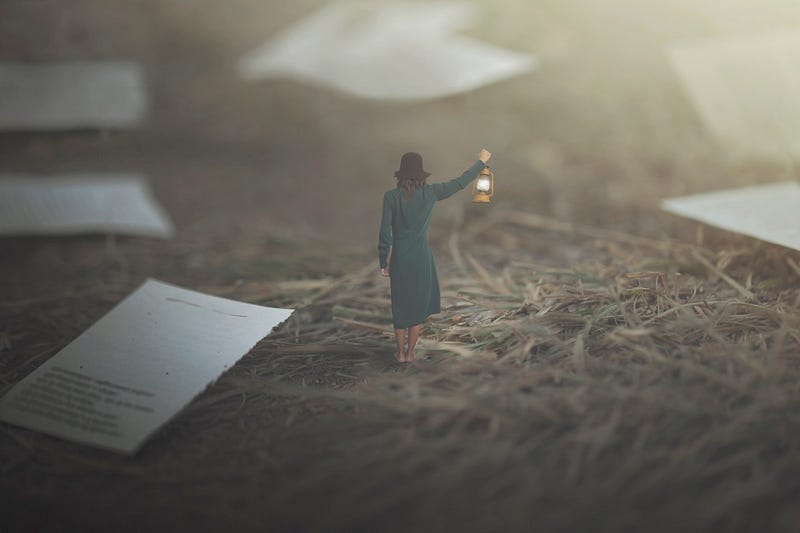
I remember when I was a very young aspiring, dreamy-eyed writer and I read Rilke’s Letters to a Young Poet, a beautiful little book given to me by a friend. Rilke says many things in these letters but what stuck with me was how much he talked about solitude. “What is necessary, after all,” he writes, “is only this: solitude, vast inner solitude.”
At the time I was filled with longing and a deep seriousness about writing, it felt to me a grave undertaking and I wondered if I would be able to have a family as a woman who writes. It took me a long time to feel appropriately frustrated by the patriarchy of much older model writing advice written by male writers who, if they had children, abdicated their caregiving duties in favor of their art. Women writers I knew and admired for the most part did not have children. (Toni Morrison stands out here as a shining exception and my admiration for her knows no bounds).
And yet, I agreed with Rilke. Solitude, prolonged hours alone, seemed to be a part of who I was. I liked long hikes alone, drives across two states by myself. I liked the idea of being in my head long enough for something to come out of that.
Fast forward to now. I don’t count the two hours on a Tuesday morning I sometimes get to myself as “solitude.” Half of it is spent emailing. I have not spent a night home alone since my daughter was born six years ago, and honestly I don’t even know what I’d do with solitude at this point. Quite possibly panic. Or binge-watch Bridgerton. Certainly not, as Rilke writes, “walk inside yourself and meet no one for hours.”
And yet, I write more than I ever did when I had all the time in the world and did not have children. And frankly when I look back at the work I produced after spending days alone, I find it wanting. Boring musings that have no contact point with the social world; writing that is not trying to enact change, but only imitate Edward Abbey and a slew of other male, white, western voices I thought I had to be like to be successful. (Again, I was young in many ways).
If I’m honest with myself, knowing I have only two hours on a Tuesday morning is liberating for me in a way solitude never was. This time crunch means that I have to eschew perfectionism; I have to write with less fear and trepidation. I have to just jump in because there is no time to waste — and I better make it interesting.
And frankly it’s not just that I don’t have the time I used to — the time male writers of yore talk about with that deep seriousness, blind to their privilege, “suffering” for their art, etc. It’s that I wouldn’t trade my messy two-kid life for any amount of time. It’s that my life feels richer for the fact that my ego is continually put in check by my children, and I am constantly reminded that the dreamy writer figure has no place in this world where we need to roll up our sleeves, and get to work. There’s writing to be done, after all, oh and a patriarchy to dismantle, and it’s only Tuesday.