
On the Virtues of Rugged Individualism
Why it’s still something that should be celebrated and encouraged, not mocked and dismissed
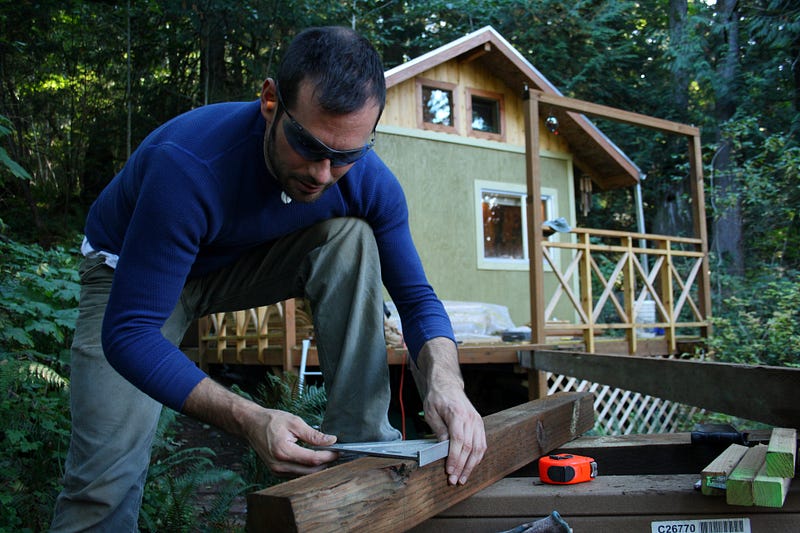
Every time I read an article along the lines of this one, blasting the notion of “rugged individualism” as some kind of fallacy and affront to human dignity, I immediately sense a clenching of my jaws and a hint of bile rising in my throat, spurred on by a mixture of indignation and disgust. At the same time, I find myself at a perplexing loss for words if asked to articulate why that should be my gut reaction. But I’m a writer. Being at a loss for words is unacceptable. So I’ve been giving the matter a lot of thought.
The conclusions I’ve reached, as is befitting such a complex and nuanced subject, are complex and nuanced in their reasoning, yet remarkably simple and straightforward in their exposition. Unfortunately, as I’ve watched my word count grow beyond reason while penning this, the exposition part will have to suffice for now.
In short, attacking rugged individualism feels like a direct, personal attack. It feels like an assault on me, on my most cherished values I’ve carefully cultivated and continually strive to adhere to and to pass on to my children. Moreover, it feels like an attack on my life’s accomplishments, and on my family’s entire eleven-generation history as Americans, as pioneers and homesteaders, as builders and adventurers. (Yes, I have a confirmed ancestor who was on the Mayflower as well as a direct ancestor who fought in the Revolutionary War. And yes, some of my relatives still ranch cattle.)
Wouldn’t anyone be upset at such a seemingly callous dismissal of everything they are, everything they stand for and believe in? Because the thing is, rugged individualism is not just some wistful idea I happen to be fond of. I’m awfully certain that I could be objectively judged as one who walks the walk. Case in point, the Shebin.
The Shebin, for those unfamiliar with the name, is a portmanteau coined by a long-ago English girlfriend of mine and bestowed by her upon my self-designed, self-financed, and almost entirely self-constructed tiny house. (“Shed-Cabin” — > “Shebin.” Clever, huh?)
In my late twenties, following the untimely death of my brother and my subsequent feelings of being utterly devastated and adrift in life, I took a job working north of the Arctic Circle on the Alaska Pipeline — as much for the income as to distract myself from my sudden, overwhelming grief. I’ll admit, I’m not proud to have been a part of the stifling, corporate, planet-destroying fossil-fuel economy, but as far as work goes, it seemed a relatively honest (if intense) living.
Imagine putting in twelve-hour days, seven days a week, for six weeks at a stretch, marooned on the frozen tundra in minus fifty degrees Fahrenheit weather (minus seventy with wind chill) — a place where alcohol was forbidden, where you were subject to random drug tests at any time, and where the only leisure activities were working out, eating (I must say, the food was incredible) or sleeping. But at least you had no out-of-pocket expenses and the pay was excellent.
After only a few months of working there, young and unattached, with no bills or responsibilities beyond work, I was able to save up enough money to buy a small plot of forested land along a remote stretch of inland sea back in my home state. And best of all, I was able to buy it outright with cash.
Despite it being the middle of winter when the sale went through, I was dying to get to work on my new purchase right away. I spent every free moment of my next shift in the Arctic designing up a small, twelve-foot by twelve-foot cabin. And then, on the following R&R (the “Rest & Recuperation” time off between shifts), the moment I got home from the airport, I packed up my tools and my camping gear, loaded my truck with lumber and hardware, and headed to my new property, eager to get started on realizing my vision.
By the time I flew back to Alaska two weeks later, having put in continuous twelve-hour days of hard physical labor and sleeping in a tent in the freezing rain, I had a raw, but fully assembled and dried-in structure. For the next six weeks, I counted the seconds until I was able to return and get back to work on it, applying every free moment to refining the details of the design. And when I did return to it, and after those next two weeks of continuous labor were over, I returned again to my dreaded arctic exile saddened but determined — for I was a man with a plan. And if you’ll pardon me quoting Hannibal from the A-Team, “I love it when a plan comes together.”
A few months later, having successfully wired, plumbed, insulated, drywalled, windowed, roofed, and painted my new micro-dwelling (all of which I accomplished without contractors or hired help of any kind), I quit my job and excitedly moved into my cozy little home. With that move came an escape from corporate servitude and a welcome return to my much-preferred life as a vagabond/chiller/hippy, living rent and mortgage free and stretching my remaining savings by living off “beach meat” (the abundant clams, mussels, and oysters nearby), berries, and pasta, going to the grocery store only for beer. It was heavenly. And I managed to sustain it for several years.
The point is that a life worth living on this increasingly crowded, shared planet must be one that still permits you to apply your own talents and resources and ambition and initiative to pursue your own happiness.
Now this isn’t actually intended to be an essay about the Shebin (although it does feel kind of nice to write about this cherished accomplishment of my youth). Yet it’s already grown far too long to achieve my original aims of purely academic discourse. All the in-depth philosophical analysis and pertinent examples I had prepared for that purpose will have to await another essay (or series of essays).
The point of the Shebin story is, how can anyone tell me with a straight face that it’s not a clear and unadulterated example of rugged individualism in action? And I don’t ask this in order to toot my own horn or boost my ego. I ask it in all seriousness, from the perspective of a detached observer.
Which part of my Shebin story involved me exploiting or oppressing anyone? (Per the standard Leftist argument, even my involvement with multinational oil companies is irrelevant, as I was merely a pawn like the rest of us to the manipulations of the greedy executives and shareholders at the top.)
Which part of “self-designed, self-financed, and almost entirely self-constructed” is society trying to lay claim to?
Did I have a bit of help from my girlfriend sanding and staining boards, and some wiring help from my Dad? Sure.
Did not the manufactured materials I employed require an entire industrial infrastructure, a dedicated network of workers, a system of quality roads, and a functioning government to enable it? Sure.
But rugged individualism doesn’t deny any of those things. We live in a world of nearly eight billion people after all. This isn’t the Paleolithic. The point is not that there aren’t other people sharing the planet with you. The point is that a life worth living on this increasingly crowded, shared planet must be one that still permits you to apply your own talents and resources and ambition and initiative to pursue your own happiness. And you shouldn’t be condescended for doing so. And you shouldn’t be punished. Anything less is some kind of totalitarian nightmare that I’d rather off myself than inhabit.
When someone claims that individualism is fraudulent, it implies that they ascribe no value to individual rights. After all, if only the group matters, what would be the point of such rights? Why not have conscription and send young people off to die as cannon fodder in pointless wars (like Putin is doing)? Their individual lives are unimportant. All that matters is the survival of the communal state.
What is freedom of speech if not the right of each individual to express his or her own unique, private, individual thoughts publicly? What is the freedom of assembly if not the right for individuals to independently choose to congregate for some broader purpose? Why have due process in law? Who cares if one lone individual suffers injustice so long as society, as a whole, triumphs?
If we’re not individuals, then we’re no longer mammals. We’re insects. We’re ants. We’re bees. We’re termites. I suppose that’s why this anti-individualist stance has become so prevalent among the Left — among urbanites, among those who revel in cramming together like termites in a mound.
Perhaps it’s a form of denial. Everyone knows that things are looking increasingly dire on all fronts these days. There’s nothing but continual bad news and it’s all getting worse. Everyone knows deep down that the possibility of societal collapse is rapidly increasing. And everyone knows that if you stand any chance of surviving that collapse, it will involve ruggedness, and a stubborn, dare I say individual strength and resolve — both mentally and physically — even if you band together as a community.
Furthermore, to deny individualism is to deny a fundamental truth of reality itself. If viewed from the perspective of existentialism, it’s inauthentic, disingenuous, or self-deceptive. Existentialism teaches us that we’re all ultimately alone. That no matter how close you get to others, you’re still trapped within the confines of your own skull. That when you’re lying on a battlefield clutching your own spilled entrails, they’re your entrails alone and it’s you alone who’s about to die — not your friend, not your lover, not your squad or commander — you.
I have no problem with those who value community above all else. I have no problem with those who dedicate their lives to fostering and growing community, to those who only feel fulfilled and alive when surrounded by other people. I have no problem with those who feel it’s their prime moral imperative to redress injustices and to help the less fortunate. But what I do have a problem with is those who think that by virtue of their values, they get to deny me mine. Those who are so self-righteously certain and satisfied in their convictions, that they feel the need to disparage or actively seek to prevent me from exercising mine.
That’s not live and let live. That’s not equity or respect or inclusion. And it’s certainly not freedom. It’s judgment. It’s a declaration of the right to trample those of others. And it’s a pretty good recipe to be first on the dinner menu when the post-apocalyptic cannibal hordes come knocking down your door.
I know many people suffered from the social isolation of pandemic lockdowns. And I feel for them. But personally, I didn’t suffer in the slightest. Rather, I thrived. Why? Because I reveled in the break from society’s hustle and bustle. Because I seized on the newfound opportunities afforded by the disruption of banality and dedicated myself to personal projects. I spent lots of time in nature. I built things. I wrote. Aren’t we all writers here? Don’t writers need to spend a lot of time alone in their own heads? What better time than while solo in lockdown?
Tell me again what’s wrong with self-sufficiency. Tell me again what’s wrong with charting your own course. What’s wrong with being one hundred percent comfortable in your own skin, confident in your abilities, and reliant on no one but yourself for your own happiness? And how is hating on that not just petty and pointless jealousy?

Colby Hess is a freelance writer and photographer from Seattle, and author of the freethinker children’s book The Stranger of Wigglesworth.
If you enjoy my writing and would like to receive stories by email whenever I publish, please click here.