
On the Trail of the Living Dead: Who First Described Zombies?
The concept of zombies was first described in the 17th century by a Frenchman exiled to the Caribbean. The word was mentioned in a now forgotten novel. However, these weren’t “living dead” but rather spirits used for sexual intrigue.
Zombies weren’t always depicted as flesh-eating undead. An example is the tale of the man who introduced the term into literature. His name was Pierre-Corneille Blessebois, leading a life full of adventures.
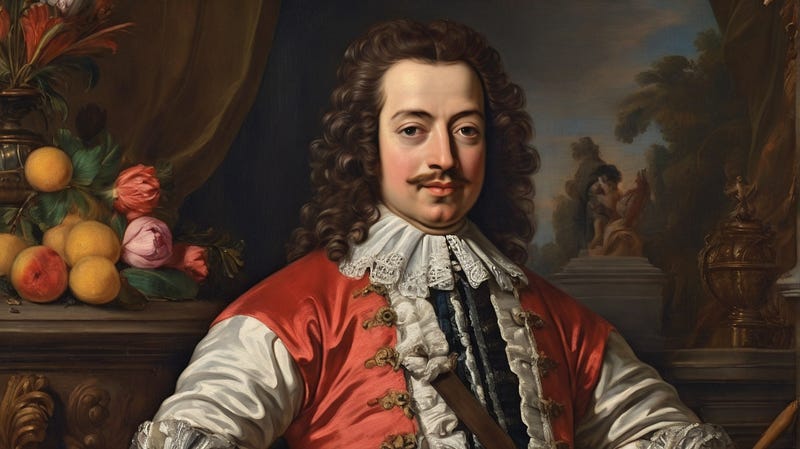
Who was the “Casanova of the 17th century”?
Pierre-Corneille Blessebois was French, born in 1646. Over time, he gained the reputation of being the “Casanova of the 17th century”. His life was a string of adventures and romances. Since he ceased being a boy, he spent most of his time indulging in affairs, listening to spicy gossip, engaging in shady deals, constant escapes, and… penance in a prison cell.
Suffice it to say that for money, he didn’t hesitate to set his mother’s house on fire. To escape from prison, he seduced and exploited a girl from a respected family. Depending on his immediate needs, he served in either the Dutch or French fleets.
He had quite the audacity. Once a judge asked him if he was the bad boy who fooled so many girls. Pierre-Corneille replied, “No, sir. I am that poor boy whom so many girls have fooled.”
During his free time, the “Casanova of the 17th century” wrote extensively, with a libertine spirit. He was no gentleman, evidenced by the fact that in 1678, he ended up behind bars for assaulting the wife and daughter of a Parisian wig-maker.
Tales of Black Magic and Witchcraft
It was during this time, in an attempt to extricate himself from prison, that he started divulging information about the infamous Parisian poisoners. This involved a murderous circle centered around a professional poisoner called La Voisine and the Marquise de Montespan, the entrepreneurial mistress of King Louis XIV of France. — Although Blessebois’s testimony proved useless, the fact that he pretended to possess knowledge about the case speaks volumes about the circles he frequented. It also speaks to his penchant for tales of black magic and witchcraft — believes Professor Doris L. Garraway, who specializes in French literature and history.
Thanks to his real or feigned knowledge, Blessebois didn’t languish in his cell; he managed to leave it behind happily. However, another stint threatened him: for desertion. He managed to turn it into a forced trip to Guadeloupe. There, various risk-takers and adventurers ended up, whites on de facto “contracts” as quasi-slaves. Although Blessebois arrived in Guadeloupe with a ban on returning to France and an order to work honestly, he was drawn into the hot atmosphere of the Caribbean island.
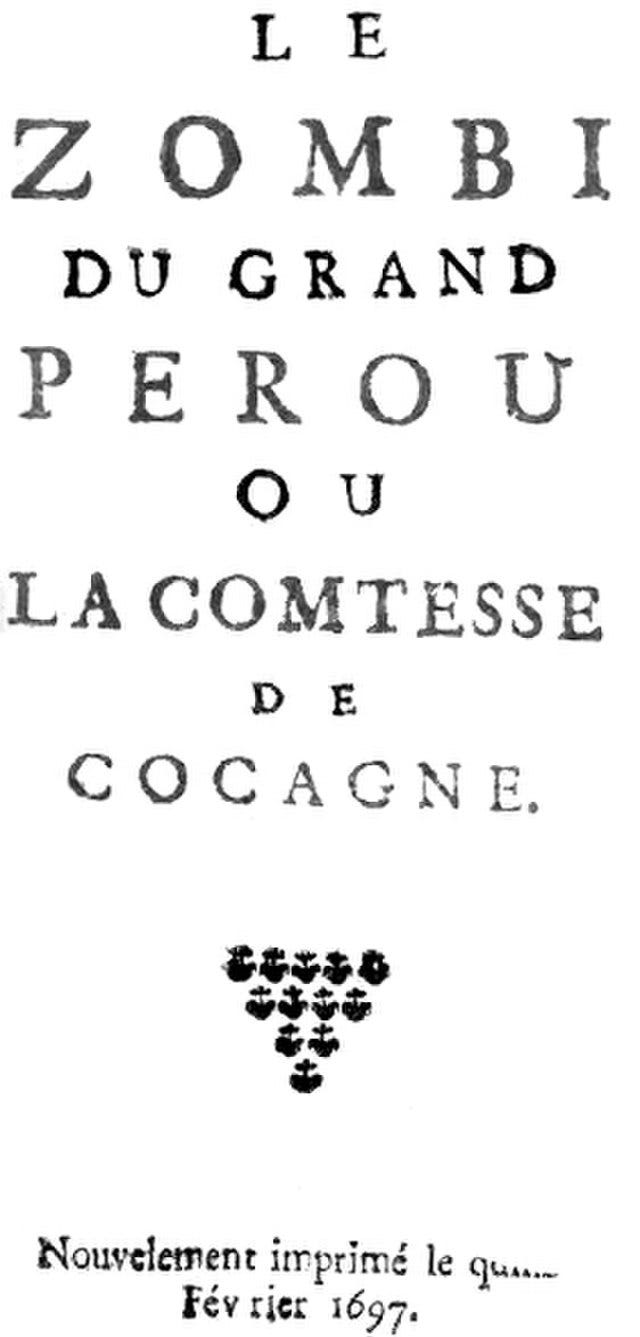

When was the word “zombie” first used in literature?
He later recounted his “exile” in the book “Zombie from Grand Perou, or Countess de Cocagne” (1697). Today, outside of literary scholars, no one would probably be interested in it if it weren’t for the living dead in the title. It turns out that prior to Blessebois’s 17th-century work, the word “zombie” didn’t appear in books at all. Here it was used — attention — for the first time in the history of literature. Earlier than in any English-language source, which various lexicons and encyclopedias like to refer to in entries about the living dead. Blessebois was the first person to describe zombies in literature.
However, Blessebois’s work isn’t a horror story but rather an ironic tale of sex, magic, and intrigue. As researchers have determined, it must be mostly autobiographical. In 1686, the exiled Blessebois arrives at an estate on Basse-Terre in Guadeloupe. There, he meets the “Countess de Cocagne”. Behind this pseudonym hides Felicite de Lespinay. A woman without inhibitions but also without a drop of sense. As the mistress of the titular Grand Perou, Charles Dupont, she dreams of forcing him into marriage.
To achieve this, she decides to resort to magic. Blessebois, the narrator, has a reputation as an expert on the subject. Realizing that an interesting adventure is unfolding, he doesn’t refuse to help. He proposes to turn the enamored woman into a zombie, which, in his opinion, is a kind of invisible spirit under whose guise she can torment the marquis until he promises her marriage.
Attention all readers!
As content creators on Medium.com, we face minimal compensation for our hard work. If you find value in my articles, please consider supporting me on my “Buy Me a Coffee” page. Your small contributions can make a big difference in fueling my passion for creating quality content. Thank you for your support!

