On the Shores of the Cosmic Ocean
Humanity’s destiny among the stars
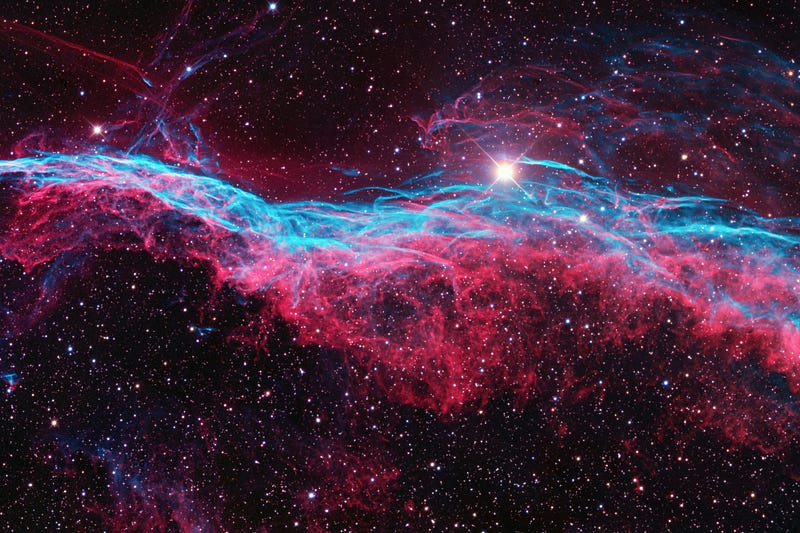
The Earth is a gem, a glittering gem set amid a vast, cold nothingness. There is nowhere else, nowhere remotely comparable (or at least, accessible) for any of the nearly eight billion people inhabiting this priceless treasure of a planet. It is our home. It is our only home. It birthed us, shaped us, sustains us, and if pushed to its breaking point with abuse — punishes us.
Yet this gem has a flaw, and a fatal one at that.
You see, the Earth has an unfortunate, Yahweh-like habit of periodically wiping out the vast majority of its inhabitants. This has happened at least five times previously in the three billion years since life here began. And sadly (and inexcusably, since we’re now the cause), the sixth one is currently underway.
There are any number of both natural and human-driven phenomena capable or guilty of causing mass extinction on a planetary scale: climate change, asteroid impacts, hypervolcanism, nuclear war, AI run amok — the list goes on and on. Yet no matter the cause nor the form of the next inevitable cataclysm, two key points remain.
The first is that our planet may be a priceless gem, but as just discussed, it’s also a precarious one. As Robert Zubrin notes, “a single species with a single mode of life is a slender thread whose line to the future can be easily cut if conditions change adversely.” Just ask the trilobites. Or the ammonites.
The second point is that no matter how precious the Earth, there is something more priceless yet — us. For we may very well be the rarest thing in all of existence, what physicist Brian Cox calls “the cosmos made conscious… the means by which the universe understands itself.”
As such, the Earth cannot in good conscience remain the sole repository of the only known intelligence in the universe. With so much at stake, it has become incumbent upon it to share its progeny with its kin.
There’s a famous quandary known as the Fermi Paradox that essentially boils down to asking where the rest of the party is. That is, where are all the aliens?
Astronomical discoveries of the past two decades have shown that planets around stars is not the exception but the norm. So if there are billions upon billions of planets out there, and they’ve had billions of years to give rise to life and intelligence, why are we faced with nothing but deafening silence? Why has no one sent us a telegram, or come calling at our doorstep?
One possible explanation is that of the Great Filter. It’s the idea of a fixed sequence of ever-increasing improbability — that going from lifeless chemistry, to abiogenesis, to multicellularity, to intelligence, to becoming a bearer of science and technology requires overcoming a series of ever more improbable hurdles; and that very few would-be civilizations make it through all of them.
If true, the critical question for humanity then becomes: Is the filter behind us, or ahead of us still?
Have we passed the first, cosmically-imposed screening, surviving the infinitesimal odds of ever making it past the lifeless chemical stage, only to soon squander our miraculous fortune through our own shortsighted foolishness?
Or are we instead, like a failed marriage, just one more depressingly commonplace statistic; another one set to bite the interstellar dust out of the myriad technological species that constantly arise and then stumble?
It’s been said that with great power comes great responsibility. Perhaps the cosmic standard is one of recklessly irresponsible youth.
But if that’s the case, although we may be drunken teens careening down the highway, swerving repeatedly into oncoming traffic, we haven’t yet crashed. It’s not too late to pull over and call an Uber.
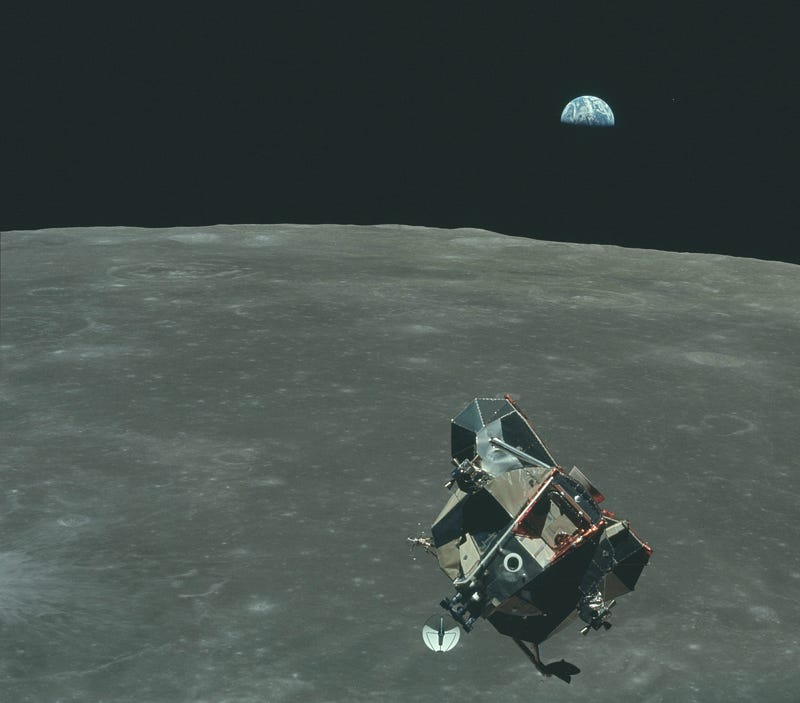
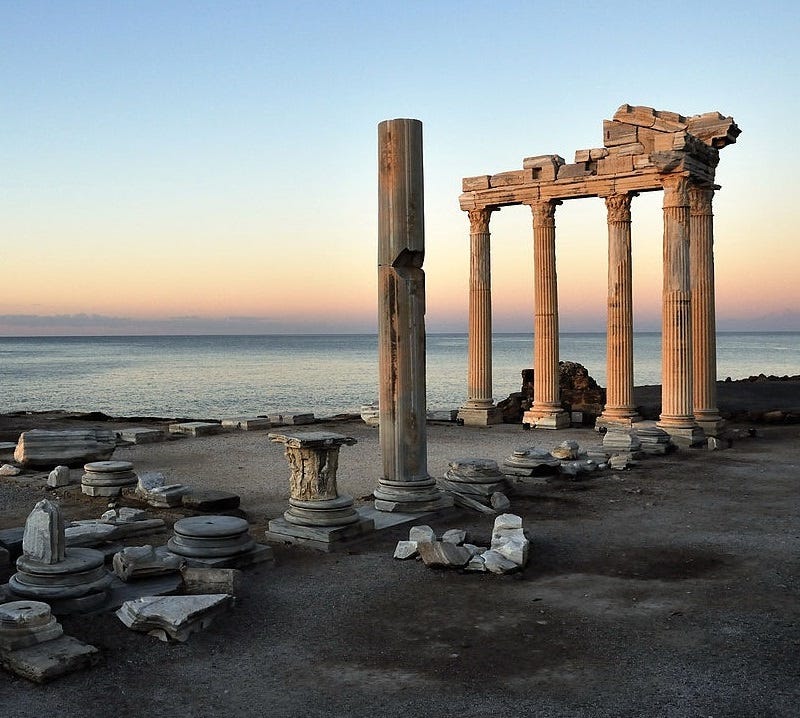
“All civilizations become either spacefaring or extinct.” — Carl Sagan
Imagine Utopia, a world where humanity, at long last, has risen above its barbarous roots to achieve peace, prosperity, and equality for all. No one is hungry. No one is homeless. No one is discriminated against or oppressed. War is but a distant memory. We live in perfect, Snow White harmony with all of nature, with all our fellow beings. We look upon everything we have accomplished, and behold, it is very good.
To so many, this is the goal—the environmental movement, the social justice movement — each seeking a shared end point for disparate yet intertwined needs. And few goals could be worthier.
Yet ironically, even if we were to achieve this, we’d still be doomed to misery.
The reason is simple. Nearly all of our current woes stem from the same root cause — overpopulation.
Consider, for example, the oceans. For most of history, it was unfathomable that human activities could affect something so vast and so limitless. And for the most part, they couldn’t and they didn’t. “Dilution is the solution to pollution.” And it was.
Until suddenly there are billions of us — producing, consuming, discarding, and repeating. Day in and day out, without end.
It’s estimated that every day, twenty-two thousand tons of plastics enter the oceans, where they collect into country-sized masses of floating detritus, or worse yet, break down into microscopic pieces that now infest the entire water column, from the most pristine bays of isolated, uninhabited isles to the depths of the Mariana Trench. If we continue on our current trajectory, plastic waste will soon outnumber all the fish in the sea.
And then consider the social issues. The steady erosion of civil liberties and the militarization of the police. The increasing number of economic migrants and climate refugees. The widening income inequality. The ever-worsening political polarization and the decline of democratic institutions. The looming threat of a new world war.
All of this stems from too many people crammed into too little space. Too many people chasing finite resources on a finite planet. And all of it is only getting worse.
Four babies are born every second. Every second. That’s insane. We joke about it in my house, with my kids giggling out their calculations of how many new babies were born during the course of various activities throughout the day. Pouring a glass of milk? (12!) Brushing teeth? (88!)
My eldest asked me recently if perhaps a silver lining to COVID could be that it puts a dent in the ever-ballooning population, giving our poor, beleaguered Earth a respite from our relentless rabbiting. Oh, my dear innocent child, if only.
When you do the math, you find global pandemic deaths have offset this constant incarnating of new sapiens by a whopping two weeks. Two weeks? That’s it? So no. Sorry, son. (And sorry, world, for adding to the tally.)
But let’s say we somehow manage to overcome our present perils. We solve all the environmental problems, all the social strife. We balance out the population into a sustainable, steady state and achieve our long-dreamt-of Utopia.
What would that actually look like? How would it come about? How would it be maintained?
“Balancing" population growth is a euphemism for somebody dictating who gets to breed, and how often. “Balancing” our use of resources is another way of saying “rationing.”
A world where everything is in balance is a world where everything is controlled. It’s a world where every facet of your life, from cradle to grave, is prescribed to you. Where you have to ask or beg permission to do anything at all — to buy a house (no one would be allowed to build new ones) or to move between cities; to get married or to have children. You’d need a permit to wipe your backside, and another one to flush.
How could it be otherwise? All aspects of existence would need to be carefully rationed and controlled or else we’re right back to our unsustainable present.
And scariest of all, in a world thus controlled, thought itself would need to be controlled. Freethinking cannot be tolerated when conformity is a matter of survival.
This is not a world of opportunity, of exploration, of freedom. This is a nightmare dystopia in the guise of paradise. This is the future getting worse. As famed physicist and futurist Gerard O’Neill put it:
But while we remain limited to the surface of a gradually depleted Earth we face a new kind of threat… Survival will require that either voluntarily or under coercion we must limit our options. …and that in the long run the freedom of the human mind will have to be limited also… enforced stasis through a rigid social code.
As obvious as this becomes upon reflection or in hindsight, it’s a truth rarely mentioned. Which is astounding. Yet very few people seem to have thought it through. I know I didn’t. I mean, it’s rather counterintuitive. Solving the world’s ills doesn’t solve the world’s ills? Huh.
But such is the way of our species. It’s like we’re too caught up in our current crises to consider the new problems our proposed solutions will inevitably spawn. Out of the pan and straight into the roaring flames.
So what then to do?
The answer is literally all around us, stretching away nearly to infinity in every direction. We need only to raise our gaze skyward.
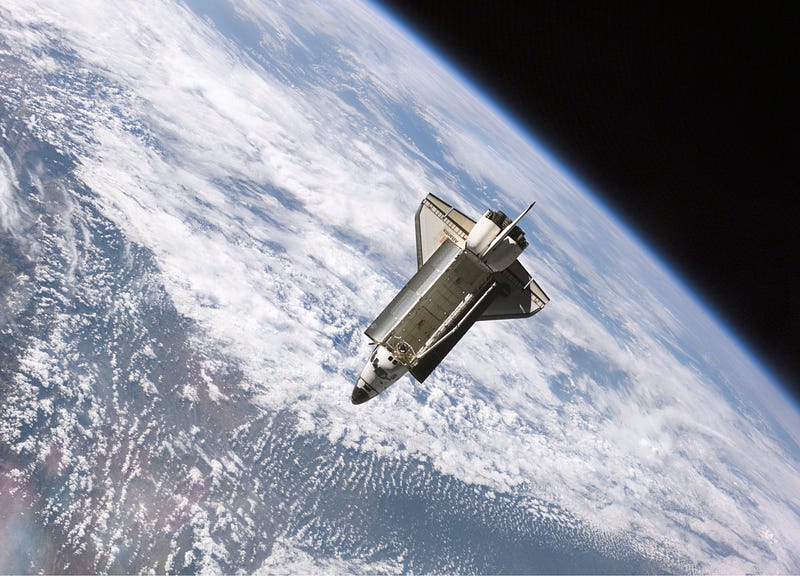
The cosmos is vast beyond comprehension. And our wonderful planet, in Sagan’s immortal words, is but “a mote of dust suspended in a sunbeam.”
It would seem a cosmic mockery for us to turn myopically inward and to ignore the endless expanse that lies beyond our frail atmosphere. It would go against everything we are as a species, and everything that’s brought us to this point in our evolution. As Zubrin notes:
Humans are the descendants of explorers. Four hundred million years ago, our distant ancestors forsook the aquatic environment in which they had evolved to explore and colonize the alien world above the shoreline.
Now is our time to take the next step, to continue that long-ago journey our aquatic forebears began. As the “father of rocketry,” Konstantin Tsiolkovsky so eloquently stated, “Earth is the cradle of humanity, but one cannot remain in the cradle forever.”
We are the first species in the long history of life on Earth to at last possess the technology to leave the surface of our planet and to expand outward into space. As we speak, brilliant visionaries are pouring their personal fortunes into making this dream of leaving the cradle an ever-more-attainable reality. Now is the time to act. Now is when we must seize the moment before it’s too late.
The reasons for doing so, as outlined above, are many. To preserve our species, our consciousness, our intelligence, and perhaps life itself against the ravages of an indifferent universe by spreading our eggs across more than one basket. To preserve our planet and our way of life. To inspire our children with opportunities for new knowledge, new adventures, new freedoms, and to give them hope for the future.
And if all of those reasons still aren’t enough, the fact remains that the sun itself will eventually force the issue. For even if the Earth (through clever human intervention or dumb luck) evades massive natural or artificial disaster, in a billion years time, the sun will fail us, first by scorching us and irradiating us, then by consuming us in its dying gasps. That’s the inevitable lifecycle of a main-sequence, G-class, yellow star.
You may think this a problem for a far distant generation to tackle. You may think we have much more immediate needs to attend to. And while you wouldn’t be wholly incorrect in saying so (for it would certainly be foolish to wipe ourselves out from climate change while worrying about a problem a billion years in the future), consider that every problem we currently face is the result of previous generations focusing solely on present needs while kicking the can down the road, consigning the consequences to future humanity.
Do we want to be as narrowly focused, as visionless as those who came before? Must we blindly repeat their folly?
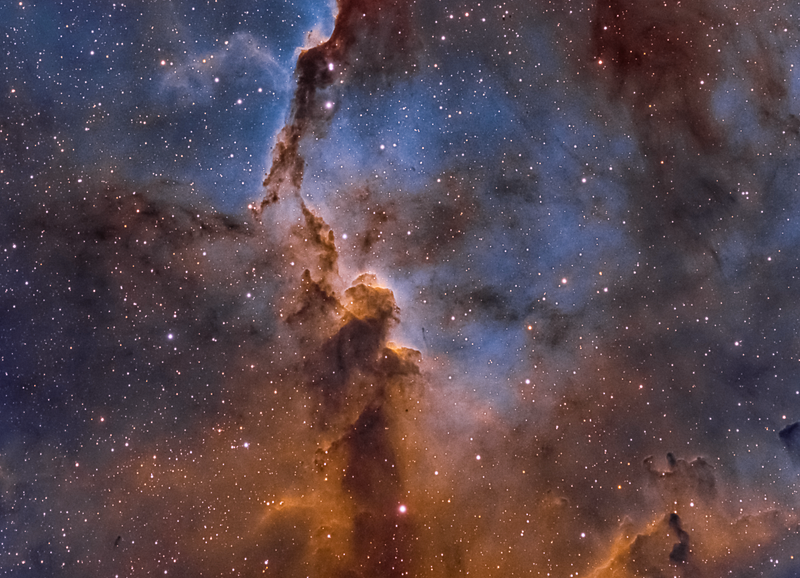
Multitudes of new worlds yet unknown await, filled with menaces to be faced, challenges to be overcome, wonders to be discovered, and history to be made. The first chapter of the human saga has been written, but vast volumes lying out among the stars are still blank, ready for the pens of new peoples with new thoughts, new tongues, astonishing and beautiful creations, and epic deeds.
I know it’s become fashionable lately to hate on the so-called “space billionaires.” I know there are many who would happily see them taxed out of existence, who would happily see their vast fortunes redistributed among the suffering masses. I’ll leave that argument to another essay, but bear in mind, the world collectively spends more on lipstick each year than on space exploration. If we can afford one, we can certainly afford the other.
And anyway, how can you put a price on the survival of a species? How can you put a price on preserving the light of consciousness itself?
Will it be easy, moving beyond the confines of this planet that has nurtured us since the dawn of time? No. Will it be without its unexpected challenges (and unintended consequences)? No. But will it be worth it? Absolutely!
We’ve got this, people. We can do it. We really can. If only we set our minds to it; if only we look past the myriad petty distractions that stand in our way. As legendary explorer Ernest Shackleton reminds us, “Difficulties are just things to overcome, after all.”
Sic itur ad astra!

Colby Hess is a freelance writer and photographer from Seattle, and author of the freethinker children’s book The Stranger of Wigglesworth.
If you enjoy my writing and would like to receive stories by email whenever I publish, please click here.