
On the Purpose of Art
Are humanity’s most creative faculties merely a drive towards ego? On the concept of art during an era of quarantine.
One of the most alarming aspects about the beginning of the Coronavirus pandemic was the speed with which many events that had seemed like pillars of our lives were shut down. In a matter of what only amounted to several days, Coachella announced that it would be postponed, SXSW announced the same, and numerous sports leagues suspended their seasons indefinitely.
There is a reason music, dance and visual art are involved, in some level, in every single world religion or mystical sect.
The music industry seemed like it was one of the most affected industries as performing artists who rely on their supporters meeting them out in public places suddenly had no avenue by which they could do what they did to make a living — perform. Many artists have taken to the virtual world in an effort to bring a live experience to their fans through live-streaming performances. Bigger artists such as Drake and Billie Eilish have already done this to huge success and have gathered millions together on their pages to share in the experience of their music.
Despite the success of a few household names, many independent artists are now stuck at home wondering whether or not the adventure to “pursue our dreams” was even worth it. For what has taken some people years to build as an artist was nearly brought down and destroyed in not even 3 months. It might just be that my generation of millennials took the lesson, “You can be whatever you want to be if you put your mind to it,” way too seriously, or it might just be that the context in which I write this piece is putting a negative spin on my opinion, but it appears all too clearly that “following our dreams” is not always a possibility for reasons beyond our control.
I think that many artists, be it visual, music, or dance, begin to pursue their passions through the recognition that this pursuit, and their subsequent creations, represent the clearest visual into what truth is, what truth could be, and how God can be manifested on an every day level.
Art, at its basic level, represents a molding of chaos into a form that can be enjoyed or analyzed. For example, there are any number of movements that a human being could choose to express at any one point; however, the art of dance seeks to organize and put order to a series of movements in order to express a certain feeling, or movement. Adding musical or visual effect will only increase the power of this expression, and consuming such a spectacle allows us all the opportunity in the shared power of adding form to what was once formless.
There is a reason music, dance and visual art are involved, in some level, in every single world religion or mystical sect. Since time immemorial, humanity has used the arts as a means to engage in the true knowledge of God, and ever-lasting reality. It is no different now; however, in the absence, or should I say decline, of widespread religion, the arts have taken an interesting place within our societies that could be considered unprecedented.
If we take a second to look past the stern gaze of those who were wont to offer that advice throughout our lives, we would see the values of such years of crisis passed down as lessons from those who actually had to endure them.
More often than not, the arts are now used as a means of legitimizing the ego, and as a means of achieving a certain level of freedom that those who do not engage in the arts cannot hope to imagine. Let me put it to you this way, the fundamental aspects of a capitalist society encourage people to use the arts as a means of a way of living, rather than as a means of understanding themselves, or developing their own concept of “truth.” This might not be considered a negative thing, although some would say that such a means of employing the arts kind of takes the soul out of it.
On the virtual sphere, arts are viewed as a trade that should be mastered in a certain way that is driven towards metrics, and maximizes the opportunities of making money from that art. It seems almost impossible to begin a hobby and just enjoy it, because no sooner than the point at which you arrive at a skill level that could be considered somewhat impressive, you are guided, through the efforts of ingenious marketing tactics, towards opportunities in which you could end up being paid for that hobby.
Entire communities are developed off the ideal that their particular art is the most-high, and will lead you to the lifestyle you think you deserve. Those who are less business-minded are told to, “Suck it up,” when they express the feeling of having qualms over employing business strategies in regards to their art. “If you want to make a living through your art — whether or not it’s music, writing, dance, or visual arts — then you have to do these things. If you don’t do them then you will not make a living.”
This type of philosophy delegitimizes the value of art in that only the art that makes enough to sustain a living for the artist is considered “good” art. This may be faulty thinking, and I could write a whole other article on what may be considered “good art,” but it is safe to assume our current zeitgeist if we only view the way major label artists are put on pedestals and worshipped, practically, as gods. In an attempt to create what our society considers to be “good art” we end up losing our soul.
The problem, in so many words, is capitalism. This is an economic ecosystem in which we encourage companies to exploit humans in their most base nature so that a bit of profit can be made. The most common phrase one may hear in regards to marketing would be that, “Sex sells,” and this is of the utmost obviousness in entertainment industries. Using sex as a means of manipulating people to purchase your product is not only widespread, but encouraged in many industries. Despite the crying out of our soul that what we are doing is immoral, we continue to market our arts, and our truths in such a way based on the notion that “this is just the way it is.”
With the crash of the entertainment industry, we are left uncertain as to when “normal life” will reappear, and we will be able to go on and about our daily activities, and begin to go to shows, and performances again. Some are worried that something like this could set back the entertainment industries for years with the risk of re-circulation of the virus, and the newfound apprehension many might feel about being in large groups.
We are also left with the dreary and incessant memory of our parents, and other authority figures constantly reminding us that a career in the entertainment industry wasn’t a real career to invest in. The notion is a career in the arts is never stable, and leads to mental illness more than anything and, you know what, the naysayers may have been right. Well, at least a little bit. Let me explain.
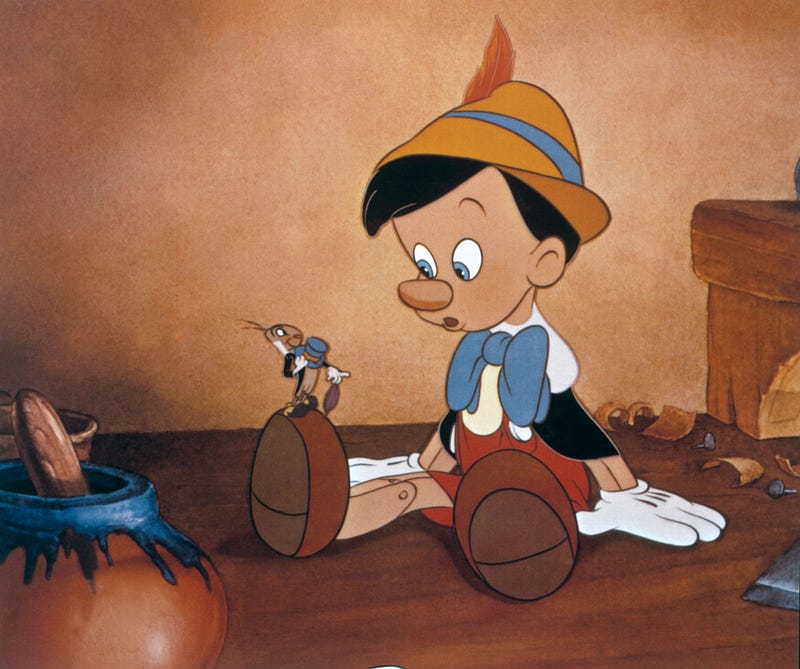
One of the inspirations that has been driving my thoughts on this topic has been that of the movie Pinocchio (1940). Although I’m sure most people are familiar with the classic Disney movie, I’ll still take a minute to summarize the plot and analysis. Basically, a man named Gepetto creates a puppet who, through the magic of a blue fairy, gains life, and the direction to be, “Brave, unselfish and true.” Over the course of the story, the young puppet Pinocchio goes through a series of trials that either highlight, or showcase his inability to live up to these truths.
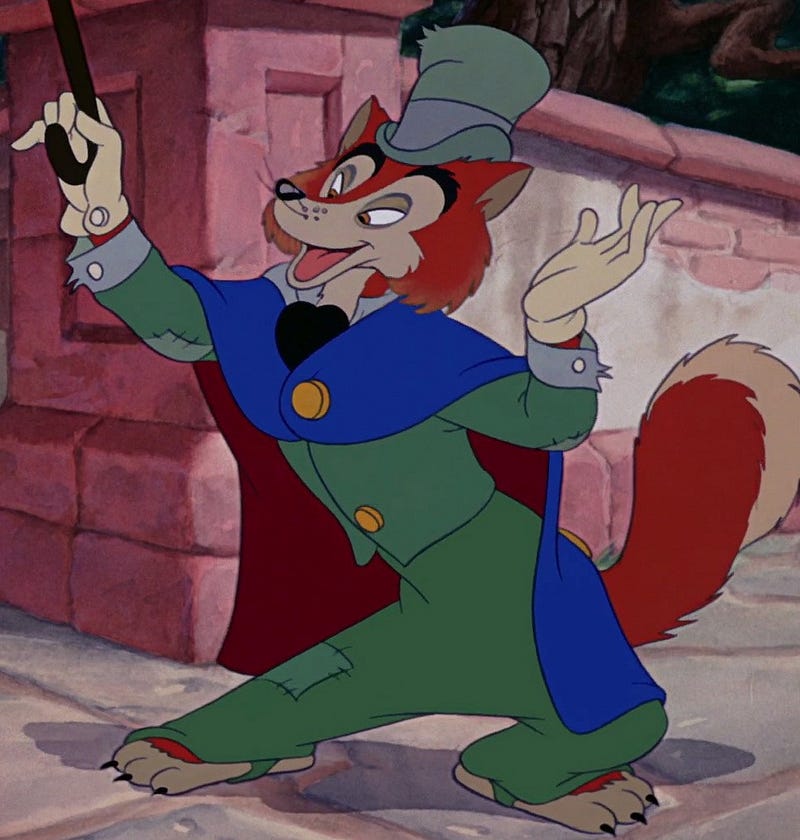
The story is a basic tale of morality and, especially considering the time period in which it was published, shows itself to be a tale of conventional values that should lead one to “success.” At the beginning of the movie, Pinocchio is guided, albeit somewhat mischievously, into a career as an entertainer. Although he achieves success as an entertainer, he does not attain freedom, and is even further exploited by his talents for the betterment of others — namely, the puppet-master Stromboli, who, in his shows, acts as though he controls Pinocchio despite the fact he has no strings. When Pinocchio tries to go home, Stromboli locks him in a birdcage, and Pinocchio is only freed by the presence of a fairy.
Before returning home, Pinocchio befriends a young delinquent who engages, with a number of other youths, in drinking, smoking, gambling and vandalism. Once the delinquents finally make it to their destination, Pleasure Island, they learn of a curse that will turn them into jack asses, and force them into slave labor. The allegory is clear, and dictates that those who engage in such behavior eventually become too stupid to tell right from wrong.
Once again, the tale points to a symbolic coming-of-age story in which a young, naive, protagonist goes through a series of trials in which he is to eventually earn the capability of distinguishing between right and wrong. However, we must remember the context in which this story was published — the movie was published in 1940, which was immediately after The Great Depression, and right before WW2. Despite the fact that the movie was being published through a medium that would be considered entertainment, the movie espoused conventional middle-class values of hard work, and sacrifice.
Although the values in Pinocchio may seem somewhat archaic to us, they are extremely relative to the time period in which we now exist — a period of crisis. The period in which Pinocchio was created drove people to seek such values that would be essential to their communities. Millions upon millions of people lost their jobs during The Great Depression, and millions upon millions more saw the suffering of their communities firsthand. It is awfully difficult to to be tempted to get over on somebody, first of all, when you see they are doing so wretchedly, and, second of all, when they have no money to be gotten in the first place.
Even the biggest of influencers a la Drake, or Billie Eilish are in the same boat, and can make no more money than the local musician who gets paid a cut of her open mic’s bar tab every Wednesday.
With the recent economic crash now, hopefully, just behind us, we are beginning to recognize a reality in which the values espoused in Pinocchio are especially relevant.
“Go to college and get a degree.”
If we take a second to look past the stern gaze of those who were wont to offer that advice throughout our lives, we would see the values of such years of crisis passed down as lessons from those who actually had to endure them. It would have been impossible for us to completely understand this advice, however, considering such a period of crisis as this one is a reality in which we have never existed.
The most notable historic events over the last 40 years would have to be 9/11, and The Great Recession. Both of these events involved Americans, and the western world at large, to consider their places in history and how these events would be remembered and endured. There were many of us who were greatly affected, and we carry those badges of trauma alongside us in who we are as people today.
Even with the disastrous effects from these events taken into consideration, the loss of lives and jobs is in no way near to that of the magnitude of WW2, and The Great Depression. If we also take WW1 and the Bird Flu epidemic of 1918 into consideration, then we are looking at a generation that lived through the most fatal period of human history. They may have felt the need to espouse such ideals as were expressed in the movie of Pinocchio, but as far as our understanding of those values in this day and age, we had no point of reference with which to judge this advice. We simply had not been through anything that had, ultimately, required the submission to a way of life.
And so, upon the collapse of our economy, we have come to remember the value held in the lessons that have been passed down to us. We took for granted a lifestyle in which we were free to go out when we pleased, and gather people together for the sake of music and art. And despite this fact, we must turn and face this reality immediately before it defeats us.
The conventional way of making money through the arts would be through live performance, or representation — even if it is just a painting, it is usually displayed in a gallery or venue. What we must truly consider, in a time where people are facing a financial crisis, is what our art truly has to offer. A normal album release for a musician might gear up with a press run, accompanied by online ad campaigns, a huge purchase of merchandise, a scheduling of a tour to allow the merchandise to sell, and then a re-run of the same process about a year or so later.
Furthermore, we are not even taking into consideration the presence of scammers and bottom feeders in the form of sketchy promoters/venue owners who undoubtedly make up a notorious population of the music industry — and even the entertainment industry in general. The presence of such scum is inevitable in an ethos where making a quick buck is practically worshipped as a religion.
Even so, people never needed to go out to these events and take part in these musician’s dreams. For the most part, people probably enjoyed going out and engaging in these activities. Perhaps it gives them the same opportunity to feel what musicians feel in being able to pursue their dreams in the first place.
The fact is, we find ourselves currently incapable of making music for the sole goal of legitimizing ourselves in our popularity as an influencer, or as a means of living a lifestyle of freedom from the prison-like situations our nine-to-fives may create for some of us. Even the biggest of influencers a la Drake, or Billie Eilish are in the same boat, and can make no more money than the local musician who gets paid a cut of her open mic’s bar tab every Wednesday.
The question we must finally ask ourselves is ultimately why we do what we do. What was the original message that you were dying to share with the world? Why did you want to share it? Who are you? Or was the pursuit of this dream just a simple power grab in order to achieve a life that is so idolized in our international media? Anyone can be famous nowadays. This has been the environment in which many millennials came into adulthood, stemming from the the new reality of the rise of social media.
Those who have found success will tell you that you have to play the game to make it, and eventually you are drawn down a path that you didn’t foresee when you first started out, so fresh and naive. Perhaps there is no longer a need to engage in the mindless promotion that seems to go hand in hand with the world of art. As the endless stream of content slowed down while the Coronavirus took hold, for the first time, many artists were allowed the opportunity to just exist.
Any online news headline you search on Coronavirus will detail how the pandemic has upended daily life. Now is the time, more so than ever before, to question the system in which we exist, or rather, which we previously existed. Placing art as a crown upon the mantle of capitalism was an unsustainable system. Why do you create art? It is possible that creating under such a system would only ever lead us to egotism — an equally unsustainable system. If art is to be thought of as “good art” it should transcend the values of our human world, and reach to the divine.
These words are all well and good, but the basic idea is that it should represent what is true to yourself. It is atrociously obvious when art sinks to the level basic capitalism, avoids what is true within the artist, and seeks to exploit a type.
We can, and will, adapt. Human beings have done so time and time again. Furthermore, I am skeptical that the world will end in a cataclysmic fashion. I think it is much more likely our decline will be extremely drawn out, and eventually become unrecognizable to us. Those who claim that the end of the world is nigh are never wrong in some way, but these people have been around for millennia — they will be around for a millennia more.
If we can take some positives from this, and we must take some positives from this crisis, it is that we may have truly taken for granted a lifestyle that could be considered indulgent. For the most part, we could travel wherever in the world we wanted to, go out with as many number of people as we wanted to, and do damn near what we wanted to to get by in life. It is high time to recognize the purpose and importance of our arts in a time where many people cannot afford the luxury of making unnecessary purchases.
So once again we must ask ourselves, “Why do we create, and for whom?” It is only then that we can begin to understand, and reflect upon, our purpose in a reality such as this.
Thank you for reading,
for any ILLUMINATION writers, feel free to drop a comment if you have any thoughts. Looking forward to hearing what you guys may be thinking about this line of thought.
As always,
Gabrielknowseverything


