
On The Psychology of Money
A Personal Reflection & Book Review
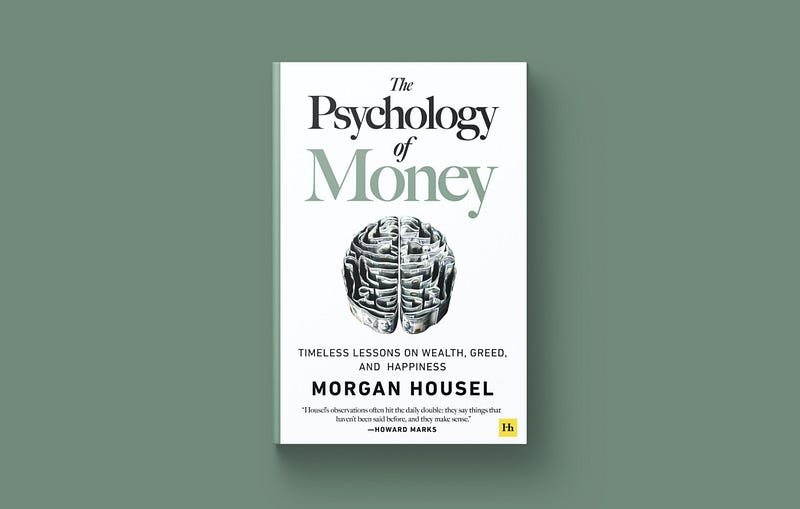
Confession time: I am among the two-thirds of Americans that are “financially illiterate.”
I didn’t grow up with sound financial role models, and it’s not like public schools teach you about mortgage rates, EFTs, 401Ks, or the dangers of high-interest APRs (at least none of the schools I attended covered this).
I’ve held down a job since I was legally eligible to work (14 years old, unless babysitting and paper routes count, then it’s 11), but no one thought to teach me the importance of savings, investing, and frugality. I graduated high school in 2001 with no college fund and a soul-crushing need to get as far away from “home” as possible. So, that’s what I did. I jumped into the world of full-time, minimum-wage work (after one failed semester of community college, but that’s a longer story for another day) and have more or less been supporting myself and living paycheck to paycheck ever since.

Fast forward to July 2022, I had the rug pulled out from under me when I was laid off during my work day via Teams meeting, nice, right? Shortly after that, my husband (who had also been laid off months prior) and I received a notice that it was time to renew our lease, and by the way, it’ll be at an increase of $600.
We were struggling to find employment, and it was making it impossible to find a cheaper apartment because no one accepts tenants without proof of stable income. For a split second, it seemed like we were down to two choices: 1. Homelessness or 2. Moving back in with my father would have created a different kind of crisis (sorry, dad, I love you, but you know it’s true).
We received our Deus Ex Machina moment when, during an unhinged rage text I had sent to a group chat, a friend of ours came through with a potential job offer for me if we were willing to relocate out of state.
Hell, yes, we were!
In what seemed like a matter of seconds, we emptied our meager savings, cashed out what little stocks I had just started investing in, received a very generous Zelle transaction from my father and step-mother, said our goodbyes, packed up whatever belongings could fit inside our Ford Fiesta and moved halfway across the country to start over.

As the dust began to settle and I had a chance to take a breath, it occurred to me that even though we had miraculously landed on our feet, we were still sort of in the same spot we had been in when we left New York. The move had completely depleted our savings, added more to the credit card debt that was killing us, and we were still living paycheck to paycheck. It wasn’t just the location of our lives that needed to change, the way we handled our finances needed adjusting as well. I had to acknowledge that I was devoid of financial know-how, and if I didn’t get a grip on it now (should have been yesterday), whatever future I was heading into would ultimately end with me working until I died from some illness or condition I couldn’t afford to treat. That’s how The Psychology of Money: Timeless Lessons on Wealth, Greed and Happiness by award-winning author Morgan Housel ended up on my kindle.
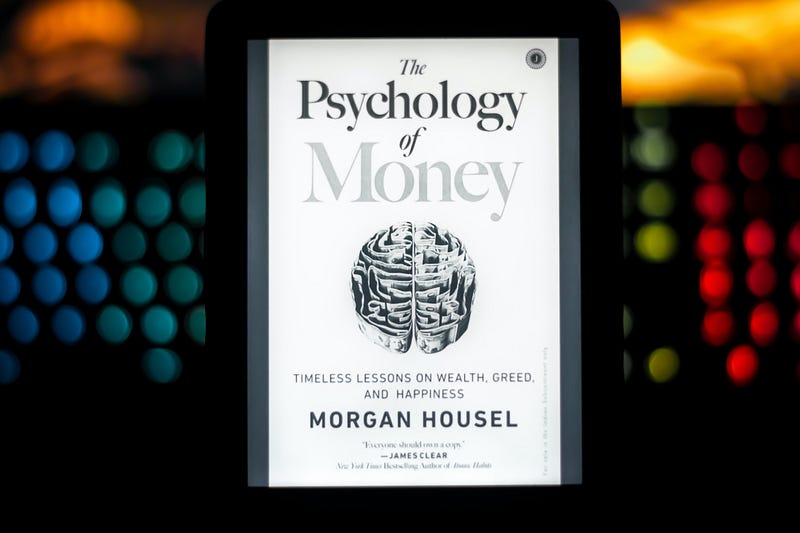
In his book, Housel offers short stories, anecdotes, scientific data, and history lessons to provide an explanation of the seemingly infinite ways we humans approach our money and finances. In each chapter, he also provides his own insights to consider, which teaches the reader how to make sense of one of life’s more intimidating topics and how to make better financial decisions going forward (assuming you need to).
I have several other finance titles lined up in my queue, but if you’re like me and find yourself overwhelmed and drowning from your own financial illiteracy, this book is a good starting point. Housel takes an informative and non-judgmental approach to explain why we are where we are and stresses that this is not a unique problem, there are many other people in the boat with you. Throughout the book, he reiterates:
“We’re not crazy, we’re all just newbies…we all make decisions based on our own experiences that seem to make sense to us in a given moment.”
Another point to appreciate is that Housel’s insights don’t just apply to finances, they work for other areas of our lives as well, such as our relationships with others and ourselves, in summing up the book, he encourages readers to:
“Go out of your way to find humility when things are going right, and forgiveness/compassion when things are going wrong…what you probably want is respect and admiration. And you’re more likely to gain those things through kindness and humility than horsepower and chrome…define the game you’re playing [and]… respect the mess.”
If you stick with him, you’ll finish the book with a sense of relief; I don’t know about you, but knowing you’re not the only person on the planet still figuring this stuff out is helpful. It’s also a relief knowing that, as he states right at the beginning of chapter 2, “ Nothing is as good or as bad as it seems.” I take that to mean this can be a temporary problem and is very much a fixable one.
Housel not only offers methods and food for thought to becoming financially literate and independent, but he also offers you a way to be a better human overall. Do yourself a favor and add this title to your “Must Read” list.
You can find Housel’s book on Amazon (I’ll earn a small commission if you do), or if you want to purchase the book and support a good cause at the same time, consider using Semicolon Books in Chicago.


