
On the Origins of Inequity in America
Racism is an existential crisis of orientation
No event in recorded history has tilted the fortunes of humanity more than Christopher Columbus’s infamous voyage in 1492. “Discovery” of these presumed-to-be virgin lands signified an inflexion point of existential proportions for the Europeans. The first explorers thought they had been transported to the fabled Garden of Eden, describing the Caribbean as lands that were devised to meet man’s needs, where most of the trees were loaded with edible fruit. Later expeditions, however, woke European minds to a sobering new reality.
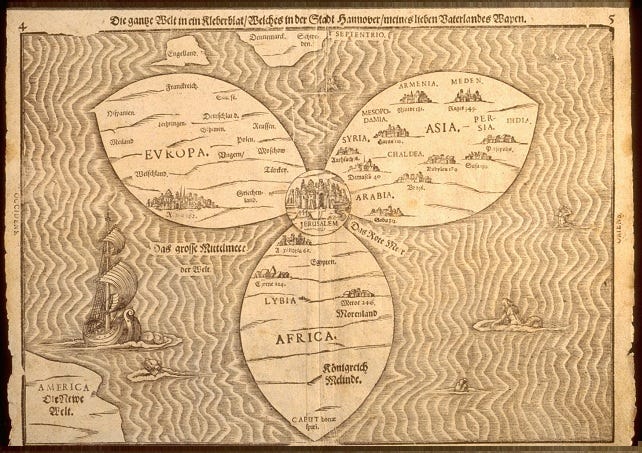
Hernan Cortes landed on the shores of what is modern-day Mexico in 1519. He was taken to what is now Mexico City, where he encountered a city, Tenochtitlan, and a civilization more sophisticated than his own. Up to this point, the European worldview was oriented precisely around Jerusalem as the center of the world. Europe, therefore, was a centrifugal force bent on enriching the Christendom. Columbus, of course, sought to find a shortcut to the Indian spice trade. However, he ended up stumbling upon a more advanced civilization, and forced his home continent into a crisis of orientation. Could it be that Jerusalem was not the center of the world, and what were the implications of such a reality?
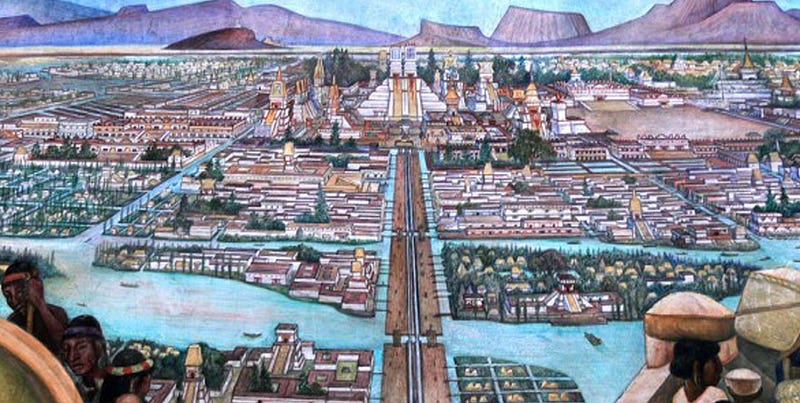
European colonists soon found out that the Native Americans were not willing to forsake their cultures in exchange for “civilization”. Early colonists also realized that they had to rely upon indigenous know how to survive the early years of settlement. Despite the general hospitality of the Native Americans, which enabled the first settlers to eventually thrive in North America, European consciousness would not allow itself to see indigenous peoples on equal ground.
Once slaves were imported from Africa in the 1600s, it became easier for the Europeans to distinguish themselves and the others based upon race. Africans were already deemed to be inferior, and it was easy to lump the indigenous peoples into the same bucket. By this time, the fate of humanity had already been sealed. The colonial powers were poised to exploit the newly discovered land in order to build vast fortunes for the empires back home while subjugating and dehumanizing indigenous and imported African populations.
For white people in this new world, the most effective tool for accomplishing human subjugation was through language. The idea that black and native people were lazy, savage, wild, and inferior began to take hold in the zeitgeist. For Europeans and their descendants, such an understanding between Europeans and others/whites and colored, needed to take place to keep the orientation that came to define European existence intact. Jerusalem, not Mexico City, needed to be at the center of the world, and white people needed to control all other people.
We, humans, living in 2020 are facing the brutal consequences of colonialism. The vile language of racism has directed violent actions against humanity, including the lynching of African Americans, segregation in the South, the deportation and separation of Latinx families, the imprisonment of Japanese Americans in concentration camps, mass incarceration of colored people, and police brutality of African Americans, to name a few.
This language of subjugation, which established a clear barrier between the colonizer and colonized three hundred years ago, has been shrewdly forced into public policy. In 1981, President Ronald Reagan’s Campaign Strategist Lee Atwater said:
“You start out in 1954 by saying nigger, nigger nigger. By 1968, you can’t say nigger, that hurts you. It backfires. So you say stuff like forced bussing, states rights and all that stuff. You’re getting so abstract now, you’re talking about cutting taxes, and all these things you’re talking about are economic things, and the byproduct of them is that blacks get hurt worse than whites”.
By the 1990s, the term “Super-predator”, used to describe black men, was widely used by President Bill Clinton to justify harsh penalties and prison time for non-violent crimes. Is it a coincidence, then, that we see a police officer put a knee into the neck of a black man for over eight minutes, and kill him?
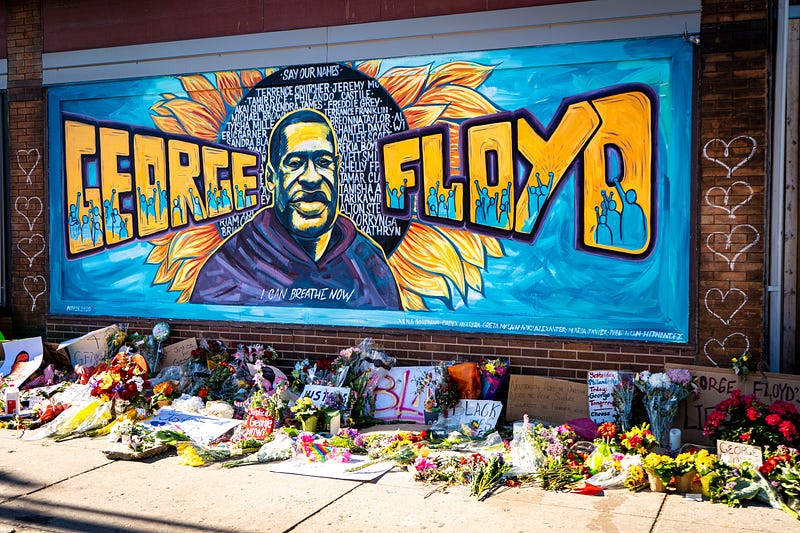
Where do we go from here? Protest and civil unrest in the aftermath of the killing of George Floyd have shown that Americans of all colors are exasperated with racial injustice. In the past, such unrest has failed at producing comprehensive changes to the unjust societal structures which literally trace its origins to the fabled story of Christopher Columbus.
Unfortunately for humanity, systematic changes to the way in which we live could be years, if not a lifetime away. However, the path towards a new way of living is clear. Society must begin to acknowledge, not deny, the truths which constitute who we are and how we came to be this way. For one, Christopher Columbus can no longer be celebrated as a hero and a cultural icon. Doing so denies the humanity in any American that is not white. Likewise, Confederate paraphernalia cannot be given a simple pass for “preserving heritage”, but rather defined as symbols of hate. Collectively coming to terms with history is by no means a solution to our problems, but it is a clear first step that humanity must take if we are to realize a more excellent way of life.