
Philosophy | Society | Life
On the Hyper-Simplification of Reality
Thoughts on the immediacy we live in
The age of obscurantism
It seems clear that we live, nowadays, in an age of obscurantism. Something that the covid-19 pandemic has only aggravated.
This obscurantism comes from the way we receive, treat, and process the information that comes to us about the world. In other words, this obscurantism is born from what it is to be human. The experience of the human.
Not being a philosopher, anthropologist, or sociologist, I am, in principle, a human, which allows me to say one or two things about it.
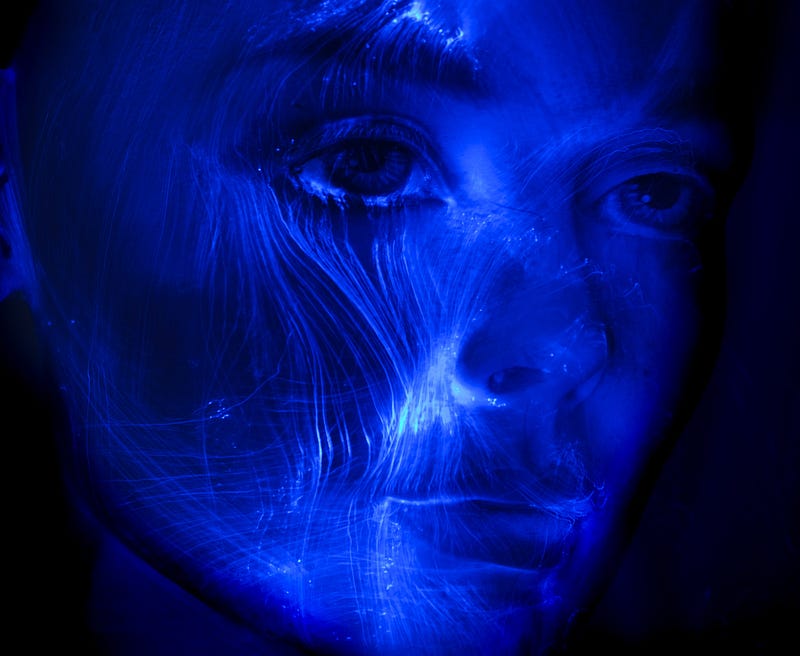
Do we have a “new human”?
The experience of being human has changed radically in recent years with the introduction and massification of the digital world, namely social media. As the name implies, the social experience between people has changed.
One of the differences that seem clearest to me is the immediacy that has been generated.
I was born in 1996. If I already thought that my generation and its “sisters” were people of instant gratification, with little waiting time to achieve a goal, the advent of social networks only intensified this situation.
And, obviously, as the human experience changes in the digital world, so does real life. This immediacy has taken over our lives and our interactions.
The problem of immediacy
Concentration on a physical conversation is reduced, with the eagerness to get to the moment of response to shine. The laughter will be the real-life likes of what we have said. We probably don’t even think much about the phrase, but we have to be sure that it is controversial enough to provoke reactions in others.
And our ego thus receives the massage that we have become accustomed to receiving in the digital world. Because social media has intensified the culture of the self in a way that I, at least, have never witnessed in 26 years.
Mark Zuckerberg says that his goal was to bring the world closer together, when in fact, and as far as the human world is concerned, it has only driven it apart.
I have the feeling that people have never before met so many people but, at the same time, have never felt so alone.
And alone because not only do they live in the culture of me, me, me, but they isolate themselves within a complex tangle of beliefs and opinions, a broth of subjectivity so deep that it creates a dissociation between the real and the imagined.
The concept of truth and the hyper-simplification of reality
Let’s think about the truth: today truth, the concept of truth, has fallen into disuse. Today there is subjective truth, each person’s opinion. This opinion is generated in a brutal hyper-simplification of reality. So, what is this hyper-simplification of reality, anyway?
Thinking costs a lot. It takes a lot of work and takes us out of the comfort zone that is to walking on an already paved path, even if it is a bumpy one.
We create preconceptions and formulate stereotypes that we then apply in a uniform way to the world, without taking the time to try to understand its complexity. The complexity of each thing in itself can lead us to grow. After all, we grow, I think, when we allow ourselves to step outside the form of beliefs and ideas that we are.
I am not, by this, passing a certificate of uselessness to the knowledge acquired. The fact that I know about the existence of the law of gravity saves my life, in that I don’t throw myself out of a window for fear of dying.
This is, by the way, a reason to accept that life is not a set of pre-defined solutions. We have to, at every moment, think, and reflect, to make the best possible decision, and even the concept of best is ours and defined by us.
The meaning of life
But when we hyper-simplify reality to the point of reducing it to an identity discourse (on both sides of the barricade), or reducing it to preconceived categories of subjects, because “politicians are all the same”, or “women are like this”, or “men are like that”, we fail in what should be human experience at its peak: a search for total understanding of the meaning of life.
And that total understanding, an unattainable dream of those who devote their lives to searching for a theory of everything, is a perpetual path of not reaching, something that guides us in the experience of being human to the very end, even with the notion that we will never achieve total understanding.
And perhaps it is in this paradox where the meaning of life lies: to seek perfection is to walk towards infinity.
Before you go…
Did you enjoy reading my story? How about becoming a member here on Medium? Your membership fee, only 5$/month, will give you the opportunity to read all the stories you want while supporting me and other writers to continue to bring you insights every day. Click here to become a member.


