
On the eve of changes
Or how an ancient Roman architect tells us designers how to embrace the future .
Along with the State of UX report, which reveals some prophecies about the metamorphosis of designers in the near future, I came across another article—a lyrical ode to the timeless masterpiece of the Vitruvian Man by the genius Leonardo da Vinci. This unexpected encounter, seemingly unrelated, was an interesting addition to the overall picture of the changes to come.
I am sure you have seen this drawing dozens or even hundreds of times. But do you know why it is called the Vitruvian Man?
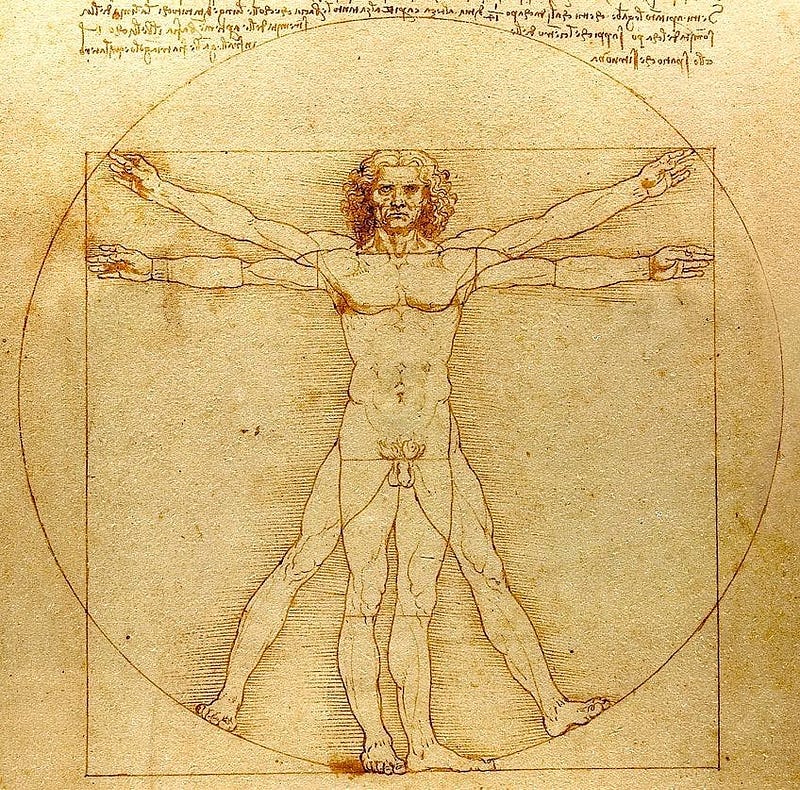
Marcus Vitruvius Pollio lived in Rome in the first century BC, served as a military engineer and artilleryman under Julius Caesar, fought and worked in what is now Spain, France, Turkey, and Tunisia. After his retirement, Vitruvius wrote ‘De Architectura’, a treatise that was part history and part guide to Greek and Roman architecture.
The ancient Roman architect Vitruvius considered human proportions to be the basis of classical architecture. And it was his notes that inspired Leonardo to create one of the most famous drawings in art history, and even gave rise to the Italian Renaissance.
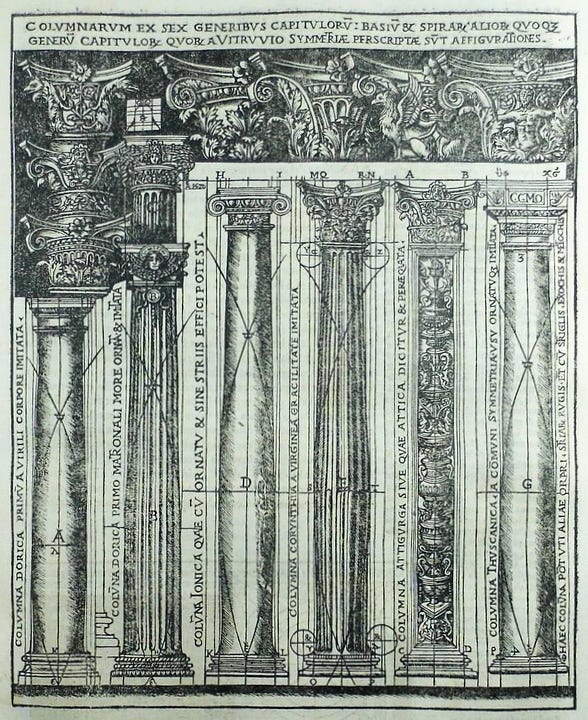
In his work Vitruvius argued that architects should be able to draw, understand art, know history, music, chemistry, astronomy, law, medicine, poetry, and philosophy.
Here are some quotes that support his claims:
“Philosophy makes an architect high-minded and not self-assuming, but rather renders him courteous, just, and honest without avariciousness.”
“Music is needed so that architects may be able to tune ballistae, catapultae, and scorpiones to the proper key.”
“The architect should also have a knowledge of the study of medicine on account of the questions of climates, air, the healthiness and unhealthiness of sites, and the use of different waters. For without these considerations, the healthiness of a dwelling cannot be assured.”
“And as for principles of law, he should know those which are necessary in the case of buildings having party walls, with regard to water dripping from the eaves, and also the laws about drains, windows, and water supply.”
As soon as I read these points, I immediately began to project them onto my own profession as a digital product designer.
Today’s technological evolution is forcing us to embark on a fascinating odyssey, navigating the ever-changing landscape of skills required by the new digital age. Think of it this way: at the beginning of our quest, we were trying to master pixels, developing our creativity and saturating the digital world with information. As we honed our skills, the canvas of our experience expanded, and we became involved in the complex process of designing not just beautiful products, but user-centered ones.
The journey continued, plunging us into the depths of research like a treasure hunt. We began to touch on psychology and sociology to ultimately create products and interfaces that are not just beautiful, not just easy to use, but that create valuable bridges between companies and customers, solving their specific problems in a clear way. Thus, our mission is to create products that are organically intertwined with users’ lives and provide solutions to their deepest dilemmas.
We’ve become specialists in transforming insights into interfaces that not only please the eye, but speak the language of human relationships and emotions. Our skills, once limited to pixels, now span the spectrum of understanding, transforming us into architects of experiences that transcend the purely digital and touch the essence of human connection.
Sounds pretty strong! It seemed that this was the end of the story, that the next chapter would just be a horizontal grinding of our skills. But no. AI tools have entered the scene, and once again we are faced with certain challenges.
What’s Next?
This question is particularly relevant today, as both UI and UX are being automated. Look at all the competition that is currently taking place around AI tools: ChatGPT, Pi, Midjourney and the recent (albeit scandalous) announcement of Google’s Gemini product, especially the amazing demo of creating a pretty nice UI. So there is no doubt that this is a short-term perspective.
And it is here that Vitruvius comes to mind, with his advice to architects to teach music and philosophy, and other sciences seemingly far removed from architecture. What areas might be of interest to us, given that creating interfaces themselves will only take a small fraction of our total working time. To answer this question, I have 3 ideas in mind.
1. Ethics
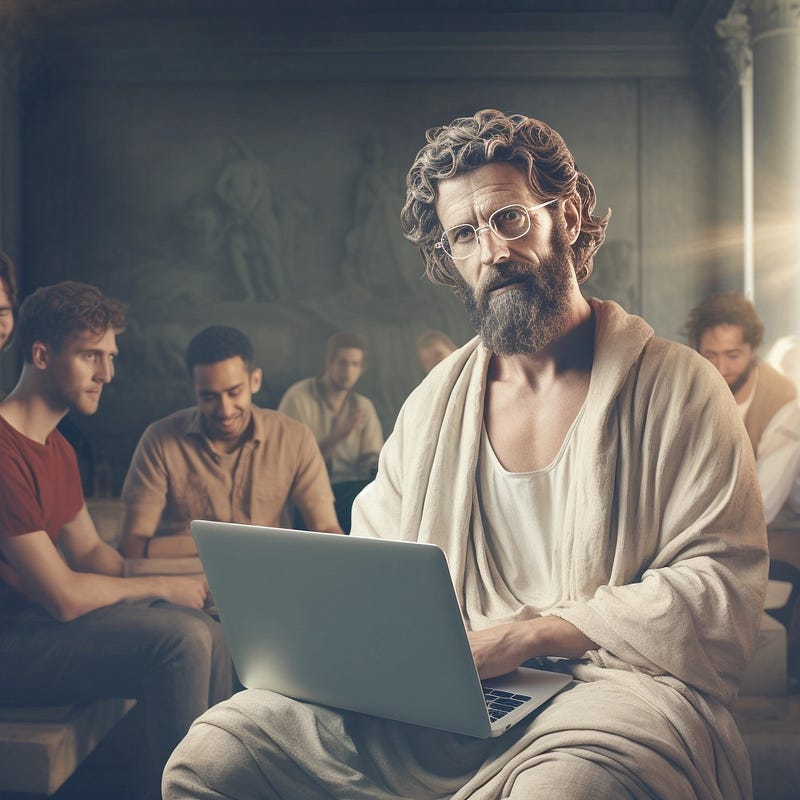
The battle against the insidious forces of “dark patterns” and corporate sirens that lure users into the clutches of profit-driven machinations is already well underway. So many times I have spoken out against unethical business practices at workplaces in my past, despite feeling like my voice was being ignored. It’s a constant struggle to balance doing what’s right and making a living.
But I was lucky. Philosophy was one of my main subjects during my Master’s degree. It helped me not only to broaden my mindset, but also to realize the value and importance of morality, social norms and the elusive movement between “right and wrong”.
The term was coined by Aristotle to describe a particular branch of “practical” philosophy, because it tries to answer the question: what should we do? Aristotle, the sage, crowned happiness as the noble pursuit of ethics, a euphoria achieved through self-realization. In this journey, self-realization becomes the artful navigation of rational action, a delicate dance that avoids extremes and embraces the golden mean. Therefore, the most important human virtue is moderation and prudence.
Now I’m revisiting my university textbooks on ethics. And as I dig deeper, I find the tools to articulate my choices and transform myself into an advocate for the sacred rights of users. Designers, the users’ ambassadors in the corporate world, find themselves in a pivotal role. In a tech world riddled with falsehoods and shrouded in dark patterns, we can use our skills to amplify the voice of the user, making it stronger and louder. In short, here are some of the ways that knowledge of ethics can benefit designers in their work:
- It enables designers to anticipate potential negative impacts of their work and mitigate those risks, thereby avoiding harm to users and communities.
- It helps designers make decisions that are consistent with the principles of fairness, transparency and inclusivity, promoting diversity and access for all.
- It enables designers to create products that are consistent with ethical values such as privacy, security and trust, and to build relationships with users based on respect and honesty.
- It empowers designers to advocate for ethical design practices and challenge unethical ones, driving change and innovation within the industry.
The journey begins, and I urge you to explore the How Design Designs Us series, a foundational series of works that unpacks the need for this vital skill.
2. The Law

EU Directive 2019/882 aims to create a common accessibility standard for essential products and services, including digital ones. It applies to manufacturers of computers and operating systems, ATMs, ticket machines, banking services and e-commerce websites and applications. The directive was adopted by the EU in June 2019, transposed into national laws in June 2022 and will be fully implemented by June 2025.
The US, Canada, Australia and other countries are taking similar steps to legislate the accessibility of digital products for users. However, there are still many entrepreneurs, product managers, designers, and developers in the technology industry who have never heard of these laws or, more interestingly, of accessibility.
But not knowing the law does not absolve you of responsibility. And although countries and their legislation do not keep pace with technological developments, you and your product could soon be sued if it does not comply with the WCAG standards.
- Netflix was sued by the National Association of the Deaf for not providing closed captioning on all of its content.
- Nike and Walmart were sued by a blind customers for not making thier websites accessible to people with visual impairments.
- Amazon was sued for not making its website and mobile app accessible to people with disabilities.
These cases demonstrate that accessibility is not only a moral obligation, but also a legal one, and that companies that fail to comply can face serious consequences. Knowledge of the legal framework that governs the quality and accessibility of digital solutions is therefore increasingly important for the creators of such products, product designers in particular.
3. Business and Entrepreneurship

As designers, we’re tasked with creating beautiful, user-friendly, thoughtful products and experiences. But what good is our work if it doesn’t support the bottom line? That’s where a deep understanding of business comes in. By learning the language of finance and strategy, we can align our design work with the overall goals of the business. This not only helps us make more informed design decisions, but also allows us to collaborate better with other teams and communicate the value of design to stakeholders. Speaking the language of business allows us to bring our unique perspective to the table and contribute to the growth of the business in new and meaningful ways.
I’ve learned to easily distinguish between designers at the beginning of their career and more experienced colleagues. The fact is that the threshold for entering the design profession is actually very low. Thanks to a variety of online tutorials, anyone can master Figma, for example, in a matter of days. A few courses from NN/G will give you the basic theoretical knowledge. Then just a bit more practice and you are a real designer. However, it’s crystal clear that a designer is still a novice when I see their strong emotional reaction to the need for a third, fourth, etc. iteration. They still see design as a linear process. But that’s not how business works. The business environment is dynamic: yesterday a competitor launched a new killer feature, our resources are severely constrained, or new investments are falling on our heads, etc. Managers will never (well, almost never) create new conditions just because they want to. It happens because of some changes that the business needs to embrace, and the only difference is that the designer doesn’t have this information in mind. They just want to finish the interface.
So, on a more substantive note, how does reading business books and attending business events can help you designers?
- Align design work with business goals and outcomes, which can lead to greater business success.
- Better understand the financial impact of design decisions, helping you to make informed decisions about how to use limited resources.
- Collaborate more effectively with other teams, such as marketing and product management, by speaking their language and understanding their priorities.
- Communicate the value of design more effectively to stakeholders, helping them to see how design can drive growth and profitability.
- You’ll be able to contribute to business growth in new and meaningful ways.
Vitruvius recommendations for architects to learn philosophy, medicine and music don’t sound so daft now, do they? In the same way, today we need to take a broader view of our responsibilities, bearing in mind the technological advances and the challenges that remain unresolved. And if we are to remain at the forefront of technological progress, we must heed the advice of the distant past to become more complex and balanced.
Thank you for reading! If you found this or any of my articles useful, you can support me on my Substack or by buying me a coffee 🤗