
On the Anniversary of My Friend (the Writer) Cai Emmons’ Death
What contemplating death can teach us about how to live
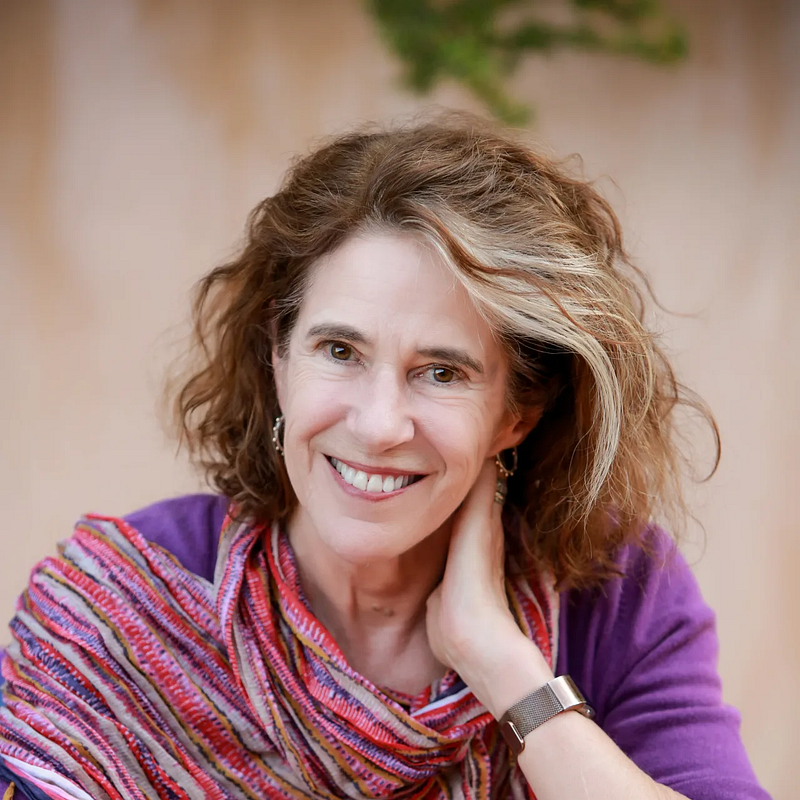
A year ago, my friend and mentor, Cai Emmons, died peacefully at her home surrounded by people she loved.
Cai was my professor in graduate school at the University of Oregon when I got my MFA in Creative Writing. At the time of her death, she was a successful novelist. But when she was my professor (more than two decades ago), she was an accomplished playwright and filmmaker who had just published her first (what would turn out to be award-winning) novel, His Mother’s Son.
Cai was a kind teacher who loved you and loved your writing. (Remarkable because this was not the approach many of my other writing teachers took, but that’s for another post.)
Cai held a baby shower for me in her home just after I graduated from the U of O. She was the first person to babysit my son, and a New Year’s Eve party at Cai’s beautiful home in Eugene was where I attended my first party after having that baby. So even though I hadn’t seen Cai in person in many years (she on the West Coast and me back East), she still held a special place in my heart.
Cai died after a long struggle with the ALS which slowly took away her functioning. What was remarkable about her death was that not only did she keep writing right up until the end, but how she wrote about her illness and the ways it was affecting her life and writing since her diagnosis.
To say that reading Cai’s posts allowed me to experience the 10,000 joys and the 10,000 sorrows of life all wrapped up together is not an overstatement.
And with Cai, it was never about her ego. It was just act after act of generosity. It was Cai’s posts here on Medium that inspired me to start posting, myself.
At one point, I was so moved and amazed by what she was doing that I messaged her to say she reminded me of another beloved teacher who passed away the year before (though not one I knew, personally), Thích Nhất Hạnh.
She was flattered by the comparison with this world-renowned teacher, author, and peacemaker. But I think more than that, she realized what she was doing with her blog posts was remarkable.
And what she was doing was remarkable.
The LA Times wrote a lovely tribute to Cai, underscoring that, through her blogs, Cai taught us about how to die. But to get the full effect you should read Cai’s posts for yourself.
Her final, beautiful post (published just a week before her death) is all about wrapping up a life (to the extent that one can). And it’s about the delusions we toil under thinking we can control more than we actually can, and the neverending struggle to let go.
“Most people, in that moment, don’t want to leave. It takes resolve and concentration, almost like giving birth.” ~Cai Emmons
But, in the end, Cai was able to give up control, taking the biggest leap of all: into the unknown of death.
All this got me thinking about the relationship between death and art.
When Cai died, I had been doing a “contemplation on death” practice with another teacher, Bhikkhu Analayo. This practice focuses on turning toward the truth of our mortality, not as something abstract that might happen out there in the long away future, but as something sure to happen, we don’t know when, and it could be now.
Practicing this way, we turn toward our shadows and free up the energies we would usually spend running from our fears and sublimating our emotions. Turning toward what’s most frightening (the truth of our mortality) is upsetting at first. Most people spend their entire lives trying to avoid it. Cai understood this.
“Much of our lives are devoted to pushing back against such entropy — shoring up buildings and our own bodies against their inevitable collapse. For a while it works, but in the end it’s a futile task.” ~Cai Emmons
But then it turns out to be a relief.
When we turn toward what’s scaring us and look it in the face, all that energy of fear is freed up to go elsewhere, into being kind and compassionate to oneself and others. Into gratitude. Into appreciation. Into focusing on what’s really important, instead of shoring up our defenses, distractions, and egos.
“Contemplation of death” is a traditional Buddhist practice outlined in the Satipaṭṭhāna Sutta, the discourse on establishing mindfulness. And this is what Cai was showing us how to do with her blog posts (let’s call it “blog practice”).
“But since I spend a certain amount of time every day thinking about death, and because I’ve made it my mission to normalize it, I must keep writing about it.” ~Cai Emmons
Turning to face the facts of her life and illness and her impending death with curiosity, and being willing to share what she was discovering with the rest of us, she not only freed herself to move towards the inevitable with love and grace, but she helped to free the rest of us by lighting the way.
To be clear, these posts were not all sunshine and roses and everything will be fine. These were honest posts that weren’t afraid to face the frightening truth of what was happening to her with dignity and curiosity and a lot of love.
“And, on this publication day, I see myself in those flowers. I’m not done yet. I’m still trying to eke out yet another bloom even as my limbs and hands weaken. I hope other members of my species will notice. It is yet another experience of feeling a connection with both the living and the dying.” ~Cai Emmons
I think it might be Cai’s love (including her self-love) that came through most powerfully to me and which allowed her to turn towards herself and to share so openly and vulnerably with others. She didn’t waste her energy beating herself up. She wasn’t wasting what time she had lashing out and angry. Not just because that’s not who she ever was, but because she could see her time was precious and she didn’t want to waste what energy she had.
“I will die as I have lived, saying yes to everything, trying to bring closure despite knowing that neat endings are an illusion.” ~Cai Emmons
This is the lesson “contemplation of death” practice is trying to teach us. If we were to turn and face the truth that we are dying — as Cai did — perhaps we would stop wasting our time and energy being hateful and harmful, or distracting ourselves with unnecessary pleasures, grasping for things that will bring us only temporary relief, and, instead, start living love.
I know this doesn’t work for everyone because some folks can’t stop clinging to their idea of self. They keep trying to shore up this thing they believe they are (the self), when there is no evidence that this thing exists. I think Cai understood this. She let go of her small self and went forward, confident and knowing she had lived a life full of love and being love, and that ultimately she was part of something much bigger, and that the real impact we can have in the world comes through what we send out into the world. That this is our real legacy.
“I hope my words do have consequence after I die. I’m not talking about entering the canon, but I’m hoping there are ripples at least for a while.”
Thank you, my friend. Thank you. I miss your love and your light. You are an inspiration and your ripples are still being felt.
Thank you for your kind attention. 🙏🩵


