
On Perspectives of Truth
On truth existing as a concept only through human understanding.

Understanding the nature of truth stands as one of the more fundamental epistemological problems of philosophy.
This is because determining the place of truth as something that is only internally present within human thought processes or reasons or something else that is somehow essential to reality and instead completely distinct from our own thoughts in turn informs how and what we can know.
These insights regarding truth represent what Bertrand Russell uses to explain the value of philosophy in defense of those would criticize it as having no practical application.
- Russell argues that truth must exist independently of the mind by highlighting the conflict between the universe and ourselves, saying we are “impaired by dominion” in reference to the effect of our senses in creating reality.
- Meanwhile, those such as Nietzsche see an even greater issue with truth because he believes that there is nothing to ground our assumption that truth has to exist within reality or as some property of it.
In Nietzsche’s 57th aphorism from The Gay Science, he gives a scathing and sarcastic critique of the realists’ strong sense of grounding in reality and empiricism, stating that
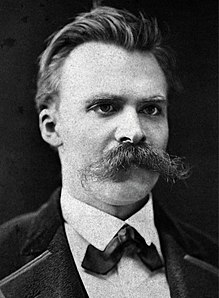
“There is no reality for us — and not for you either, you sober ones…”
Meanwhile, Hobbes argues for a similar view of the inability to confirm truth in his comparison of reason to mathematical sums and how in the end
“…he does not know any thing; but onely beleeveth”
However, the Nietzschean view better grasps the problem and expresses it much more clearly between these writers that separate human truth from reality.
This examination affirms the Nietzschean view that truth must exist as a pure construct of the human mind and that our assumption that it is anything independent of that is in itself a grave prejudice, one that Russell tries so hard to escape.
Primarily, it is valuable for us to better understand the positions of each philosopher before comparing them and making judgments about their accuracy.
Consider Russell’s viewpoints regarding the nature of truth and its exploration as expressed in his work Problems of Philosophy. Russell denounces realists in the sense that he argues against those who stress importance of grounding ideas in empirical experience that:
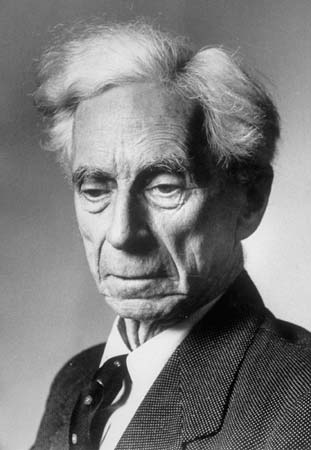

“…many men, under the influence of science or of practical affairs, are inclined to doubt whether philosophy is anything better than innocent but useless trifling, hair-splitting distinctions…”
In arguing against the realists and those who value practical application above all else, Russell paints these individuals as “materialists” and attacks them for their narrow views, characterizing them as a sort of slave to their own prejudices and beliefs, unable to escape what their common sense dictates. This perspective is illustrated when Russell describes the life of a man devoid of philosophy:
“The man who has no tincture of philosophy goes through life imprisoned in the prejudices derived from common sense, from the habitual beliefs of his age or his nation, and from convictions which have grown up in his mind without the co-operation or consent of his deliberate reason.”
Here, Russell describes his very bleak view of individuals without critical thought, capturing the whole of their behaviors as consequent from habituation. In other words, individuals without critical thinking or without the capacity to philosophize are simply and completely subject to trust, believe, and behave based on what they are accustomed to doing. By showing the problems of a life without philosophy, Russell intends to capture the key benefits of philosophy.
However, while Russell denounces those who stress practical application as having more value over the value imparted by philosophy in expanding the possibilities of the thoughts an individual can consider, he also assumes that there does exist a truth independent of human perceptions and that is based in reality.
Again, Russell highlights philosophy as a way to better control and streamline one’s thoughts and desires, freeing the person from assumptions and behaviors of habit:
“The knowledge it [Philosophy] aims at is the kind of knowledge which gives unity and system to the body of the sciences, and the kind which results from a critical examination of the grounds of our convictions, prejudices, and beliefs”
Yet, this is also the moment where Russell’s assertions go awry, because he assumes there is a true way to see the world and a way where one sees a reality colored by their prejudices and which philosophy endeavors to free the ignorant individual from. Consider how Russell characterizes our senses and the conflict between how we passively impose order on the universe:
“Knowledge is form of union of Self and not-Self; like all union, it is impaired by dominion, and therefore by any attempt to force the universe into conformity with what we find in ourselves. There is a widespread philosophical tendency towards the view which tells us that Man is the measure of all things, that truth is man-made, that space and time and the world of universals are properties of the mind… This view, if our previous discussions were correct, is untrue.”

In the above passage, Russell clearly states how he believes that our perception is in itself a judgment and a prejudice, and that beyond these perceptions there lies some more fundamental truth to reality, even if we cannot access it. To Russell, to free ourselves from the prejudices that we are capable of understanding (those of our thoughts and behaviors, and not our sensory construction) is the goal of philosophy.
As stated before, Russell’s view is problematic because it makes the assumption that there is some truth that actually exists outside of the human perception, and does not provide a basis for why we should assume or believe that. In his work, The Gay Science, Nietzsche speaks at length about how this uncertainty is what ultimately shapes his views that truth is dependent on our perceptions, not independent from it.
In the Nietzschean stance, the concept of truth is a construction completely unique to ourselves as humans, and he justifies this from an evolutionary standpoint, pointing out the distinction of true and untrue as a binary arising out of circumstance:
“Through immense periods of time, the intellect produced nothing but errors; some of them turned out to be useful and species-preserving; those who hit upon or inherited them fought their fight for themselves and their progeny with greater luck…Further, even in the realm of knowledge those propositions became the norms according to which one determined true and untrue… Thus the strength of knowledge lies not in its degree of truth, but in its age, its embeddedness, its character as a condition of life.”
Nietzsche’s understanding of truth or rational thought as a function of an evolutionary process in the advantages it brought to those who possessed it demystifies our understanding of it, and grounds it in something as natural as the reason for our own existences.
In other words, it gives us a reason to believe why truth is something inherently human and dependent on our existence, rather than something independent of our own perceptions and that exists as a fundamental part of reality, even if we cannot grasp it due to our inherent limitations.
Truth exists only in human minds because it has arisen as an adaptation fulfilling a need to survive, a “condition of life”, and because its quality and strength is refined over time and not by the degree of how “true” something appears.
Moreover, Nietzsche even explicitly defines and expands on this biological grounding for why he believes that truth stands as a uniquely human phenomenon in his work On Truth and Lie in an Extra-Moral Sense. He writes describing human intellect as something “aimless and arbitrary” when compared to against the backdrop of what else exists in nature, and that there should be no reason why something as coincidental or marginal as a human’s perception of truth should be held to be in such a grand and encompassing position in relation to the whole of reality itself. He writes treating intellect as this:
“For this intellect has no further mission that would lead beyond human life. It is human, rather, and only its owner and producer gives it such importance, as if the world pivoted around it.”
Nietzsche’s argument arises from a consideration of why intellect exists, and the strength of his argument relies on describing truth as a human capacity rather than something independent of humans due to the development of truth as a means to survive, a suitable justification since it provides keen reasoning for the relationship between truth and reality. It shows how reality shapes human truth, and not the other way around.
Meanwhile, Hobbes also presents a very basic expression of this Nietzschean idea of truth as independent from reality, but does so with less grounding and through more comparisons, which make his argument slightly less reliable. Hobbes only is able to point to the variation in human truth as a way to demonstrate how its inconsistency is uncharacteristic with the consistency of reality:
“For though the nature of what we conceive, be the same; yet the diversity of our reception of it, in respect of different constitutions of body, and prejudices of opinion, gives every thing a different tincture.”
He characterizes reason in a similar way, in the sense that he touches upon the issue of imposing such an unreliable human concept such as truth onto reality, but does not explain why truth is so inconsistent with the depth that Nietzsche does.
Ultimately, from these considerations, we see how a Nietzschean view of truth is the most grounded since it attempts to describe the origin of our cognitive faculties and explain inconsistencies and the nature of truth from that point forward.
It is superior to Russell’s view in that it does not make assumptions regarding the universality of truth, even if separate from human senses, and superior to Hobbes in its explicitness and clarity.