My Father Rescued me From Being Buried Alive at Birth
Meet a man who pushed against poverty, gender, and cultural norms to be a great dad.
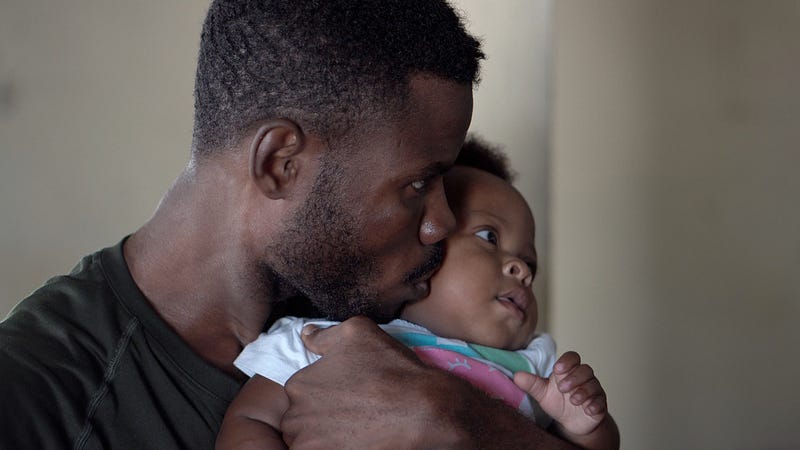
Love and integrity gave my father, a tribal man in Kenya, courage to push against strict cultural and gender norms to rescue me from a near fatal birth, illiteracy, and, in later life, becoming a victim of racial stereotyping.
His rescue of me from death at birth still gives me goose bumps. In rural Kenya where I was born, lack of ultrasound machines meant inability to determine foetal parity during pregnancy, so that my mother didn’t know she was carrying twins.
My twin brother was delivered first. Half an hour later I tagged behind his placenta. With no other baby expected, and to seal my unlikely fate at life, I came out still cocooned in my amniotic sac. This made me appear more like a thing to be disposed of and less like a baby to be swaddled, cuddled, and cared for.
The women attending to mama placed both myself and my twin’s placenta on a woven tray and were carrying it outside to dig its contents into the ground. They thought mama must have had a strange growth which had mercifully neither harmed the live child nor impeded its delivery. In their duty of care, they carried me off towards an early grave.
The presence of a village man at a birth is almost unheard of even today, let alone in the ’80s when I was born. But father, having long decided to be present when life begins, met my ‘undertakers’ at the door. He had witnessed a few births by now, and knew what a placenta looked like.
He took the tray from the woman to study this strange placenta that he had never seen before. On seeing it move, he pricked it with his fingers, bursting the amniotic sac to reveal a tiny little human. Due to poor nutrition, village babies tend to be small, and doubly small for twin births.
Had my father delayed from wherever he was, my little form would probably be under an acacia tree in Kenya, not be behind this screen. In fact, had he been too much of a village father to join in the ‘women’s’ business of attending birth, I would have been unknowingly buried at birth. He came in time however, by God’s mercy over my life, to rescue me from becoming the victim of a very grave mistake. A mistake of ignorance thanks to illitracy.
Unlike village fathers, he personally cared for my myriad of skin problems in childhood — cleaning, bandaging, ointment applications — all of which were a mother’s responsibility. The reality was that, most village fathers wouldn’t be aware of what their daughters wore, ate, or suffered from. Tribal specifications of gender roles relegated house chores and serving children as tasks too mundane for men’s lofty social standing in our patriarchal culture.
My father had not been poisoned by the insecurities that made village men lazy and detached from parenting or chores, in fear of being chided by their peers for engaging in ‘feminine’ tasks. He was the only village husband I knew to split wood for his wife. Later in life, I was very surprised to find that in all cowboy movies, splitting wood was a man’s job. I wondered how these pistol wielding men could engage in ‘feminine’ tasks and maintain such courageous cowboy flair at the same time. Why didn’t anyone tell the men in my village?
Baba put me through school with sheer determination, loving hope and nothing in his pocket. He would say: “I’ve managed to save enough money for bus fare to your school in the big city this time. Fees may follow later, I don’t know. But go. They may send you back for lack of school fees, but at least go. They will see you want to learn and may let you stay.”
Sometimes the school let me stay. Other times I would be sent me home for weeks at a time, but Baba would not give up. His family advised him to remove me from the costly city school to a cheaper one close to home, but he would not hear of it, saying it would be unjust. I had worked hard to gain admission into the most prestigious girls’ school in the country and there I would stay, he said, and stood by it.
When it was time to join university, the school held back my examinations’ results slip, owing to some fees arrears. My dreams crumbled. I could not register for my degree without that results slip. It was my father to the rescue again.
He appealed to the school’s principal by pointing out that all her generosity of high my school years would be wasted if I couldn’t get a degree. That the only chance she had of recovering the debt, was to let me have the precious piece of paper, and get a degree, so I could get a job and pay up. His persistence wore her resistance thin. She released my ticket to university, my gateway to the present.
My most beautiful memory of my father was waking up to the sound of his voice, praying out loud. My mother thought me lazy to not wake up to the kitchen duties before the men, like a good village woman, while, in truth, I was waiting to hear Baba pray before going out to the cooking hut. I felt as if nothing could harm me or stop me with his prayers resounding in my mind.
I never hugged my parents. Hugging is a what we villagers call a ‘dot com’ phenomenon engineered by the young. The question of whether or not I was loved crossed my mind either. I thought we were all just living the village way, its awkwardness aggravated by complicated albeit unspoken social rules on gender segregation.
How then could one talk of love to one’s parents? I suppose I did not know that Baba loved me. I did not think of whether I loved him. I did not think of love at all. But I knew that he believed in me and trusted me, and I did not wish to break that trust, for any reason.
When I introduced my would be white husband to my parents through a single photograph, my mother resisted the idea of marrying across the ocean, where she couldn’t protect me or ensure I was treated well. She was afraid of white men, and with good reason — her only experience of whiteness being the British colonial rule, whose treatment of the locals was not a model of kindness.
Mama must have imagined colonialism to be what marrying a white man must be like; being treated as less than, as property, as a servant. Her fear was therefore a loving fear, the instinctive kind that springs up to protect and, therefore, very beautiful. But it was my father who persuaded her to give me her blessing and let me go.
Shortly before I got married, I heard second hand from my fiancé that my father told his family I was kind, compassionate, and very good with money. I had been certain of what he thought of me as a student, but nothing of what he thought of me as a person. These words were therefore unexpected, but very affirming. Because compliments, words of endearment, and affection, are far from the norm in the village home.
One of the most special gifts my father gave me was marrying me off to a supposedly wealthy white man, without a dowry. To a villager, the notion of a poor white person is absurd.
In village thinking, whiteness is synonymous to wealth, a lot of wealth, and marrying a white person is likened to winning the jackpot. Accordingly, my dowry was set to break village records.
Having been informed by an unsuspecting child of the exorbitant amount that was being set as my bride price by the ‘dowry committee’, I appealed to my father to intervene.
In my country, asking for too much dowry, especially for an educated daughter, is common practice. Dowry is oftentimes a tense subject for the groom’s family, as many a bride’s family has been known to obstruct the wedding, unless the groom pays ‘x‘ amount of money to ‘unlock’ the wedding. I fail to understand whether it is out of unkindness or greed.
My set dowry however, was unreasonable, even if I am educated. I told my father that if so much dowry was paid for me, then it would feel I had been sold, that I really was property and deserved no voice in my marriage. I do not know what I expected, because in my culture, bride price is not the father’s decision to make.
But Baba honoured my request. He silenced the greed erupting in the hearts of some at the dowry negotiations table to ease my discomfort, and preserve his relationship with his future son in law. He displayed such integrity and courage to defy tradition, helping everyone see that relationships are not built on money, and greed is one’s own undoing.
More than that, by marrying off an educated daughter to a white man without a dowry, my father exemplified that contentment is not borne out of plenty, and that, the supposedly wealthy white people are just people, who appreciate consideration like everyone else. Baba was truly a villager ahead of his time.
Sadly, a short twenty months into my young marriage, we would lose Baba to cancer. How was I to know that the happy events surrounding my wedding would be the last time I’d see him in this life? But I have beautiful memories to hold on to.
August this year marked eight years since my father died, and my grief has mellowed from an emptiness to a sadness to a longing. A longing I cannot express.
As I reflect on these experiences among others, I celebrate my father. From the womb, to my ill health in childhood, to my education, to marrying me off to a foreigner he barely knew, my father was my rescuer and the champion of my future. His life is still rescuing me from fear of people and from hiding behind ignorance. Perhaps I can attain the same courage and integrity as he did, through life transitions.
A special acknowledgement to my siblings reminiscing on these our collective memories. Baba fought for all of us. Grieve in love, for you are loved.
To dear Mama who will not read this because she cannot read, we read for you too. Indeed, we will continue to read from you who has tenderly carried us, together with these memories, so close to your heart. Stay anchored in grace and God’s comfort.
My heart celebrates Baba, with love and gratitude. Rest well in our Father’s Light.