
The Nuance
On ‘Hurry Sickness’ and the Power of Slowing Down
Hurrying, which so much of modern life encourages, may promote nervous system dysfunction and health problems.
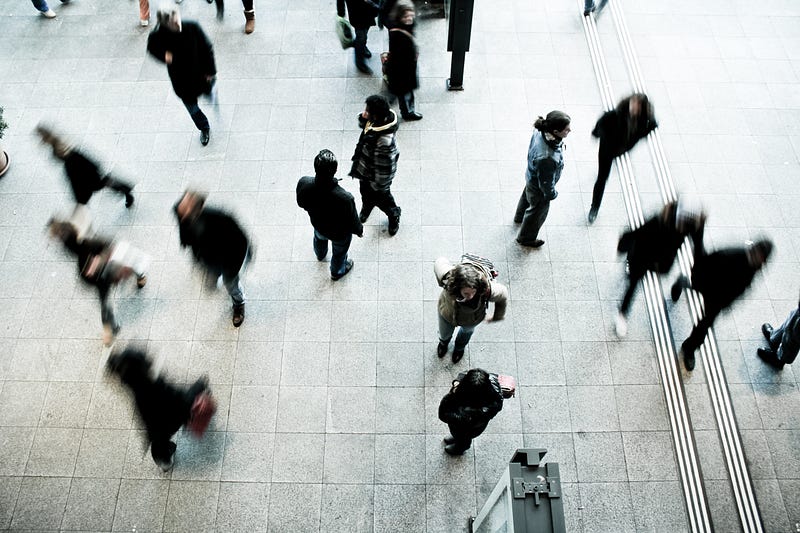
One of the best things I’ve read recently is this “On Slowness” piece from Medium contributor Savala Nolan.
Nolan writes about a sandwich shop she used to visit in Italy and the gentleman who worked there behind the counter, alone and at his own unhurried pace. Everything the man did, from writing down a customer’s order to wrapping up a finished sandwich, was done “carefully,” “gently,” and, most of all, “slowly.”
“I understood that [his] slowness was an offering of love, and very beautiful,” Nolan writes. “Such thoughtful — even chivalrous — slowness feels rare now.”
Life today feels perpetually rushed, and much of that rushedness is intentional. We go fast so that we can get more done, because getting more done = being more productive, which of course we must all strive to be. Less isn’t more; more is more. The tortoise only beats the hare in fables. Or at least that seems to be the prevailing ethos.
I think some of modern life’s pace is also a byproduct (or maybe a bug) of our favorite tools and toys.
Typing and texting are inherently quick, and online reading encourages scanning, not immersion. The internet knows we’re only stopping by for brief “checks,” not leisurely visits. And so it moves fast, encouraging us to keep up (and check back again soon).
Friedrich Nietzsche, noting a change in his prose after he switched from a pen and paper to a faster typewriter — a new invention at the time — observed that “our writing equipment takes part in the forming of our thoughts.” If our technologies are continually urging us to speed up, our minds and behaviors are likely to follow orders.
I’ve noticed this in myself. After spending a lot of time reading and replying to emails, I sometimes feel like a videogame character that has absorbed some kind of speed token; my thoughts race, I talk faster than usual, and I feel almost twitchy with tension. All of these are symptoms of increased activation of the sympathetic nervous system (a.k.a., the fight-or-flight system), which kicks into high gear during periods of stress.
I doubt I’m an outlier. While there’s surprisingly little research on the effects of different online tasks on nervous system activity, research in the journal PLOS ONE has found an association between problem internet use and heightened sympathetic activation. Chronic sympathetic activation (which is what happens when we’re chronically stressed) is associated with pretty much every malady that plagues modern humans. Cancer, hypertension, obesity, immune dysfunction, insomnia, depression, and anxiety all become more likely when a person’s sympathetic nervous system is continually ramped up.
I don’t think fast is necessarily a problem. (Exercise is often fast, and it’s associated with improved regulation of the sympathetic nervous system.) Instead, I think it’s hurrying that gets us into trouble. You can move quickly without hurrying. But spending too much of your life in rush mode — when your brain and body are trying to go go go — seems like a unifying risk factor for mental, metabolic, vascular, and endocrine dysfunction.
Slowness, on the other hand, appears to be an antidote.
Pick an evidence-supported form of stress or relaxation therapy — meditation, mindfulness, yoga, tai chi, progressive muscle relaxation, gardening — and you’ll notice that slowness is a feature. All of these activities promote reduced sympathetic activity and increased parasympathetic activity, which is often described as the “brake” on the body’s fight-or-flight response.
I don’t think we all need to take up yoga or meditation to capture these benefits (although both are great). I think these practices have become so popular because they counteract the freneticism that has pervaded modern life. An alternative remedy — easier said than done — is to go about your usual business at a calmer pace.
I’m working on this myself. I’ve noticed that, often and for no good reason, I simply don’t give myself enough time to get a thing done without rushing it. I leave for appointments at the last minute, building in no time for traffic or other delays. Or I’ll try to pack three things into an afternoon, speeding through all of them with an eye on my watch, rather than picking one or two and saving myself that stress.
Why do I do this to myself? I’m sure part of it is constitutional — just how I’m wired — but I also think this drive to pack more in and get more done is cultural.
I’ve spent the last year in southern Germany, and my friends here all seem to go about their lives in a lower gear than my buddies back home. I’ve learned that meeting up for lunch is likely to be a two-hour affair, even on a busy weekday. It’s not that my German friends take long lunches every day. But if they’re going to meet for a meal with friends, they’re not going to rush it. If they didn’t truly have time for it, they’d skip the lunch rather than try to squeeze it in. I’m trying to learn from their example.
Around the midpoint of the last century, medical researchers were interested in a phenomenon they termed “hurry sickness.” Some described it as “an aggressive and incessant struggle to achieve more and more in less and less time,” and they believed this contributed to heart problems and encouraged an unhealthy emotional state.
“Hurry sickness” long ago slipped out of the medical lexicon. It may be time to bring it back.