
On Disney’s Live-Action “Mulan,” Fiction Fandoms, and “The Chinese Virus”: Interview with Jimmy Wong
“My songs point at a glaringly bright object in the distance that we’ve been woefully ignorant of for a long time.”
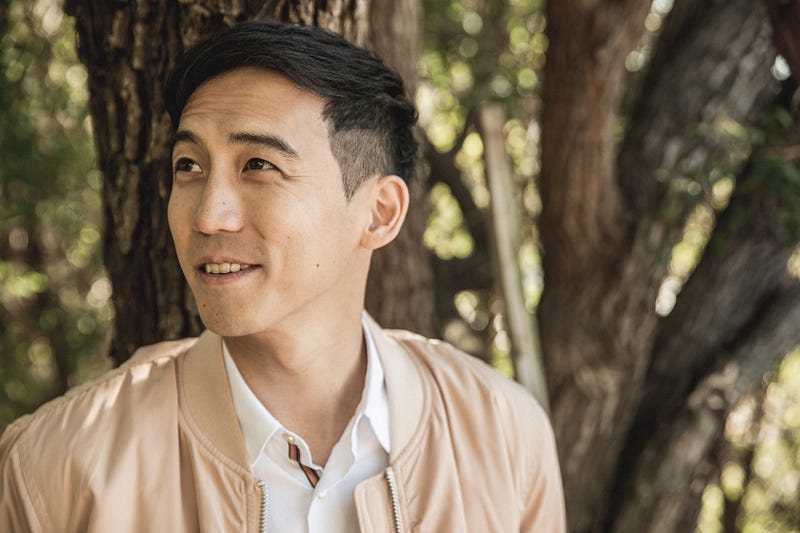
From his viral anti-racist YouTube music video, “Ching Chong: Asians in the Library Song” staged as a reaction to an offensive vlog, to starring in Disney’s upcoming live-action version of “Mulan” with an all-Asian cast, Jimmy Wong has built a career on Asian representation — his work, as he describes, is the “antithesis of gatekeeping.”
Countering the anti-Asian sentiments spurred by COVID-19, Wong recently released another music video, “The Chinese Virus,” using his trademark sense of humor to educate the public about the tactic of scapegoating without being too preachy.
Wong’s reach extends beyond his craft of music-making and starring in films and web-series including “Wish Dragon” and “Video Game High School.” Passionate about “nerdy and geeky” content, he has worked to “get more people involved” with his passions and politics, in addition to making others feel proud to be a fan or want to join a fandom.
As a co-host of “Polaris Primetime,” he has introduced viewers to the gaming world on DisneyXD. His innovative cooking show, “Feast Of Fiction,” has brought alive pop-cultural and fictional recipes from books, movies, comics, and video games, most recently publishing a cookbook, “The Feast of Fiction Kitchen: The Ultimate Fan’s Guide to Food from TV, Movies, Games & More.”
Over a video call, Jimmy Wong talked to The International Wave about content creation and social activism, his favorite memories while on the set of “Mulan,” and the ongoing hurdles of racial injustice and underrepresentation.
***
This interview has been edited for length and clarity.
Woojin Lim (WL): Tell me more about your upbringing and how that has contributed to your career.
Jimmy Wong (JW): I grew up in a traditional Chinese household. Both my parents immigrated from China in the 80s. For over a decade, my brother and I studied piano endlessly, and we would spend anywhere from one to two hours a day practicing. Music has always been a core part of what drives me creatively and what I love in life.
Filmmaking has also been a part of my DNA. Back in the mid-to-late nineties, my brother [now a director, Freddie Wong] and I would grab pool cues to film ourselves in Star Wars-esque lightsaber battles. Freddie would then rotoscope each lightsaber frame by frame, adding sound effects and visuals at a time before you could just press a few buttons on modern-day editing software to create the effect.
I don’t think I’ve ever shied away from the camera. Performing came naturally to me, and I never had to get over embarrassment. What I loved growing up and what I do now; they’re both pretty much the same.
WL: Could you tell us more about your YouTube music video, “Ching Chong: Asians in the Library Song,” in relation to your most recent song “The Chinese Virus”?
JW: The first song [“Asians in the Library Song”] was almost an afterthought. It was the third or fourth video I’d ever made on YouTube when I still wasn’t clear on the direction of my channel. But when the offensive video of a former UCLA student making racist comments about Asians rolled around in 2011, my brother encouraged me to speak out about it.
At first, I didn’t know how to respond, so I went towards my first instinct based on improvisational comedy training: my natural response was to take it in a slightly more light-hearted way. I had no idea that my response was going to catch the amount of traction that it did. To me, it was just a fun take on a way to respond to such a divisive video. I never thought that the song would become a signpost that people would look to in terms of using comedy to get over the fact that blatant racism is still apparent in the world.
Most recently, I made a video about the usage of the term “Chinese virus” as well as the numerous racial attacks targeting Asians across the world. Asians were blamed for an illness that had no nationality. For this video, I wanted to highlight a more educational aspect than just hammering on one person like the first video did. I wanted to focus on the tactic of scapegoating. There’s a lot more at play than the simple naming of a virus that ties into a deeper cultural impact that I don’t think a lot of people realized was happening.
WL: How does the message of your videos translate today in light of America’s ongoing fight against racial injustice?
JW: My songs point at a glaringly bright object in the distance that we’ve been woefully ignorant of for a long time. I look back at the songs I wrote and realize how they barely hold a candle to all of the problems that have now been dug up.
In light of the Black Lives Matter protests and the civil rights movement reigniting itself in America, what is important is to highlight the struggles that affect us all together as disenfranchised and marginalized peoples. Right now the focus is deservedly on Black lives as a minority group that has been more disproportionately affected than others.
The privilege that we have as Asians is apparent when you compare the ways that Black lives have been treated by police forces. Of course, it is unfortunate that Asians are wrongly targeted as people to blame for a virus, but there haven’t been decades of cops murdering Asians in cold blood in the streets and nothing happening to the cops.
I’m not saying that one group’s experience is entirely insignificant as a result. We shouldn’t downplay another’s suffering or prioritize ours. If anything, my point is that both Asian and Black experiences are pointing towards the same root issue in America. It’s not time for us to create borders between races, but to find ways to support each other, and to elevate the right voices in regards to what’s happening.
WL: How do you see your music videos as a vehicle of combatting injustice, if so?
JW: Music is one of many beautiful ways — alongside film and animation — to cut through the noise and present ideas that might be harder to bring up in conversation. Sometimes it is hard to broach a topic like racism without everyone talking past each other. Music has this seamless ability to filter into someone’s mind and change the way one might look at the world. I would love to find more ways to elevate the subject and approach it from a way that doesn’t immediately instigate backlash and defensive attitudes.
That said, I’ve always wanted to make sure I was speaking for something that I had an inherent connection to. In this time, I would much rather promote a Black voice in the community that has experienced these ongoing struggles first-hand and can speak truthfully to their experience.
WL: Switching gears a little bit, how would you describe the creative content — from music covers, podcasts, food shows — that you’ve made?
JW: My content is nerdy and geeky, based off of my long history in gaming, which is a huge passion of mine. I’ve had a “Magic: the Gathering” podcast for the past five years, and we’re at 300 plus episodes now.
What drives me to create content is the desire to get more people involved with what I love, in addition to making people feel proud to be a fan of something or want to become a fan of something. You might say that my work is an antithesis of gatekeeping. Educational content is a great way to bridge that gap between people who might not know anything about something to showing them a little more of a world that they may have been interested in.
That’s also why I make cooking videos to create recipes from television shows that you watch growing up in real life [“Feast of Fiction”]. Through doing that show, I learned how to cook and embraced my love of these fictional fandoms, listening to the community and hearing what fans wanted made.
By finding ways to cross-pollinate and integrate communities together, you are creating a larger, more inclusive and diverse fanbase of people that feel represented, but also feel proud to express their love for something that they truly do enjoy without feeling like they’re going to be shamed for it or locked out by a gatekeeper, because they’re not “real fans.” The key component to my content is that a lot of it is based in education and teaching, welcoming and bringing more people into the fold as opposed to excluding people.
WL: How did you start about your cooking channel, “Feast of Fiction,” and the cookbook you’ve published this past April?
JW: The original inspiration for the channel came in 2011 when I was sitting around the kitchen with my brother. This was after I released the “Asians in the Library” music video and I was looking for something new to do. I already felt the burnout from making music content because I was writing a song, editing, filming, editing, putting the video all together, and the cycle went on and on. Making a new video in a weekly cadence was brutal. So I wanted to find something that was a little more doable and series-based.
So around the kitchen table, my brother and I were asking ourselves, “what do we want to see that hasn’t yet existed in video form?” At that time, I thought it would be cool to make real-life food from video games, movies, animes, and books. Shortly after, I met my co-host Ashley Adams serendipitously, of all places, at Disneyland. She told me that she was also a baking fanatic and that she wanted to be an on-air personality.
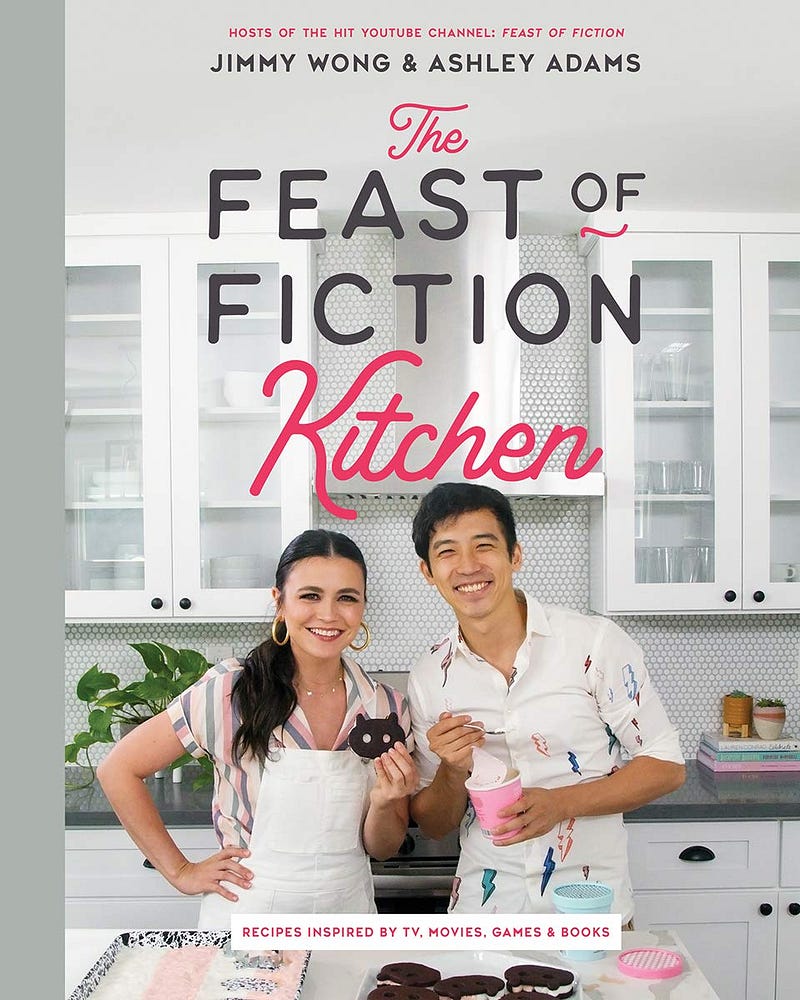
A common request on our channel was to make a cookbook that housed all these recipes. Over the course of two and a half years, we figured out all the legalities around making a cookbook, selected and tested the recipes we wanted to make, and finally did a two-week shoot where we got to make all the recipes and take pictures. Making the book was a long and intensive process, but it was a culmination of what we’ve been doing for a long time. It’s something I want to do again because making a book is a great way to immortalize your hard work and legacy in a physical medium that you can share with others as a gift.
WL: What are your personal favorite recipes from the cookbook?
JW: There’s a focaccia bread that we included as our new take on lembas bread from “Lord of the Rings.” There are many recipes for cakes and drinks, from simple to extravagantly complex ones. The book is great because when you open it, it almost feels like an art book. Each picture is its own world and has its own feel. I really love the photos and the art direction that went into the collection.
WL: After graduating from college, you moved to LA to launch a career in acting. How was it like starting off in the industry?
JW: When I first arrived in Los Angeles, my goals were clearly defined. I was trying to do something in the acting world out of college, and I wanted to be a part of the ecosystem that my brother created with all of his friends from his university days. I wanted to test out my ability as an actor, take improv classes, go out for auditions, and try my hand at this life. I knew I wanted to do something in the entertainment and creative world, and acting seemed to be the most intuitive thing to do when I first got to LA.
I told myself that I would give myself 15 years to try and “make it as an actor” before I would choose to do something else because I heard some story about Brad Pitt taking 15 years before he got his breakout role.
For my first year in LA, I went out on auditions after auditions. For three to fours hours a day, I would surf casting websites and submit myself for auditions, driving around LA and and racking up 40,000 miles on my car. Ultimately, I didn’t get that far. I got into a smaller movie, met a lot of great people, and joined the union, but that wasn’t anything close to what I had hoped to achieve. That’s why I started making YouTube videos — I needed a creative outlet. The greatest blessing of starting YouTube was getting involved in shows like “Video Game High School” while building up my presentational ability through guesting and hosting for other shows and channels.
As the years went on, I tried to audition for roles that were more significant. But back then, there just weren’t as many movies that needed Asians and the industry hadn’t reached the point where “Crazy Rich Asians” and “The Farewell” were mainstays of Asian representation in Hollywood. Eight years is about how long I had to wait before I got what I would call a “break,” and that was auditioning for “Mulan.”
I think I made the right choice, not just continuing to blindly pursue acting, but also to look more into what I could do as a creator and a creative. I’ve been able to do a lot consulting, hosting, you name it. It’s been a great outlet for me as an entertainer as opposed to just an actor, because I’d rather not box myself in one specific category. Had I not made that switch, I don’t think I would be anywhere close to where I am today. I’m glad that the internet provided an outlet for me to flex, test out new waters, and fail a lot but also succeed.
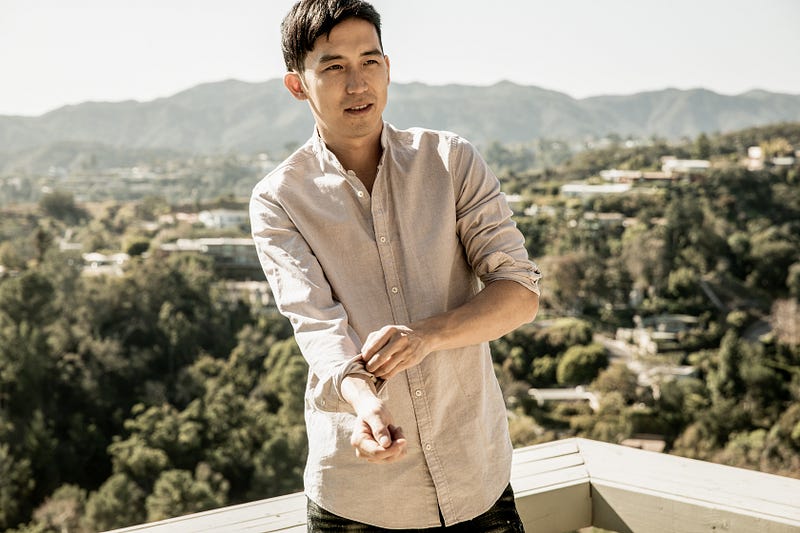
WL: You were cast as Ling in Disney’s upcoming live action film, “Mulan” (exclusively streaming on Disney Plus starting September 4). Could you tell me more about casting, playing Ling, and how it felt like to be on set?
JW: I remember hearing about the casting of “Mulan” happening about a year and a half before I went to audition for it. I told my manager at the time very bluntly that I had to get in the room for this. I felt like this is what I had been waiting for as an actor for so long.
My character “Ling” is a returning character from the original animation. He’s a man with his heart on his sleeve, the philosopher-type, the one who dreams of something else with his head in the clouds. I fit into a smaller collective of friends supporting “Mulan” and each soldier embodies a different quality to really flesh out the squad.
It was quite an experience to work on something of that scale. All the while, it made me yearn for the days where I had complete creative control because when you’re just a small piece in the big machine, sometimes you’re just ordered to show up, get ready, and wait for your turn to do your thing because you’re just one actor out of a five hundred person crew. There’s a lot of humility involved as well.
Taking part in a process that big, learning how to prioritize the right things, and seeing everyone working at that professional level was an experience that I’ll carry with me into all the projects that I do in the future.
WL: Any fond memories you had while playing the role, on or off set?
JW: We would always go for dinner together after we shot or trained for the day. I remember getting Korean barbecue with Donnie Yen and he was telling us at the dinner table about one of his friends who was a rapper. One of the cast members and I would beatbox and freestyle in our free time. We came up with a song on the spot for Donnie that he recorded on his phone, and he was touched and impressed. Those were fun moments to connect with people beyond the hierarchy that was naturally created on sets of that size.
WL: Why should theatergoers watch “Mulan”? Is there a message of encouragement you’d like to share with the audience?
JW: I hope that “Mulan” can come out when it wants to come out. Most importantly, I hope it’s released at a time when people are feeling safe and comfortable returning to the theater. “Mulan” is a movie that absolutely needs to be seen on the big screen. The cinematography, the landscapes, and everything done by Director of Photography is beautiful and gorgeous.
It’s an experience that will be super inspirational to many young girls growing up and representational for a lot of Asians. I think it’s a great foray into this world of Asian visibility. More projects like this will happen in the future if we show support for this one. The same goes for movies like “Crazy Rich Asians,” “The Farewell,” and “Tiger Tail.” Your ticket buying is a vote for more projects like these to happen in the future.
It’s important that we get as many people into the theaters buying tickets or doing whatever they can to support the movie. “Mulan” features a predominantly Asian cast with tons of living legends, and it’s something that I think is going to be really inspiring for the people who show up to watch it.
WL: Could you talk more about how your work ties into larger topics in Asian representation?
JW: I want to be a face for the Asian community, but by no means do I want to be the only face. In general, the things I want to do is to inspire other people to keep contributing and creating in a way that elevates Asians in the media and correctly finds our place in terms of representation. The most important thing to me is knowing that there’s going to be someone who’s young and looking for inspiration and looking to see themselves on screen to feel included and to know that they have a place in this filmmaking ecosystem as well. It’s the beginning of a new era for Asian representation in cinema.
I would encourage every Asian person who is an influencer, a content creator, or a celebrity out there to use their voice and platforms for good. If they don’t, someone else has to step up the plate and fill that vacuum. And that person might not yet exist.
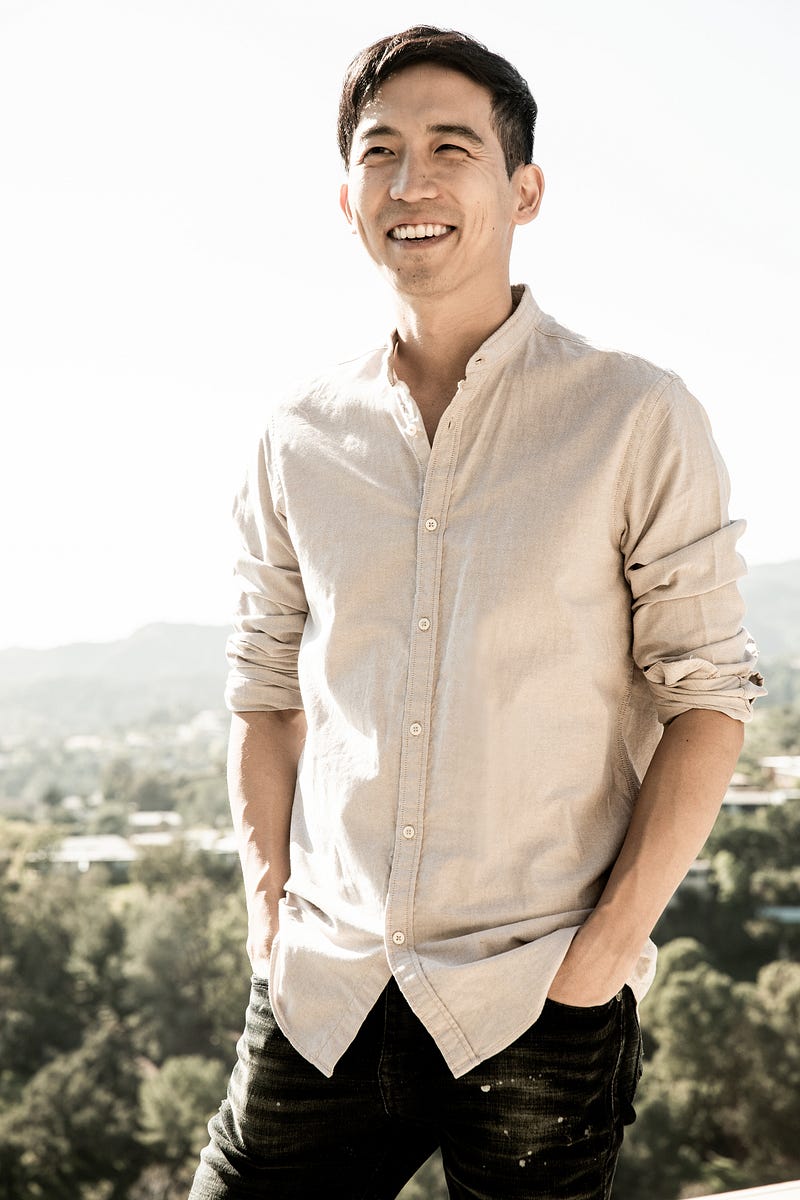
WL: Do you have any advice for aspiring actors or YouTubers or anyone who wants to be involved in content creation?
JW: Jokingly, don’t be an actor. It’s tough and it’s hard. More seriously, if you want to be involved in the creative space, don’t limit yourself to a single bucket because many novices don’t really know their real life goals and aims in the world yet. Limiting yourself to one bucket or one profession is something that you might regret down the line.
I would say to stay open, find people who can mentor you, talk to people who inspire you, watch their content, engage in the community, and find out what you truly want to do and what makes you happy. Then go towards that.
If you know you want to work in the entertainment space, there are different roles behind the camera that can make a huge difference. You don’t need to relegate yourself to being an actor, especially if those roles are still scarce. Find a business partner that you can keep accountable and they can keep you accountable.
There’s a lot of opportunities out there that are waiting to be taken advantage of and it’s up to us to take those steps. Don’t be afraid to try something new out. If it fails, at least you tried it, and you’ll be at such an early point in your life that the failure won’t harm you.
WL: What are some highs and lows of your career so far?
JW: The highs have to be moments when you feel connected to your community and you know that you’ve done something that has a positive impact. When I get emails saying that my work has helped other people overcome periods of grief, or that my work has helped them grow and move further down their life path, I feel thankful. That’s the kind of thing that I hope to do with every piece of content I ever make.
The lows are obviously my days in the early years when I didn’t know if I was going to make it. I couldn’t pay my rent, and I could barely afford food. I had to rely on my family and my brother for help. During my lows, I tried to find ways to be inspired again, whether it’s watching other content creators, talking to my peers, or building up a good support group. ‘Never Give Up’ and ‘Always Keep Rockin’ are both part of my mottos.
WL: If you could ask yourself a question, what would it be and how would you answer it?
JW: I would ask myself why I decided to speak out on certain issues and not on others. The answer I would give is that there is a lot at play that viewers oftentimes don’t understand about the complexities of the entertainment world. I want to fight battles that I know I can have the most impact on because my time is limited, and so is my effort, ability, and energy. I want to win the war against racism and systemic racism, not just the battle, so I have to choose and pick my fights.
I can’t speak out on everything just because I can speak out on something. I think it’s unreasonable to expect someone to speak up on everything. There’s only so much brainpower that we as entertainers can put towards something in public and a lot of it is behind the scenes that people don’t see. Our public persona is not representative of everything. I highly appreciate the respect that we can give to each other in terms of understanding our workloads and what we decide to take action on.
WL: Last but not least, is there any other message you think is relevant to share today?
JW: Don’t make it about yourself. Especially right now, there are marginalized groups that have suffered for many years, decades, even centuries. Ask them for their opinions, talk to them, and open up dialogue. Don’t be afraid to address the issue with your families. These will be hard conversations but try to stay calm throughout. Cite your sources, be reasonable, and be loving.
Read more…
Interview with Anggun: https://tinyurl.com/intlwave-anggun1
Interview with Eric Nam: https://tinyurl.com/intlwave-ericnam
Interview with Epik High’s Tablo http://tinyurl.com/intlwave-tablo