
On Being White, Poor and Privileged
Knowing I’m privileged is the first step toward change.
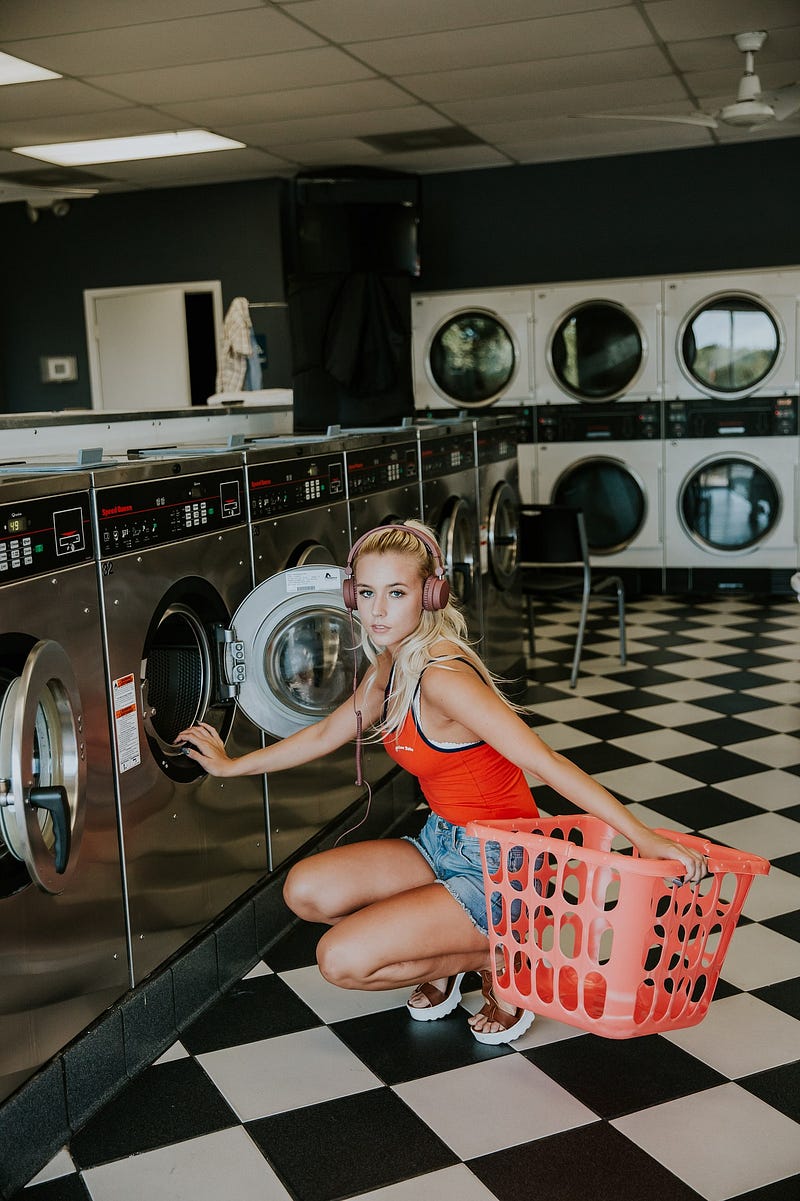
Nothing underlines my white privilege more than a trip to my local laundromat. The laundromat is ugly, its windows streaked with dirt. A garish yellow sign says “fluff and fold” in red print, taped haphazardly to the door.
One business over is a liquor store that attracts loitering alcoholics. As I lug my dirty laundry inside the laundromat, these alcoholics always ask me for spare change.
I was taught by my Republican family never to give spare change to men drinking from cans hidden inside paper bags. In this case the advice has stuck.
And yet I’ve dropped most of my family’s other teachings. I’ve chosen a different path.
I’ve chosen to follow my creative dreams. I’m a freelance writer and for years I lived in Europe and then I didn’t work while I was married. I was a housewife and my husband earned the money. Until he didn’t.
Still, I’m privileged.
I didn’t grow up going to laundromats like this one. I didn’t grow up in towns like the one I now call home. I grew up in a place like the next town over — the one known for its horse trails and good schools and big houses with swimming pools in the backyards.
Like I actually grew up in that town.
My children go to school there. My ex-in-laws still live there.
I will never lose that. I will never lose my education either.
My education is a privilege (and a privilege of my whiteness). That alone puts me ahead of most of the people who patronize my local laundromat. Yes, I’m on food stamps and I have welfare health insurance, but I can still pass as a member of the wealthy community where my kids go to school.
I have the language down. When I drop my children at school no one ever questions whether I belong there. I smell of the place. The town was created for people like me. This entire country was organized around the guarantee that people like me would succeed in it.
But I’ve fallen on hard times.
When I left my husband, I left with nothing. I became a single mother. I became a member of the working poor.
And yet I’m still privileged.
My credit is bad. My ex gives me very little money in child support. My kids are on the free lunch program at school.
But still, I’m privileged.
My whiteness and my education guarantee that.
I receive government benefits but I still don’t really belong in laundromats like the one where I do my wash.
It’s always a culture shock to do my wash at my local laundromat. That in itself is evidence of my privilege.
The laundromat is located on a gritty, urban strip. A homeless woman howls obscenities in front of the dollar store across the street. The projects are a mile away. Exhaust from a nearby refinery forms a constant plume in the sky.
When I arrive at the laundromat, other people are also washing their dirty laundry. Brown people. Black people. These people live in the projects or the modest homes nearby.
I live in an apartment in the historic downtown area of town that’s been struggling to gentrify for years. It hasn’t so the rents are still affordable for people like me.
When I first pull up at the laundromat I’m always reminded that I’m poor. Once inside, though, that sense disappears. I’m different there. I’m the only white person. I’m tall, slender, with dark-blond hair. I look like a woman from the next town over — the wealthy, white one — because I am.
I will always have that. I can’t lose it. That makes me privileged. Yes, I’m still digging myself out of debt but in the past few months, I’m closer to getting back on my feet. This month I’ll lose my food stamps because I no longer qualify — but that’s a good thing. I’m making too much money.
But I’ll also never deny that to an extent, my poverty has been a choice. Had I wanted to, I could have taken the corporate route. I could have made more money, say in marketing or some other white-collar career, thanks to the education my parents paid for.
Choosing poverty is a privilege. Choosing writing as a career is one as well. It’s a privilege to say that I could have pursued any career I wanted.
I speak the language of the dominant mainstream. I have the looks of the dominant mainstream. My cultural understanding is that of the dominant mainstream. That alone opens doors for me.
I can receive government benefits, but I still don’t really belong in laundromats like the one where I do my wash. Another reality is my true one.
I recognize that privilege. I don’t pretend it doesn’t exist.
When white people acknowledge their white privilege, it’s the first step toward change.
Most white people are completely clueless about their privilege. They never move out of their bubble. Why would they want to? It’s not very comfortable outside of it.
Living outside of your bubble means life in a poorer neighborhood. It means living amidst crime and industrial pollution. Refineries near where I live pump god knows what into the sky all day and night. We’re not told because we have no power because we have no money.
When I was married, our circle of friends consisted of other denizens of the dominant culture. It was a world where it was a given that you had a certain amount of money in your bank account and that your children were attending good schools. Of course, your kids would go on to college just like you did.
It was the world of the privileged.
I didn’t realize how privileged I was because I’d never lived outside of that bubble. It took for me to actually become poor for me to realize my privilege.
I can use the machines at my local laundromat to wash my clothes but I’m still an aberration there.
When white people acknowledge their privilege, it’s the first step toward change.