
On Being Virginia Woolf
Fiction
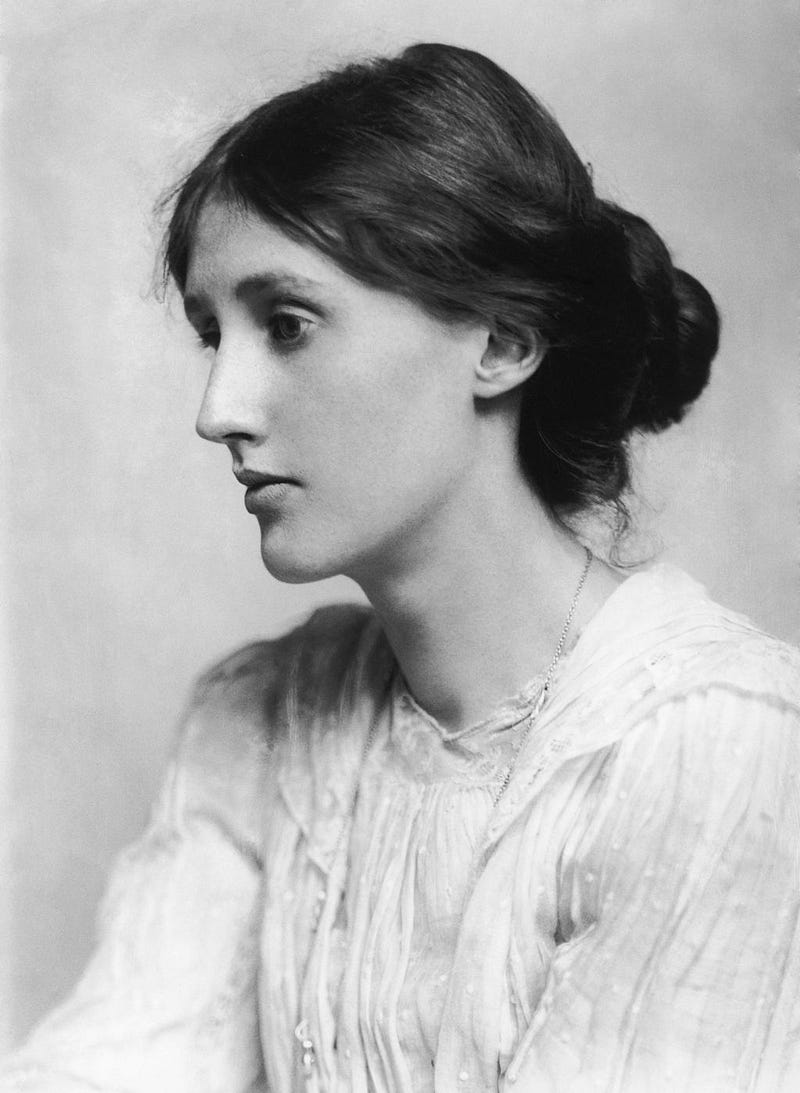
He stumbled upon Virginia Woolf at a party, back when he was in college.
He found one of her stories in a collection of essays in a book in a room at his friend’s house while he was supposed to be partying. His friends were all in the living room smoking organic-homegrown pot. My parents sent me to California to study economics, not to smoke marijuana, he told himself, self-righteously.
His self-righteousness, however, had its origin in his fear of rejection. On not daring to go after his platonic love. On not turning it into something real and tangible.
When he was growing up, he had watched enough boy-meets-girl movies to build an unrealistic expectation about the underdog boy who is noticed by the beautiful girl.
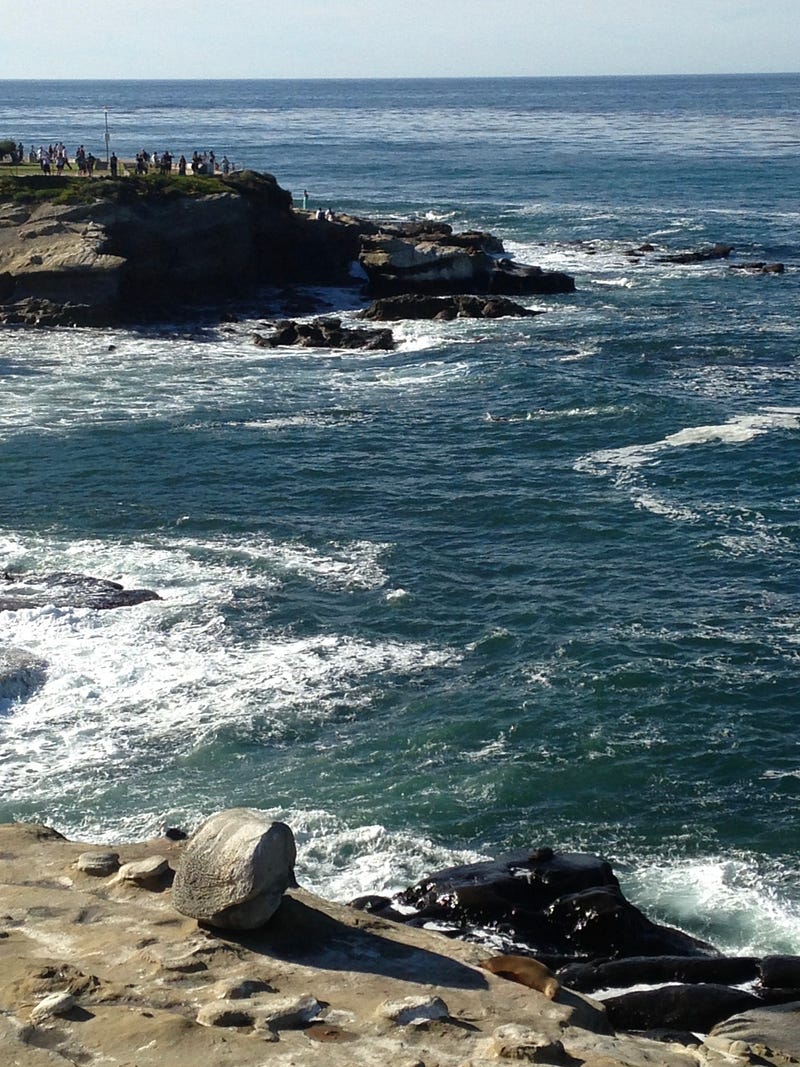
But this girl didn’t notice him any more than he was aware of the watery mist produced by the crashing waves against the shore on the beachfront house off the Southern California coast.
He was someone else’s afterthought, ambient noise.
The girl he liked was flirting with one of his other friends.
He knew when to admit defeat.
He moved on into a room with an ottoman, a desk and a chair. It had a library full of rows and full of books. His friends were in the common areas, socializing, getting high. It was never easy for him to fit in, always feeling like an outsider. Not belonging.
He browsed through the books in the collection. He caressed their covers, scenting the aroma of the old pages of the many books stored and waiting to spill their secrets to all and everyone.
Some of the books were newer college textbooks. The kind of books that are designed to transmit more information than knowledge. Or beauty. These were her books, the girl who captivated his imagination. The studio, her father’s.
He settled on a newer book, a collection of essays for an introductory English class. He opened it.
Outside, insects lived in the dark. They were bringing the night to life with their cricketing and whispers. They existed among the mist and saltiness delivered by the ocean. Perceptibly imperceptible movement. Salty water delivering a message impossible for him to decipher.
Outside, in what could be another world, waves crashed against the shore, the tide receding.
In yet a different much more distant world, one that was seemingly for him out of bounds, young people laughed unaware of their time in life. Others aware only of another, would soon forget themselves and procure to become one flesh.
Soon, people would demand a private place for making-out.
He was bored and sad. Anger hummed at him slowly, marinating his emotions.
He was not yet aware of his fear of opening himself to the world. About the fear of telling his friends, let me be your friend. Afraid of telling the girl, let me take myself seriously enough to hold your gaze.
He wanted to leave the party and end the night alone in his room. But he felt that he would look stupid leaving so early and soon.
And she was not interested in him. At least not that night.
He returned then to the world of the studio filled with books filled with stories. With soft covers, some aged, some leathery, the pages so fragile with time. The books with their stories not wanting to say no.
He returned to the young book tattooed with a bright-yellow highlighter, hints of pink, pages mostly unopened, a collection of stories, one of them, Virginia Woolf’s The Death of the Moth.
He was a wannabe writer. He had finished writing a short story about a dying moth who confused a light-bulb for the sun only a few days before. That was what attracted him to her story. He read it. Not exactly a copy of each other, however, they have their similarities. The two stories were dealing with death. He felt dizzy, the room spinning.
He could smell the sweet-fine scent of marijuana coming from the living room. He heard the laughter of the group of people he called his friends coming from across the closed door.
He felt his chest fill with anguish. How could he, if ever, explain how his work was similar to Virginia’s. Maybe it was just that they both were obsessed with dying. A death that was not quick to arrive in a life that had turned too painful to live with fears too big to face.
He opened a window to aid his lungs gasping for air and dry the tears coming down his eyes with air filled with mist and salt.
He wondered why he couldn’t settle on living nor on dying. On the immediacy of the other room, the group of people laughing just a few steps away from him. Across a closed-door. Instead of focusing on two dying moths in a place unreachable, in another time. One fighting to stay alive, the other confusing a light bulb for a Sun. Confusion sent it into oblivion.
He wondered how his version and Virginia’s were so similar.
The party finally ended, at least for him. The lights went down. The kisses began. He walked back home, his head full of thoughts but no one to talk to. He walked away from the beach, back to campus. He left the mist, off from the rhythmical voice of the Pacific ocean.
As a man who could not write his own story, he dove halfheartedly into the study of economics. He avoided reading Virginia Woolf’s as much as it was humanly possible. He withdrew from writing, he felt as in one of those movies in which the character traveled in time and had to avoid his former or future self. He did not want to meet with her again but what was Virginia trying to tell him?
As the person dives into its world, it becomes harder to reach the other, the mutual world, the one we share with our societal constructions. Virginia’s moth was fighting against death. Unable to overcome it, it died on its feet, with dignity.
Was this what she was trying to tell him. That even when he would not win the battle against death, he should strive for dignity until the end?
And what is dignity, if not to die erect, standing tall, knowing he fought?
It would be many years later, as a middle-aged man, that he would reconnect with Virginia Woolf, even though indirectly. He was browsing the infinite possibilities of entertainment his video feed was providing for him when he stumbled upon Stephen Daldry’s movie The Hours.
He now was married. His wife was sleeping in the marital bed alone by herself.
It was then that he began to understand Virginia’s struggle with loneliness, even though not through his wife sleeping alone in their bed.
Even as he was unable to understand the loneliness of a woman across a hallway from him, he was able to hint at Virginia’s struggle with the perfectionism she felt she was not able to attain. With being a woman in a world ruled by men.
She was not who she was supposed to be. Always out of place, the odd piece in the puzzle. Death calling on her, to bury the anguish.
At least he no longer wrestled with his depressive moods. He now accepted it as a feature of his persona that would never go away.
Disconnected from society, he still had his wife.
He had married her during a period in his life in which he was exploring openness to others, but without truly knowing himself, a void filled his soul.
She, his wife, barely knew he used to write. That he used to dream about getting published, then traveled the world.
At least his occupation had allowed him to travel.
He had always been drawn towards bodies of water throughout his life, cities like Geneva or Chicago.
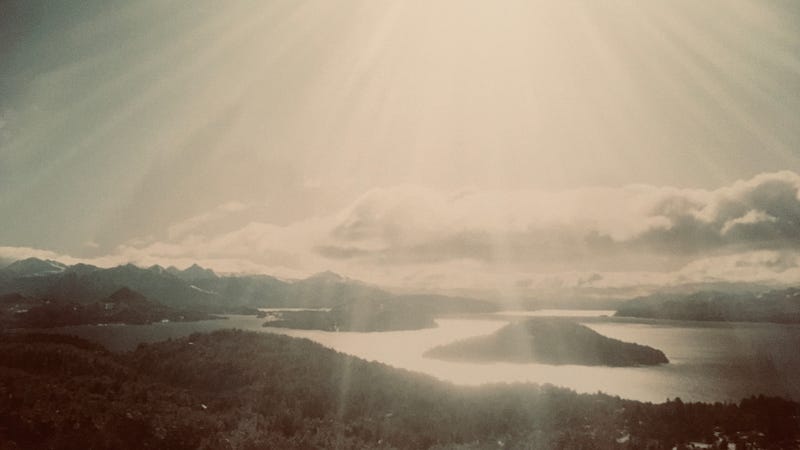
When he was young, before his time in California, he once found himself contemplating a lake from atop a cliff on a hill. He felt enamored with its flow. The lake seemed alive, talking to him.
The lake seemed to be flowing from north to south or east to west. He would not know then or ever. All that water the lake later feeding a river, flowing. He remembered it as being a serene and comforting and calm experience. Somehow reassuring of the course of life and its inevitability, realizing the water and the mountain were alive.
He felt the pull to go back to the place where life began, going back to the womb, getting entrapped by water. To succumb inside the swaying motion of the darkness where life began.
Old-age arrived, and his body began to deteriorate.
His eyes grew tired. He could no longer see the water flowing down the creek that ran behind his house from a hill with a lake that fed an ocean far away whose mist its scent he could not smell.
But he could hear the water.
He had committed the number of steps to the creek to memory. He would walk towards a bench by the water, with room for two.
His children now grown, moved far away. His spouse continued watching sad movies by herself, alone.
Only his therapist would listen to him now. He wondered if he would have anyone to retell his stories to once on his deathbed.
He felt almost dead. He wished to sit and wait by the lake, and for the lake to swell and take him. A small gentle swell. Was it the purpose of his life, to stay alive, was it that the purpose all that time?
To be alive and live?
He still felt alienated from humankind. It seemed like if somehow he was not able to play within their inside jokes, the rules that create desire. The attempts to return to what was once lived but is now no longer anything. The past. To the constant repetition of rituals.
He wondered, has it been fear or the realization he did not have much in common with other people what kept him from attempting to connect to others? Maybe it would be different in another lifetime.
He wondered if Virginia Woolf sent him a message in a bottle that he was to open that night at the party. A theme. Through the contemplation of the inert moth, unaware that death had overtaken it. His own story about a moth that had strayed towards an artificial sun, the electric bulb, thinking it found the source of life, but encountering an artificial source of light.
The redundancy of his connections. The fear of the void. His therapist as the only one to talk. His spouse still watching sad shows on a screen in a room that seemed a million light-years away, on a distant star. He was still not able to deal with the small talk at parties. They seemed fake to him. Nevertheless, his life was not any less of a farce. How long would a space ship take to reach such a distant place?
He remembered why he liked the girl who was smoking pot at the party. She had a sparkle of life in her eyes when she said hi. Like she knew about a secret he was not aware of, that she was the gate to a world he could not go on to on his own.
His wife, once close, was leaving him like mist rising towards heaven at sunrise. He, on the other hand, continued to face the sun. His feet too heavy to raise.
His moth died confusing a light bulb for the sun. Throughout his life, he had mistaken desire with love. The warmth of human connection he never found.
Not being able to look at his own heart, he was not able to look at anyone else’s heart.
He had not been able to write his own story. The sea of life took him and swayed him. The tide once high, it was now receding. Afraid of being overtaken by the waves always changing, always the same, forever chanting. All that water, all that depth, and he was not even able to skim its surface. He was not even able to turn into mist.
The girl at the party was long gone. His wife died consumed by sadness. Everything seemed so close and so far away. Both his life and Virginia Woolf.
Pablo Pereyra 2019. Thank you for reading.


