On Being More Present About Presents During the Holidays
With holiday spending expected to reach nearly $730 billion this year, it’s time to rethink how, what, and why we give.
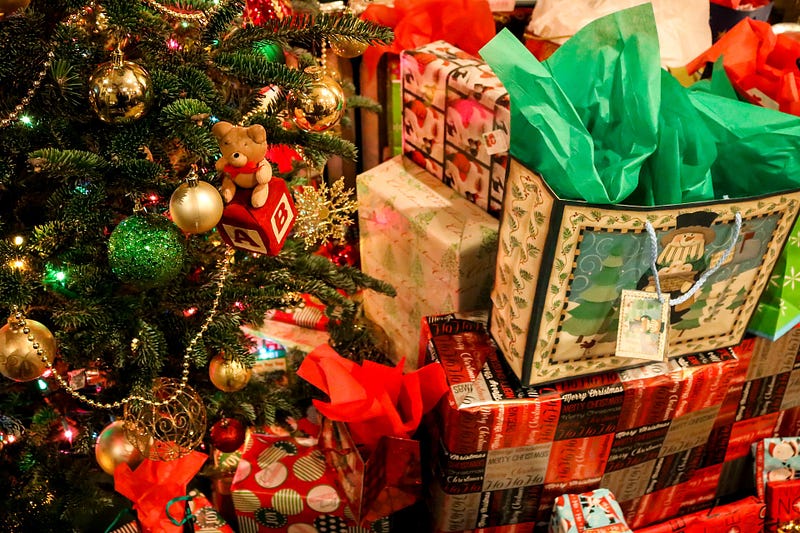
It isn’t a secret that every year we spend way too much on gifts people don’t want, don’t need, and would never buy for themselves. “Walk through a major department store in December,” writes economist Joel Waldfogel in Scroogenomics: Why You Shouldn’t Buy Presents for the Holidays. “The aisles are blocked not just with panicked shoppers but also with tables covered with ‘gift items.’ In the aisles near the men’s clothing department, you’ll find lots of golf-themed knickknacks — mugs festooned with golf balls, golf club mittens, brass tees, and so on. Would anyone buy this stuff for him or herself? Does anybody want it? I’ll hazard a ‘no’ on both counts. But it’s there every year, along with singing fish — and it sells — because of a confluence of reasons that together make a perfect storm for wasteful giving.” Scroogenomics was published in 2009 but a decade later, the sentiment still holds. According to the National Retail Federation, this year consumers are expected to spend an average of $1,048 for holiday gifts (including for themselves) and other items such as food and decorations — an increase of 4% over last year — with total spending expected to reach between $727.9 billion and $730.7 billion.
That’s…a lot of golf ball mugs and singing fish.
Crappy Sweaters + Singing Fish = Deadweight Loss
There’s an economic term called “deadweight loss” which Waldfogel describes in Scroogenomics as “losses to one person that are not offset by gains to someone else.”
The way my admittedly non-economist mind understands this is thus:
If you buy me a sweater for $75, that same sweater might only be worth $25 to me. (Or, in other words, if I was to purchase said sweater for myself, $25 would be the maximum amount I would personally spend.) Hence, the “deadweight loss” is $50.
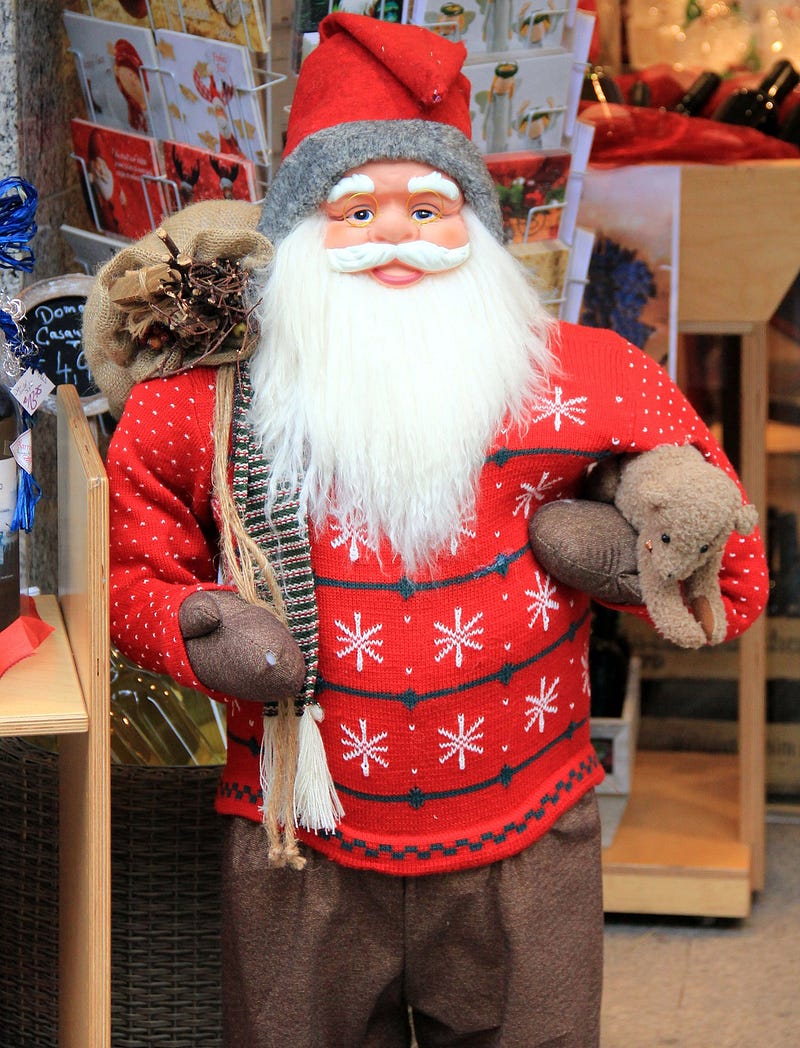
That’s where the wastefulness aspect of the holidays comes in. Multiply this by billions of crappy sweaters and stupid singing fish, then you’re talking some big bucks being thrown away. I think this is a concept that most of us kind of already know, but seeing these numbers tossed around is somewhat sobering. It makes me want to never buy another thing again, for any holiday. One might think that the solution is to give gift cards. But even those have downsides. They expire. They get lost. Sometimes the recipient isn’t interested in that particular store or it goes out of business.
So, if purchasing actual gifts and giving gift cards are both wasteful, what are we elves to do?
The Nostalgia of Christmas Past…
I don’t believe there’s a one-size-fits-all answer to this. How we approach gift-giving varies dramatically from person to person, from family to family. It’s emotionally loaded, too, I think, often rooted in our nostalgia for Christmases long, long ago.
At least it is for me.
My beloved grandmother lived for Christmas. Mom-Mom shopped non-stop, bought gifts throughout the entire year. In her and my grandfather’s modest Philadelphia rowhouse, one bedroom was dedicated to the storing and wrapping of presents, as if it was Mrs. Claus’s own workshop.
Each year she undoubtedly spent more than she and my Pop-Pop could afford. On Christmas Day, there were so many presents under her tree that they covered the entire living room floor. If I’m not mistaken, one year we needed two separate cars to transport everything home.
And then, in 2004, she died. And for many years afterward, we continued to find wrapped gifts with tags indicating the intended recipient. A bittersweet comfort and joy indeed.
…And the Reality of Christmas Present

There’s a part of me that would love to be my Mom-Mom, but the logical part of me knows that it is impossible and impractical.
Like many people, my approach to gift-giving has increasingly been more focused on the simplistic, the intangible, the experience. I’d be lying if I said economics didn’t play a part in this mindset.
As a one-income family, my kids have known years when the “big present” was being able to afford to travel six hours to visit our family on Christmas and perhaps one or two items under the tree — with lots of room to see the carpet underneath.
And while a part of me will always want to replicate the extravagant, indulgent Christmases of my childhood, these days I’m more inclined to buy something from an artisan friend at a holiday craft market to support their small business venture. Or maybe make something myself.
In other words, I’m giving the gift of thoughtful presence instead of presents.