
On Being Kind to the Bees
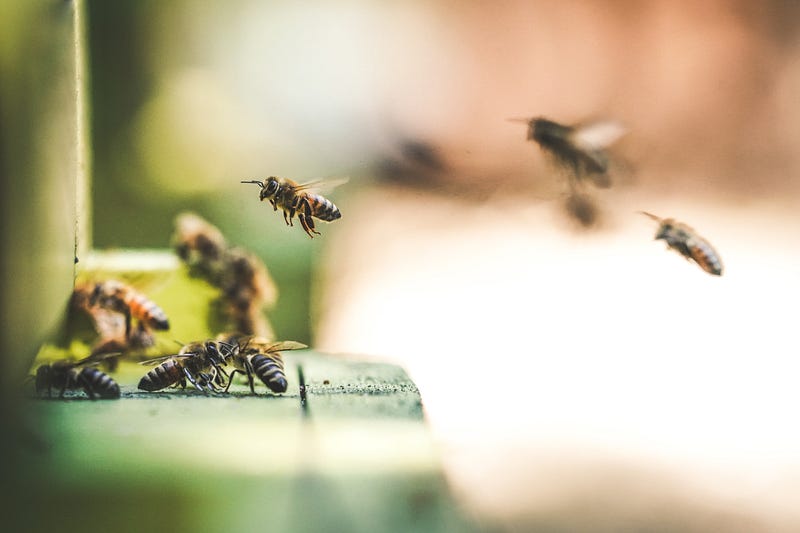
“I would recommend more intake of pure honey, nature’s pure food that we get from the bees.” This comment came from a faithful reader, after I wrote about tea with honey for throat issues. Faithful Reader Alvin Huie went on to mention the fact that honey has “the most nutrients, antioxidants, vitamins, etc” of many of the foods we consume.
A few minutes later I picked up my mail. It included an appeal from the good people at EarthJustice, pleading eloquently for help in saving the bees. I took this as an omen that bees of the world need a blog.
You have to love the people at EarthJustice, an environmental nonprofit with the pretty wonderful motto: Because the Earth Needs a Good Lawyer. Indeed. Bees too, apparently. It’s possible to find all sorts of opinions and data sets, depending on who (such as, agricultural products industries v environmental nonprofits) is furnishing the information. The banning of some bee-killing pesticides in the past may have somewhat slowed the scary decline in world bee populations, but I’ll go with this report from Earthday.org. Its March 2022 Fact Sheet says, among other things, that “there are 20,000 distinct bee species around the world, with 4,000 of them in the United States alone. From 2006–2015, approximately 25% fewer species were found. Under the best scenario, thousands of bee species have already become too rare.”
For an inside look into the world of bees I turned to Alvin — who happens to be an old friend and new(ish) neighbor. Now entering his 90s, Alvin is retired from an IT career and from active beekeeping (after 25+ years.) But he has kept track of all things bee-related since first getting hooked in 1994. “It’s a low-key hobby,” he says. And a lot of good fun. He attended week-long world bee conventions in S. Korea, Argentina, Ukraine and elsewhere. He reads bees books, introduces others to beekeeping and belongs to several apian organizations. There is a LOT to know and share about bees. To help with which there is Apimondia, an international federation of beekeepers’ organizations and related others that’s been around since 1895.
Bees themselves however, bless their little apian hearts, don’t exactly enjoy lives of leisure and self-indulgence. According to their friend Alvin, the average worker bee lives about six weeks max. The drone, whose primary purpose is to mate with the queen — or help with temperature control by flapping his (larger) wings along with all the others — might live for around 30 days. But if he’s successful in beating out a few thousand fellow drones — they don’t fight about it! They just try to get closest to her — and mating with the queen, he immediately dies. What can I say? Queenie herself might live for a year or two, but during the springtime (her busiest season) she’s laying about 1500 eggs per day. All of this may be why you never hear people saying “it’s a bee’s life.”
Still. All those apian friends of ours — in the remaining 20,000 species — are critical to our survival. While we humans are hardly noticing, they are pollinating, without which activity we would lack most of the fruits, vegetables and other good things we live on. Or promoting biodiversity, or making honey or creating all that great wax we use. All of which requires, well, being as busy as bees for their entire lives.
You may want to thank a bee today.


