
SPEECH
On Becoming a Master Tryer
This is the transcript of my offering as commencement speaker for my MFA Writing program graduation. Hope you enjoy it and that it resonates with you or someone you know.
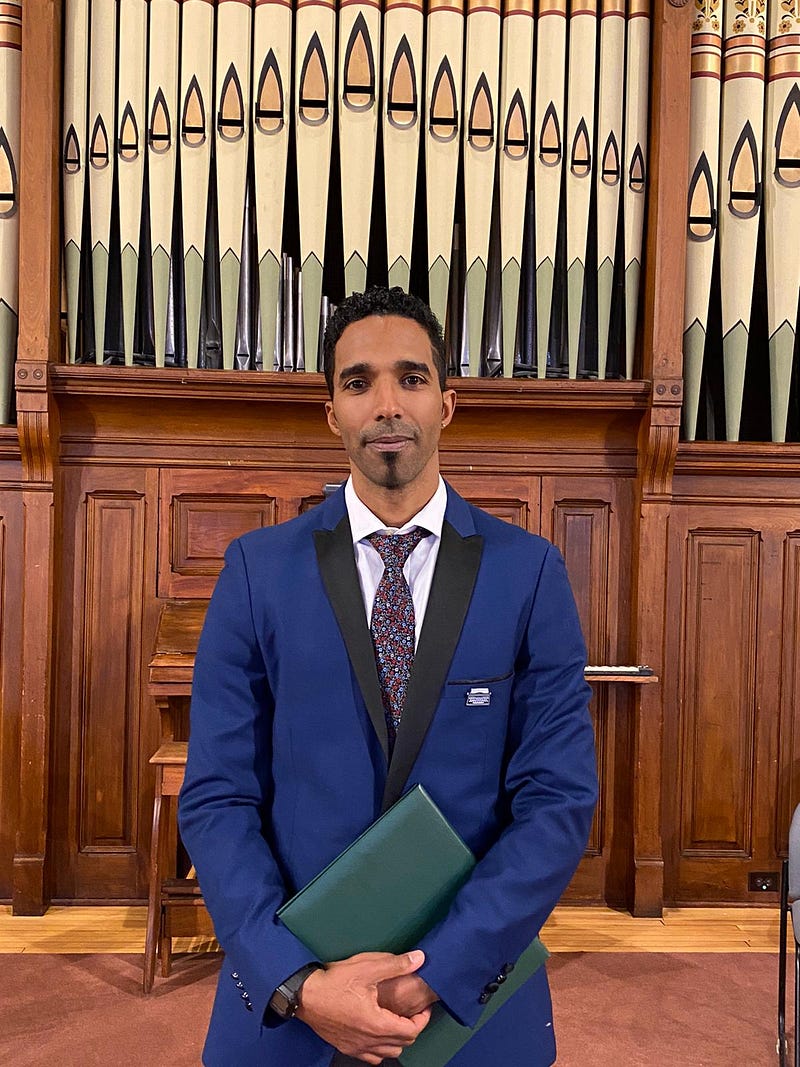
Bienvenidos. Welcome to the families, friends, partners and guardian angels of the graduating class of 2020. I am honored and humbled to be your commencement speaker. This morning, as I was going down the breakfast line at the cafeteria, I had the pleasure of speaking with a fellow writer as we both grabbed scrambled eggs. She congratulated me for my [poetry] reading the night before and then asked, “How do you feel now?”
I thanked her and said, “Nervous.” I explained about working on putting together this speech and how I didn’t want to fail, mostly because I wanted to do a good job. And she asked if she could offer me a word of advice. I said, “Please do.” And then she said something that made me drop my shoulders and breathe. She said, “Just offer them what you have.” Thank you Tavia.
Here’s what I have to offer: A story. Some words on the practical use of failure. And James Baldwin as a sounding board for an artist’s credo. This story starts with a preface. A timeless maxim, from one of my personal gurus:
“Do or Don’t, there is no try.”
And though I can see how Jedi Master Yoda’s simple yet deeply profound maxim was just what a young Skywalker needed while struggling to Jedi mind-lift an X-wing fighter plane out of a murky swamp on Dagobah, it may only serve as counter to what my story will hopefully help to illuminate when thinking about failure and the often conflated and just wrong ideas of success.
When I was 18 my definition of success was to become a Navy SEAL. I would train at my high school pool, swimming laps back and forth underwater, seeing how long I could hold my breath. I joined the Navy because, though I was a bright student, my ranking as #110 out 113 graduating seniors in my class, did not reflect this. I felt like I had failed in my high school career. I went off to boot camp. Did well. Came out with a higher rank than I entered. After boot camp, I trained for and applied for diving school, which also would qualify me later for Seals BUDS training. Out of 36 candidates, I was the only one who successfully passed the first phase of physical training.
However, when it came to my medical test, I passed everything except for one test- the light falant test. I failed it with flying colors! (pun intended)
I learned that day that I had a color deficiency. I would not be able to move forward with Seals training, because I would not be able to distinguish the colors between wires on an explosive, especially under water. I could still go on to diving school, become an underwater welder, once there was an opening at the school. Till then, I had to continue on to my next duty station which was an aircraft carrier called the U.S.S. Enterprise in Southern Virginia. I never went to dive school. I struggled a lot during my time in the military, some of that struggle due to bad decisions on my part. Others were out of my control and part of a larger problem within not just the military, but many of our institutions. Needless to say, I failed at fulfilling my dream of becoming a Navy SEAL.
Now, in this fertile ground of a decomposing dream, I found what would become my next true north: I wanted to study acting, and become a professional actor.
I’ll spare you another long winded Hero’s Journey of entering the special world of university, and the Theater Department and finding mentors, allies, and antagonists, some being all of the above. And how I found successes and near success and a compost of failures as a romantically nearly starving artist post-undergrad. I will fast forward to the moment I decided to call my well seasoned agent, who’d worked with the likes of Phillip Seymour Hoffman, to say that though we’ve had some good wins, I no longer have it in me to go on another audition. She of course said I was crazy, and I agreed. Another failure to add to the heap.
Which brings me to today. As I stand here, I am aware that one of my qualifications for being able to offer you whatever words of wisdom or perspective about being writers and artists and living a practiced life as one, is that I have a resume of not quite making this a sustainable lifestyle.
I have tried and I have failed.
Again, my guru Yoda would say “Talk much, you do. Doing nothing, you are. Do or don’t; there is no try.” And I’d turn to him and say,
“I feel you, my pointy eared sensei. But what if it’s all try?”
He might hmmm or just lift up the damn x-wing himself, to shut my lazy ass up. But I’d still be thinking about the try. Is there no try? Isn’t all try?
And that’s what I want to offer you all. That this degree that will be conferred on us, is not just this document to hang on a wall or make a copy of to show potential employers, or stare at while we try and finish that gnawing at our limitations beast of a vision for a story, an epic, a cry in the dark wilderness to be heard. That that rectangular object you will soon hold in your hands, can be a talisman that illuminates a truth that we’ve known and can say with shameless confidence: We are Master Tryers. We tried to get that amazing, crazy ass ephemeral idea for a creative work out of our heads to go through our hands and come out on the blank page whole and intact.
But nine times out of ten, it will undoubtedly change. Because we are changed by the work. We fail at glory, And still we try. We try to express ourselves — our feelings our mysteries, our loves and burning rages, our idiosyncrasies and Grand designs, and fail at every level at getting it just right.
Because that’s our vocation as Master Tryers — to fail your damnedest at the trying. And try again.
I know it doesn’t sound right. Is not the point of getting a Masters degree to say I won? I did it! Someone said that you got this, go out there now and prove to the world that it was worth it. Yeah! And now because you have succeeded at obtaining this Master’s degree, you can succeed at obtaining a book deal — you are a success. But if you are a success, does that not mean someone else has failed? Because the antonym of success is failure. You cannot have one without the other. The one is needed to define the other. But what if we decided that success and failure were not the measuring sticks of our work? What if the measuring stick was to write better than the person you were the moment you decided to pursue this work of being a writer?
And so the real measurement is the amount of fingers to the amount of times that you just say fuck it and continue to do the work.
I’ve continued to reset my definition of success. That, instead of placing all my bets on Fame and Fortune and these lofty and often layered ideas of success, I began a diet of pragmatic optimism- and here’s the recipe…
It’s one part no bullshit
Two parts the hell with it
And a spoonful of wishful thinking
Mix it together with a lot of plain old ‘roll up them sleeves’ emotional and physical labor, and you have yourself you’re very own brand of trying. So at 38, I decided that what I want to see for myself was that I would be an artist who chose his own path based on the work that obsessed me, work that made me try my damnedest to keep trying to make the thing that I wanted to make. And that I did not need anyone else telling me whether I was an artist or not. I learned something about myself as an artist and as a human being, and if I’m lucky — oh, someone was moved by the work, someone got something from it, and someone gave me the honor and the privilege of their time and energy and we made a connection.
As I near the end of my offering, I want to share some insights I gained from reading James Baldwin’s 1962 essay The Creative Process, which I recommend that not only writers, but anyone who consumes art and culture read. I actually wrote an essay in response to his essay, and used it as my critical piece for my application to VCFA. I ask that you indulge me for a moment in quoting myself:
The body of Mr. Baldwin’s essay speaks on two points that I find to be the most important. The artist’s responsibility to society, and the particularities of the American artist. In the first, Baldwin strongly states that “…the nature of the artist’s responsibility to [their] society is to…” “…never cease warring with it…” It is a powerful contradiction to the pop culture consumerism of today’s hyper-influential social media culture. The underlying slogans are ‘Get Fans!’ ‘A Million Likes!’ ‘Find your tribe and give them what they want.’ ‘Do something Funny/Weird/Cool/Sexy/Stupid/Big/Original/Mainstream.’
But do these actually help to push our society toward a better understanding of ourselves? Do they make us look in the mirror and face our individual insecurities and fears? Or are they part of the Great Escape, away from a higher consciousness and human community? Like Baldwin, I am not looking to make grandiloquent claims for a special breed of human called the artist. Do I want to entertain? Yes, of course I do, as I am entertained. Would I love to make people laugh, experience joy, and sensuality? Do I want to inspire them? Yes to all of the above. However, I am not willing to compromise my artistic integrity to get on the cover of GQ or The New York Times Bestseller List. The irony is, that if I dig deep, go personal, open myself up and be vulnerable, I will achieve both truth and joy in my work, and I will find audience.
Here’s a thought experiment:
What would happen if the walls of this institution [insert your own] fell today, and all our degrees were useless pieces of pretty velum, and the only person who knew about your writer’s journey gets a special case of amnesia which prevents them from remembering a single word you wrote to validate your Master’s degree? How can you prove that you actually did the work? In this twisted very blown-up B-movie Sci-Fi, you can’t prove it. Except for that, you know you did the work. You, and you alone, can go about re-building — not the institution, but the practice of artistic expression, and of forming community that supports, provokes, inspires, collaborates and rejoices in the power of creative expression. Do not fear your power to create. Do not fear your limitations.
Do not fear the truth of what is at the core of everything you write. And never fear the machines of industry. For they will undoubtedly fall apart with just the right dose of nuance and cultural change; value your ability to (re)create.
Before you come up and receive your well earned degrees, I want to confer unto you by the council of Master Tryers, know that as you walk, this life-long practice that you will never perfect, will never let you down, as long as you keep trying. It runs on your ‘want to’ and your trying, at making the thing that lives in your head a reality.
Know too that as you walk up here today, you are crossing the threshold into the embrace of labor, into the arms of universal craft-beings, and adding to the cosmic cannon of creation. Trust in your mistakes. There’s gold in them heads, and diamonds in those hearts. In the words of one of our fellow Master Tryers, writer and musician Samuel Barrantes Lopez:
Suck better next time!!!!!!
Gracias.
© Armando Batista, 2020 All Rights Reserved
Armando Batista is a trickster spirit in human form, hailing from Washington Heights, NYC. He is the child of immigrants. A trained actor and performing artist, Armando has worked on stage, screen, and in multiple venues and spaces, transforming the everyday into a magical moment for curiosity and imagination. He holds a Masters in Creative Writing from Vermont College Fine Arts, and is currently down the rabbit hole of a poetry book project which he envisions as a “gaming experience in poetics and wordplay” for the reader; think CYOA meets visual poetry and hybrid text at an underground house party… He currently resides in the DMV area.


