
On April 9th Add a Little Unicorn Sparkle to Your Day
Round up a blessing of unicorns and celebrate
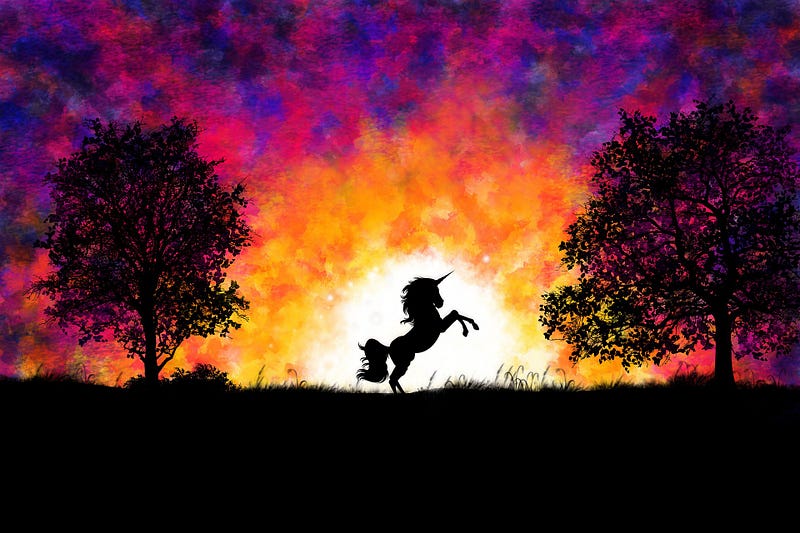
There’s a reason April 9th is one of my favorite days of the year.
It's the only day I can get away with wearing my unicorn onesie to work or shopping, or out to dinner. For the other 364 days that aren’t dedicated to celebrating unicorns, I settle for wearing unicorn shoes. (For the record, I actually have two pairs of unicorn shoes.)
One year, I even sweated through a warmish 36°C day in my woolen unicorn onesie to celebrate. (That’s 96.8°F for those of you who haven't made the leap to the metric system.)
I’m a very dedicated Unicorn Day supporter.
Over the years as I’ve celebrated Unicorn Day and created quizzes for the students at school, I’ve learned some interesting unicorn facts.
🦄Unicorns are everywhere
There are references in many cultures to unicorns across the ages. Unicorns have been around for a very long time.
- A unicorn is the most common animal found on seals in the Indus Valley, dated around 2500–1700 BCE.
- The first written record of a unicorn was penned by Ctesias, a Greek historian, (c. 400 BCE). “White body, red head, multi-coloured horn (a foot and a half long!), and dark blue eyes.”
- Pliny the Elder, a 1st-century Roman scholar, wrote of unicorns in Natural History, Book 8, 31. “The unicorn (monocerotem) is the fiercest animal, and it is said that it is impossible to capture one alive.”
🦄Unicorns fascinate everyone — even holy scholars
The Authorized King James Version of the Bible drops the odd reference to unicorns (and dragons!) here and there within its pages. Depending upon who you believe this could be a translation error, a reference to another now-extinct creature, or possibly, just maybe, unicorns once roamed the earth.
🦄You can apply for a unicorn questing license (formerly known as a hunting license).
Unicorn questers have a strict code of ethics.
Unicorn questing has a defined season (Valentine's Day is a no-go zone), bag limits apply and questing can only occur in specified territories.
You can grab your Unicorn Questing License from Lake Superior State University.
🦄Unicorns have a strong royal connection
Royal families have always held a strong connection to unicorns — which persists to this day.
- King Tongmyong (Koguryo Kingdom B.C. 277-A.D. 668) kept a unicorn lair.
- William I, King of the Scots, (1165 to 1214 CE) had a unicorn in pride of place on his coat of arms. To this day, the unicorn remains Scotland's national animal.
- The Throne of Denmark, made in the 1600s is constructed from unicorn horns.
- Martin Frobisher presented Elizabeth I with a unicorn horn, later known as the Horn of Windsor.
- When asked if unicorns were real, Prince William replied, “Obviously, it’s a trade secret, so I can’t possibly comment.”
🦄Eau de licorn
Unicorn products have well-known health benefits and can cure many ailments. Apothecaries touted unicorn products among their wares, from powdered unicorn horn to Eau de licorn (unicorn purified water — or water that has been funneled through a unicorn’s horn.)
Unicorn tears also have magical properties. Some consider tears to be less invasive than hi-jacking a unicorn’s horn. But really, who wants to make a unicorn cry?
Given the unicorn’s healing properties, it’s no wonder we’ve hunted them to near-extinction, and they are now harder to spot than leprechauns.
🦄From white to rainbow
For centuries, unicorns conjured images of white, pure, elegant creatures. Then the 1980s hit and Hasbro released their My Little Pony and My Little Unicorn toy range.
Now unicorns poop and fart rainbows and you can even buy unicorn snot. Never underestimate the power of children's marketing to take an idea and run with it!
🦄A case of mistaken identity
Marco Polo, while on his many travels, spotted a unicorn in the wild. He was sorely disappointed by what he saw.
Their hair is like that of a buffalo, and their feet like those of an elephant. In the middle of the forehead they have a very large black horn…. Their head is like that of a wild boar, and is always carried bent to the ground. They delight in living in mire and in mud. It is a hideous beast to look at, and in no way like what we think and say in our countries, namely a beast that lets itself be taken in the lap of a virgin. Indeed, I assure you that it is quite the opposite of what we say it is. — Marco Polo
Can you guess what animal he really spotted?

Love unicorns? Love writing letters? Check out my printable Unicorn Letter Writing Set 🦄🦄
Sandi Parsons is an award-winning school librarian with over 20 years experience working in educational libraries. She lives with her favorite husband and two problem puppies. She believes in the magic of unicorns.
Join Medium today with this referral link and access every Medium story you want to read.


