
#30DAYSOFSCIKUCHALLENGE
On Altruism
Day 20 Prompt: A Neuroscience Research Inspired Sciku
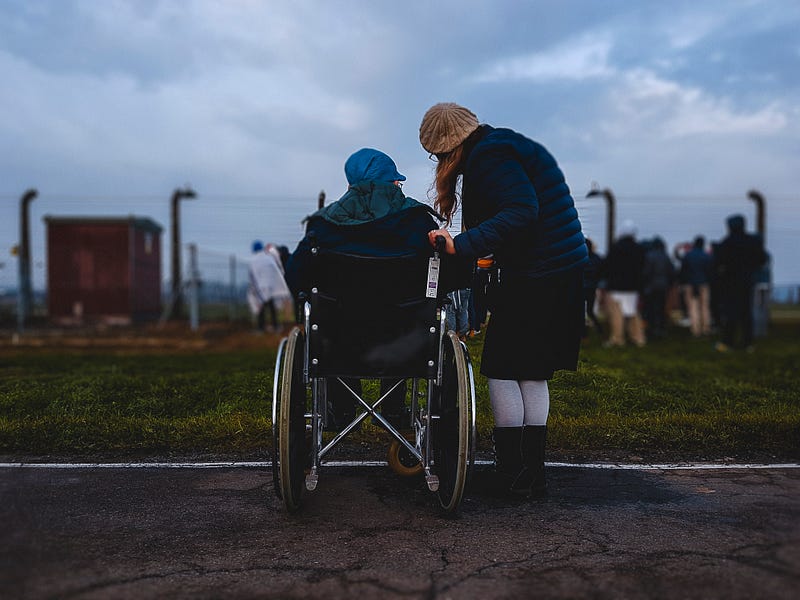
help others in need without a social judgment prosocial resonance
Given the events of the past few weeks, it is easy to feel down and question our empathic self — Now, two UCLA scientists are providing some reasons to feel optimistic about our basic empathic human nature — Based on explorations of the brain, they provide evidence that altruism may be more hard-wired in the brain than previously thought.
In other words, we might be intrinsically driven to behave in an altruistic manner — as I understand — altruism here referring to that well-meaning, selfless behavior often, but not always, prompted by feelings of compassion.
The researchers scanned participants’ brains with functional magnetic resonance imaging, paying close attention to activity in several areas of the brain, in particular — the amygdala, somatosensory cortex, and anterior insula — is associated with experiencing pain and emotion and with imitating others. Two other areas are in the prefrontal cortex, which is responsible for regulating behavior and controlling impulses.
Briefly, they report that participants with the most activity in the prefrontal cortex proved to be the stingiest, and participants who had the strongest responses in the brain areas associated with perceiving pain and emotion and imitating others were the most generous. Researchers referred to this tendency as “prosocial resonance” or mirroring impulse, and they believe the impulse to be a primary driving force behind altruism.
“It’s almost like these areas of the brain behave according to a neural Golden Rule,” Christov-Moore said. “The more we tend to vicariously experience the states of others, the more we appear to be inclined to treat them as we would ourselves.” Source : Science Daily.
In the second study, published earlier this month in Social Neuroscience, the researchers set out to determine whether the same regions of the brain might be blocking the altruistic mirroring impulse.
By subjecting the participants to a noninvasive procedure called theta-burst Transcranial Magnetic Stimulation, which temporarily dampens activity in specific regions of the brain, the researchers dampened either the dorsolateral prefrontal cortex or the dorsomedial prefrontal cortex, which combine to block impulses of all varieties. The researchers suggest that, the results indicate that in fact, participants with disrupted activity in the brain’s impulse control center were 50 percent more generous than members of the control group.
“Normally, participants would have been expected to give according to need, but with that area of the brain dampened, they temporarily lost the ability for social judgments to affect their behavior,” Christov-Moore said. “By dampening this area, we believe we laid bare how altruistic each study participant naturally was.” Source : Science Daily
The studies likely have many implications. Still, perhaps, one key takeaway is that by temporarily inactivating a part of the brain involved in impulse-control, neuroscientists have provided compelling evidence that we’re hardwired for altruism.
Now more than ever, it is a comforting thought that left to our instincts, we may be driven by an innate desire to help each other — Our inner altruistic self is perhaps exactly what will help us find better solutions to overcome our current and future life challenges — let's hope we can keep finding a way to help each other in small ways and big.
Thank you for reading!
**This is Day 20 of the #sciku challenge — science-inspired haiku-like poetry( so #sciku?) prompts to get you inspired — Our dear readers — why not spend some time each day creating and having a little fun — if you do — publish it anywhere on medium, just tag it with — #30DaysOfScikuChallenge.
**Tagging Lynn E. O’Connor, Ph.D. Laura Griffith Machado, PsyD Rita Hitching, and anyone else who feels inspired to follow and/or play along with this fun #30DaysOfScikuChallenge and today’s prompt: Neuroscience
What’s next —
Or perhaps the following: