
Olive Oil Pressing Season Is Just Ending in Italy
A wonderful time to enjoy the benefits and taste of olive oil
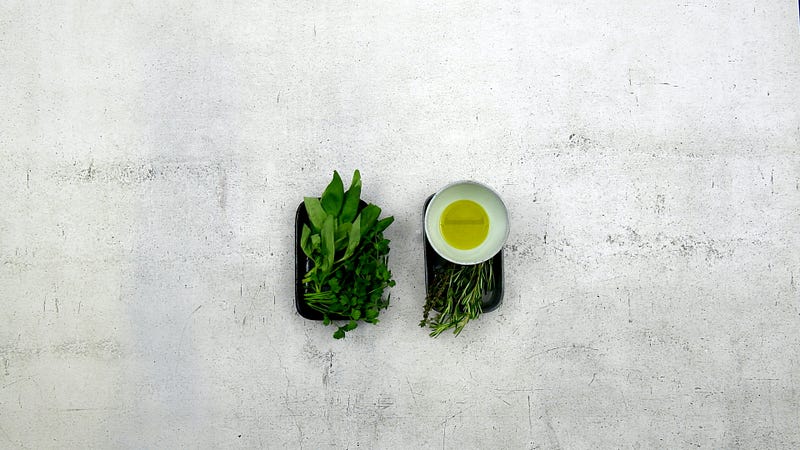
Olive oil greases the engine of the body. I am convinced of this. In my Italian town, it is usual to see an 80-plus-year-old Nona bicycling around to the shops or to meet friends.
As a foreigner, this amazed me.
Having lived here for 5 years now, I have come to realize something:-
At the heart of the healthiest nation in Europe, is a Mediterranean diet, underpinned by olive oil.
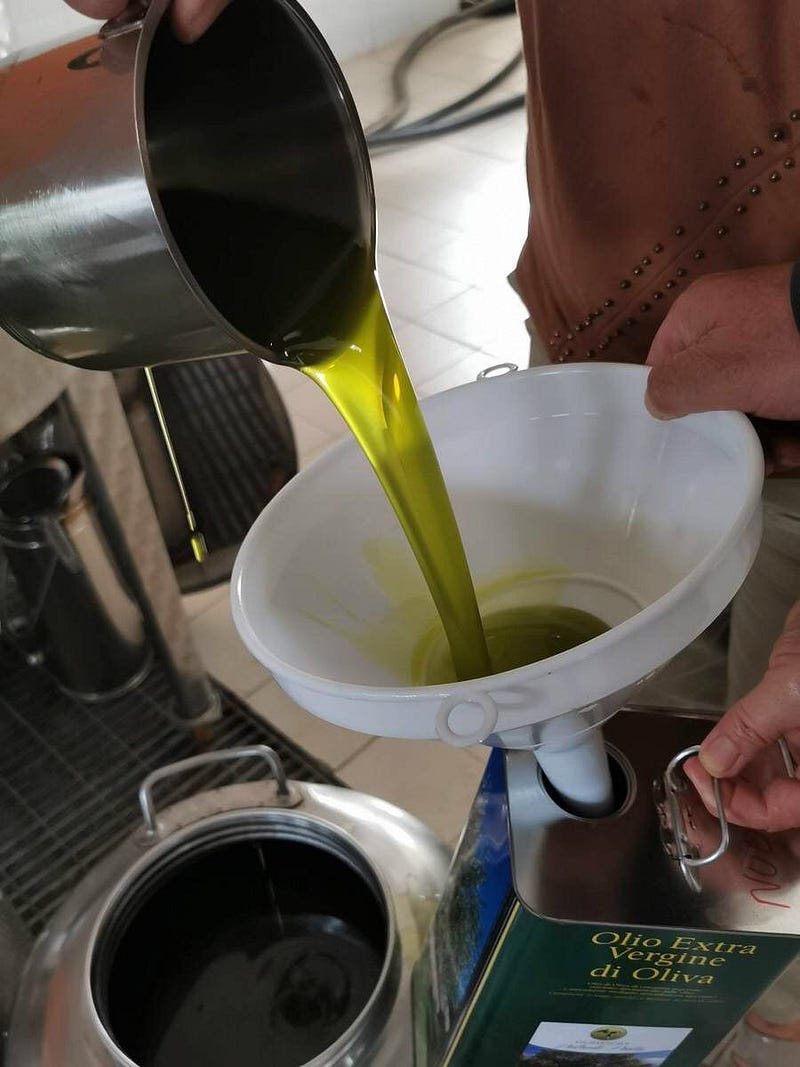
Anybody can arrive at an olive farm, and ask to buy oil. They are only too happy to oblige.
In fact, it is almost a right to ask, and a sin to refuse.
I usually head out on a Saturday, once a year, to get my stash and make a day of it. I buy around 20–25 liters, at a fraction of the retail price.
And it makes a lovely gift filled with chili, peppercorns, roasted garlic (always roast the garlic before steeping in oil by the way), or herbs. Or just a liter on its own, with a little handwritten note and recipe and a 5-cent ribbon.
My best gifts received are personal, or homemade ones. I’ll take a bag of freshly baked biscuits over a store-bought bit of TAT any day. You?
And like any good day in Italy, it usually revolves around food. I stopped for lunch at this amazing spot and ate like a king. We had eaten cheeses and preserves at the olive farm already so I wanted a light meal.
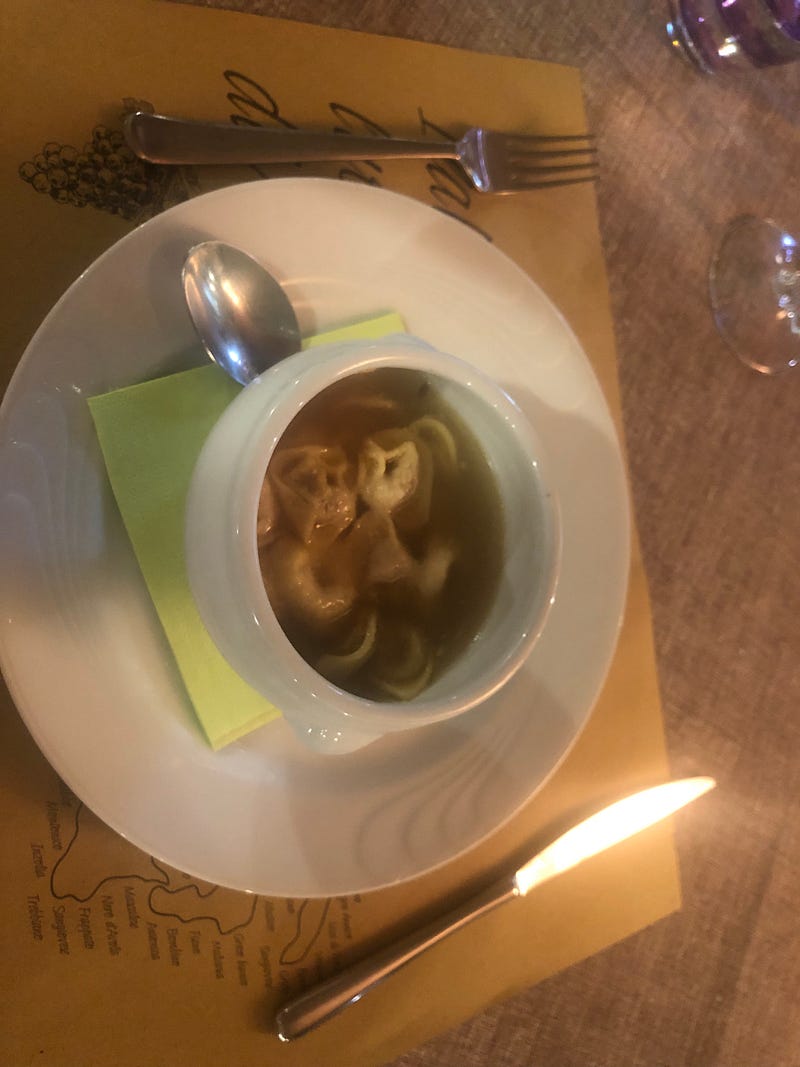
This is “light” by Italian standards. The portions were not huge. In Italy, it is usual to get PRANZO LAVORO, which roughly means “working lunch” in the country. Between 12–3.
It is a set price ranging from € 9–13 and you get 2 plates of food, sparkling or still water, coffee, and wine. I chose a Franciacorta Sauterne that was a bit extra, but well worth the money. It was delicious.
Franciacorta is the Italian equivalent of the Champagne region of France. Both are excellent.
Agnolini in Brodo is a tortellini filled with finely diced pork, beef, and chicken liver, poached gently and served in the chicken broth poaching liquid where little flecks of chicken oil bob-a-long on the surface.
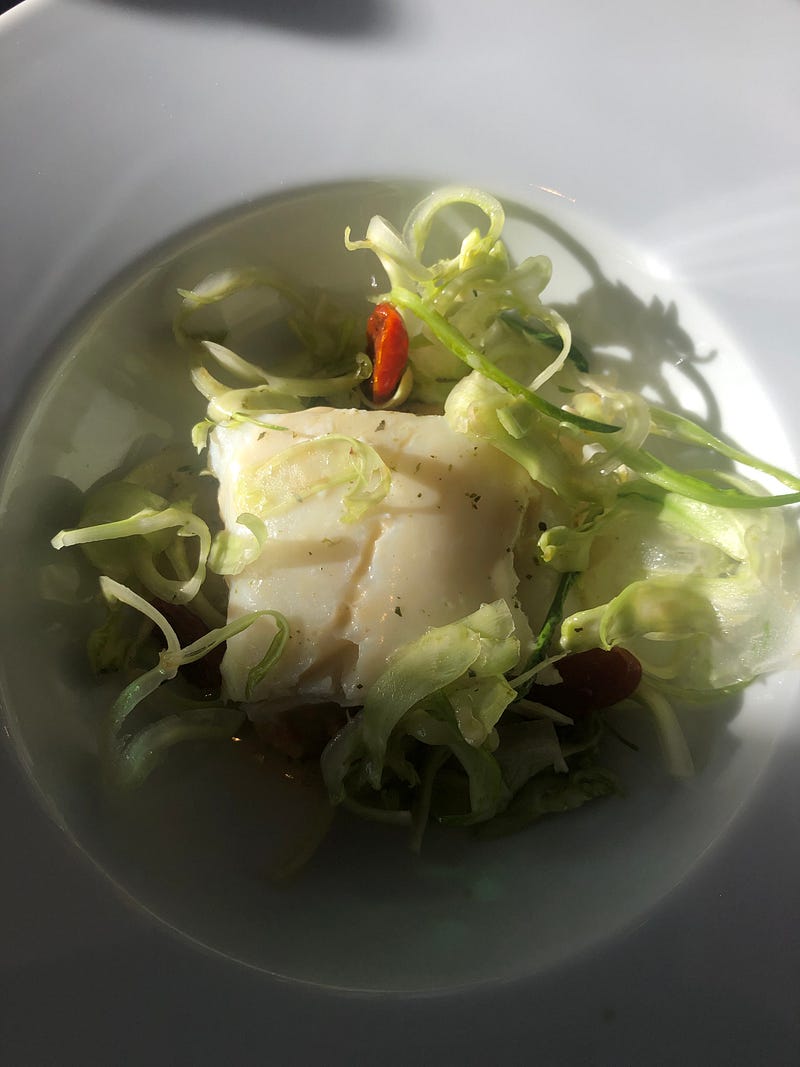
The fish was lightly poached and delicately delicious. It was a thick meaty chunk too. Underneath was a grilled mussel potato cake with a light wine and mussel sauce.
But the thing that made this dish pop, was the salad veggie garnish. Garnishes can elevate a dish, and take no time at all.
It had been poached in a pickle liquor, slightly sweet, and crunchy, and it cut through the richness of the dish incredibly well. I could have just had a bowl of salad greens.
Yeah, you heard that right. Just greens.
I went home and tried to reproduce it. I think mine was actually better and is now a firm favourite on my recipe list.
Recipe: (And trust me, it is so simple).
Read it through once, so you get the timings right. It is simple but requires decent timing in the process.
I think it is best to not have too many ingredients, and I like the idea of using only one accent colour with the predominantly green veggies. I chose a Ferrari red bell pepper.
Make earlier: —
1 x Red Pepper roasted on high in the oven, in olive oil. Let it get a bit charred on the outside. I roasted the whole red pepper, and then removed the seeds later. Once roasted, place in a glass bowl with all the pan juices and oils, and cover immediately with plastic to keep the heat in. Put aside to go cold. DO NOT REFRIGERATE. It must go cold naturally. You can leave it overnight in the fridge, once cooled.
Note — I assume most know this, but if you cover a hot chili or bell pepper in clingfilm, in a small bowl, its skin peels off easier.
If that is too much like hard work, just de-seed a fresh red pepper and roast in a glug of olive oil.
While your red pepper is roasting in the oven at 220 C, put a small pot to boil on the stovetop and add 1/2 of a cup of good vinegar — white wine or apple cider or whatever you use; 3 tablespoons of WHITE or CASTOR sugar (or more if you like it sweet); a few drops of sesame oil; a bay leaf; a glug of olive oil; a few mixed peppercorns and a teaspoon of vanilla EXTRACT, or freshly scraped pod, (Never use vanilla essence, it is a rip-off). Boil for 10 minutes. At about 7 minutes, add the pickling onions as they take longer to soften.
Depending on the amount of garnish you are making, increase the liquids, but the ratios above will work if you increase the vinegar. Adjust sugar if necessary.
While it’s boiling for 10 minutes, separate your veg and do the vegetable prep. 10 minutes is enough time.
1 x Finely shaved celery stalk. Use a potato peeler. Use the leaves as well;
A few Sliced Mangetout. Slice on a 45-degree angle to get some variation.
6 to 8 pickling onions, peeled and topped, or slices of white onion if you don’t have them, or cannot be bothered.
Once cooled, take the bell pepper gently — retain the natural juices and oils from the roasting pan, and the covered red pepper, and put them aside. Remove the outer skin and seeds. It is a little finicky, but trust me, the eating is far superior without the skin. And dice into small bite-sized pieces.
Prepare: (depending on the number eating, you do not have to use the entire lettuce — but ideally use three different types)
1 x Frisée lettuce, or any green lettuce, NOT ICEBERG.
1 x Mâche lettuce
Ideally, you want two different textured green leaves.
1 x Red Oak lettuce — the red tinge compliments the red pepper.
Some French beans — topped and tailed and sliced thinly in lengths.
As the vinegar is taken off the stove, and still piping hot, put the celery in with the pickling onions, and then the Mangetout, the beans, and sliced pieces of red pepper. Then place the stalks of the lettuce into the liquor so the leaves are out, like a vase of flowers. Leave it to cool for a few minutes. The veg must not go soft. You want it al dente. Crunchy.
You want the lettuce stalk ends to soften and suck up the hot vinegar mix, but not over-wilt the leaves. Once the vinegar has cooled, put the leaves into the vinegar as well. Leave for 15 minutes or so.
Remove the salad items from the pickling juice. Strain the pickling juice to remove peppercorns and impurities, and add to the reserved red pepper pan and roasting oils and whisk with a little good extra virgin olive oil until slightly emulsified. Not oily.
I had it with thinnish slices of cajun spiced blackened chicken fillets, layered. A light grating of fresh Pecorino. And some crusty ciabatta to soak up the juices.
But you do you. Layered between slices of roasted sweet potato would be delicious too.
I have four oils in my home at any time.
- A fine smooth extra virgin olive oil from around the Garda / Franciacorta Region of Lombardy that I use to dress my salads, cheeses, and snacks. I use it as a finishing oil.
This oil region has a very low acidity, usually below 0.8%, and is crushed naturally, not mechanically. It is the finest oil around, is less bitter and is usually a rich fruity dark green. It is harder to come by because the production is small, but it is prized in Italy as one of the very best;
2. A decent extra virgin oil that I use for light cooking, but not for dressing salads or finishing, etc. For example in a tomato pasta sauce, or meat ragù. It is not as good as the one above and noticeably so if you put them side by side. Like wine, whiskey, or any food … olive oils are graded and have definite quality levels. This is a middle-of-the-road option;
3. An olive oil that is not extra virgin. It is a second press but still pure Virgin oil. It might be mechanically pressed. This I use to sauté with. Things like Chicken Milanese and crispy rosemary potato;
And finally,
4. A blend of olive oil and pure vegetable oil. Often called POMICE OIL. Mechanically pressed a solvent is used to extract the oil from already pressed oils. A second or third pressing, so to speak. I fry in this oil. Things like chips and fish or calamari.
Many Italian gardens have a few olive trees and they can harvest and send the olives to a local “Frantoio” (mill) and have them pressed into oil. The average family uses about 20 liters of oil a year.
This may sound like a lot, but remember, Italians do not use butter. They rather dip the bread into the oil or drizzle the oil onto the bread before building a sandwich. And most of the cooking is done with olive oil, not vegetable or seed oils.
Olive oil differs from region to region in Italy, and 18 of the 20 regions produce it. Soil, climate, and cultivars, like wine, affect the taste. Olive oils can also be a blend of a variety of olives.
If you buy olive oil from a farm or proper dealer, they will give you a small cup of oil to taste, smell, and sample. If given this opportunity — take it. And find out what you prefer. If you are lucky, they will also give you a piece of good bread to dip into the cup. But do not bet on that happening … they drink olive oil neat. Often.
For health.
If you are serious about olive oil, and I am, check if the olives are FRANTOIO (more fruity); Moraiolo (Spicy); or Lecchino (sweet & very smooth).
The original pesto is from Ligurian olives in Tuscany and was for centuries, the original oil used for basil pesto, hence its name Pesto Genovese. It is a delicate mild olive and is popular in Italy on aperitivo plates and in pasta dishes.
Quick serving idea:
Boil a cup of good balsamic with a few green and pink peppercorns and a stick of cinnamon. Reduce by half or until it coats the back of a spoon.
Then, while it is still hot, strain it into a serving dish with a lip. And leave to cool. Pour good extra virgin oil on top and it will separate — giving you a visibly appealing alternative to butter.
Use for bread instead of butter and dip the oil, into the balsamic and eat. I often eat this with macerated baby tomatoes mixed with freshly torn basil leaves.
It’s olive oil all the way, baby.
The South harvests earlier than the North of Italy, and it is a big occasion. It is said the mafia gained a foothold in the USA through the importation of olive oil from the South which was immortalised in the Godfather movies.
The Agromafia is an old branch of the mafia “franchise”, and very real. It is also very wealthy accounting for an estimated 15% of the entire mafia income. They are considered the “better mafia” because they refuse to sell drugs or prostitution. Its leaders are seldom caught. And they are considered the originals.
Fake olive oil, sold mainly in the USA, but also in many other countries, is valued by the Carabinieri at $15 billion annually.
The Carabinieri estimate that the Agromafiosi make 3 times more than the cocaine mafia per annum. And in some strange way, that pleases me. I’d rather the kids were sniffing olive oil, even if it is fake, than cocaine.
Enjoy a Virgin today. You will not be sorry.


