
Tottenville History
OLHC History from the Silver to 50th Golden Jubilee
1924–1949

125 Years of History at Our Lady Help of Christians
Article Two in a 5-part series
In the introductory article to this series, 125 Years of History To Interest You: Our Lady Help of Christians 1898–2023, I shared the background of my involvement in writing this parish history.
The first article of the series, OLHC History to the Silver Jubilee shared the first 25 years: 1898–1923.
Now I’ll be sharing the next 25 years that includes Dorothy Day becoming a Catholic in the parish.
In 1926 when Father Malloy became ill, Cardinal Hayes appointed his assistant, the Rev. Joseph V. Hyland, the administrator of the parish.
By 1930 Father Hyland had cleared the $7,000 debt on the rectory in Tottenville, the $4,000 debt on the house in Huguenot, and the $3,000 debt on the Church in Huguenot.
He made improvements to the heating system, stained glass windows, and floors of the Church.
But Father Hyland’s biggest place in history happened on December 29, 1927.
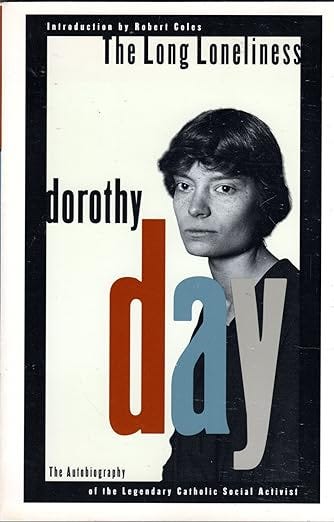
That was the day he received Dorothy Day, co-founder of the Catholic Worker Movement, into the Church following the baptism of her daughter, Tamar.
At the time, she resided at the Peter Maurin Farm, headquarters of the Catholic Worker Movement, which was located on Bloomingdale Road in Pleasant Plains.
In 1933, the Harmsen family sold the parish what was to become the convent for $9000.
Prior to this the Sisters motored to and from school each day from their motherhouse at St. Michael’s in Greenridge.
In March 1935 Father Malloy died, and Cardinal Hayes directed Father Hyland to keep separate accounts of the financial affairs of Our Lady Help of Christians and the mission church in Huguenot.
In September 1935, Our Lady Star of the Sea became a separate parish with Father Hyland as its first pastor.
The Rev. Francis F. Donnelly became the pastor of OLHC in Tottenville.
In April 1942, the Rev. Richard J. Piggott came to Tottenville as administrator under Father Donnelly.
The church was newly decorated:
- The sacristy now housed a new hand carved vestment case and hand carved baptismal font.
- A new hand carved altar rail replaced the old brass railing.
- The school received a complete renovation. To provide additional classroom space the auditorium changed into two classrooms.
- Firefighters from the local fire station and the men of the parish cemented the playground and dug out the basement of the church.
- The parish was able to pay off the convent debt.
Upon the death of Fr. Donnelly on April 20, 1944, Fr. Piggott continued as administrator until July when Cardinal Spellman named the Rev. James F. Molloy Pastor.
In the fall of 1944 the Rev. Frederick J. Miller became Assistant Pastor, an appointment which was to last for 28 years.
When Fr. Molloy arrived, there was a $6,700 parish debt, gone within a year with the generous cooperation of the parishioners.
In November 1945, realizing that the parish would require more property for future development, Fr. Molloy purchased a four-family house next to the convent for $7,250, with this debt paid off within a few months.
The church basement became a lunchroom for the children.
To commemorate the Golden Jubilee of the parish in 1948, Fr. Molloy had three hand carved altars installed in the church.
Liturgically a solemn Mass of Thanksgiving celebrated the golden jubilee on May 23, 1949, with the Bishop of Wheeling, Virginia, Most Rev. Thomas McDonnell, officiating.
Did you know that Dorothy Day now has the title Servant of God on the first step toward possible canonization as a saint?
In 2000 Cardinal John O’Connor started the path. In 2005 the Dorothy Day Guild began to gather evidence to further the process. In 2012 the U.S. Conference of Catholic Bishops added their support of the cause. In 2021 Cardinal Timothy Dolan completed the diocesan phase sending the documentation to the Vatican to begin the Roman phase of canonization.
Look for the next 25 years of history in this 5-part series, or become an email subscriber to make sure not to miss any.