
Old Woman Living in a Chicken Coop
The shocking discovery changed America for the better…and proved it’s never too late to launch your second act.
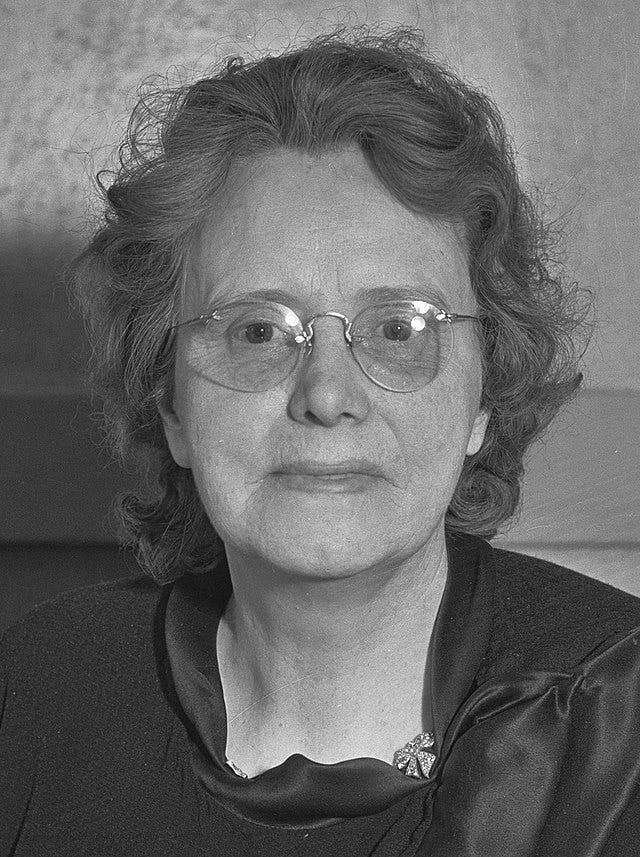
In the mid-1940s, a woman named Dr. Ethel Andrus was enjoying a stellar, 40-year career. She was a Ph.D., a celebrated teacher, and the first female urban high school principal in California.
But one day, her mother’s health took a turn for the worse, and Ethel walked away from it all. She resigned to care for her aging Mom.
She was only doing what many dutiful daughters do. But as it turned out, Ethel’s unselfish act would launch the second, most enduring role of her career.
The inspiration of Ethel’s Mom
Had she achieved nothing further, Ethel would still be remembered as a noted educator. But Ethel’s mother urged her to never stop achieving, even in retirement.
“You thought your work was over when you gave up teaching youngsters,” Ethel’s mother told her. “But it’s only the beginning.”
How true that would prove to be.
One day, Ethel got a call.
A former colleague told her a retired teacher hadn’t been seen for awhile. Would she mind checking on her?
Ethel drove to the address she’d been given, but no one answered the door. As she turned to leave, a neighbor said she could find the homeowner “out back.”
In the backyard was a windowless shed — a former chicken coop. Ethel knocked on the sagging door, and it opened…revealing a grey-haired woman with withered skin and sunken cheeks, wearing a threadbare coat.
To her shock, Ethel recognized the woman, who had served in their school district as a distinguished Spanish teacher .
The retired teacher told Ethel she now lived in the chicken coop because, on her meager pension, she couldn’t afford decent housing or healthcare.
The situation infuriated Ethel. And it prompted her to devote the rest of her life to a single mission: Making sure no retired person has to live in poverty and degradation.
Fulfilling her quest was far from easy.
Ethel looked around America in the 1950s and saw many other retirees with no health insurance and little or no pension. She saw workers forced out of jobs through mandatory retirement at age 65.
She saw insurance companies routinely canceling auto policies for older drivers. And the poorest segment of the population? Sadly, she knew it was older Americans.
Ethel set out to change all that by founding the American Association of Retired Persons (AARP). And what it means to grow older in the U.S. changed dramatically.
Under her leadership, Ethel helped pass Medicare and Medicaid, improved Social Security, secured tax benefits for older adults, established cost-of-living increases for pensions, outlawed mandatory retirement and made age discrimination illegal.
AARP grew to become a powerful consumer advocacy group — the nation’s largest nonprofit dedicated to empowering older Americans. The group remains focused on ensuring proper housing, health care and financial security for all.
In the last 50 years, in large part due to AARP, the poverty rate among Americans 65-plus has declined nearly 70 percent.
A more positive image
Of all her contributions, Ethel’s most important one may be how she changed the image of aging and retirement.
“When you leave a job, they often just give you a gold watch, and all you can do is look at it and count the hours until you die. Yet think of all the grand things we can do that youth can’t.” — Ethel Andrus
Ethel promoted retirement as the start of a person’s creative life, rather than the end of it. She saw the time after employment as an opportunity to move beyond a focus on self, to serving the needs of others.
Her personal motto was “To Serve, Not To Be Served.” Through her efforts, she brought legions of retirees out of isolation and back into the mainstream of life. As a result, they went back to school, traveled, got part-time jobs and volunteered in their communities.
Ethel objected to the term “senior citizen.” She said, “We wouldn’t call 45-year-olds junior citizens.”
Dr. Ethel Andrus died in 1967, scrappy and passionate to the end. She left behind an impressive legacy, dedicated to the idea that all Americans should live out their lives with independence and dignity.
So if you’re wondering if your glory days are over, remember Ethel, who founded AARP at age 74.
And take inspiration from her example that it’s never too late to launch your second act.


