
Mature Flâneur
Old Lisbon Never Gets Old
Why we keep coming back
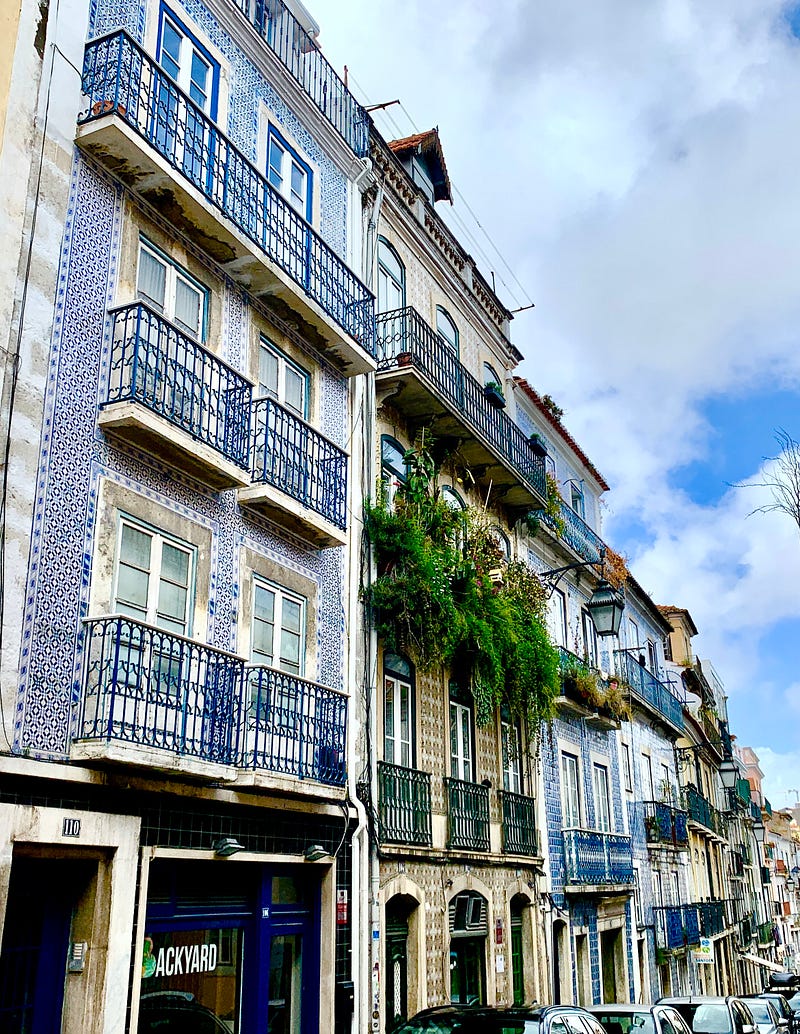
Lisbon is old, but it never gets old. This is the fourth visit for us since October 2021. The more Teresa and I come here, the more we want to return again.
Visiting a city for just a few days creates an artificial impulse to see and do as much as possible, to check main attractions off a list. But now that we have already seen a good number of the tourist highlights, there’s absolutely no pressure to do anything other than to flâneur — to wander about without a plan, following our noses and keeping our eyes open for the unexpected. Just taking a stroll from our hotel to the city center and back is enough fun for a day. Being less dazzled by the monuments, churches and palaces allows the quirkiness of Lisbon to better reveal itself.
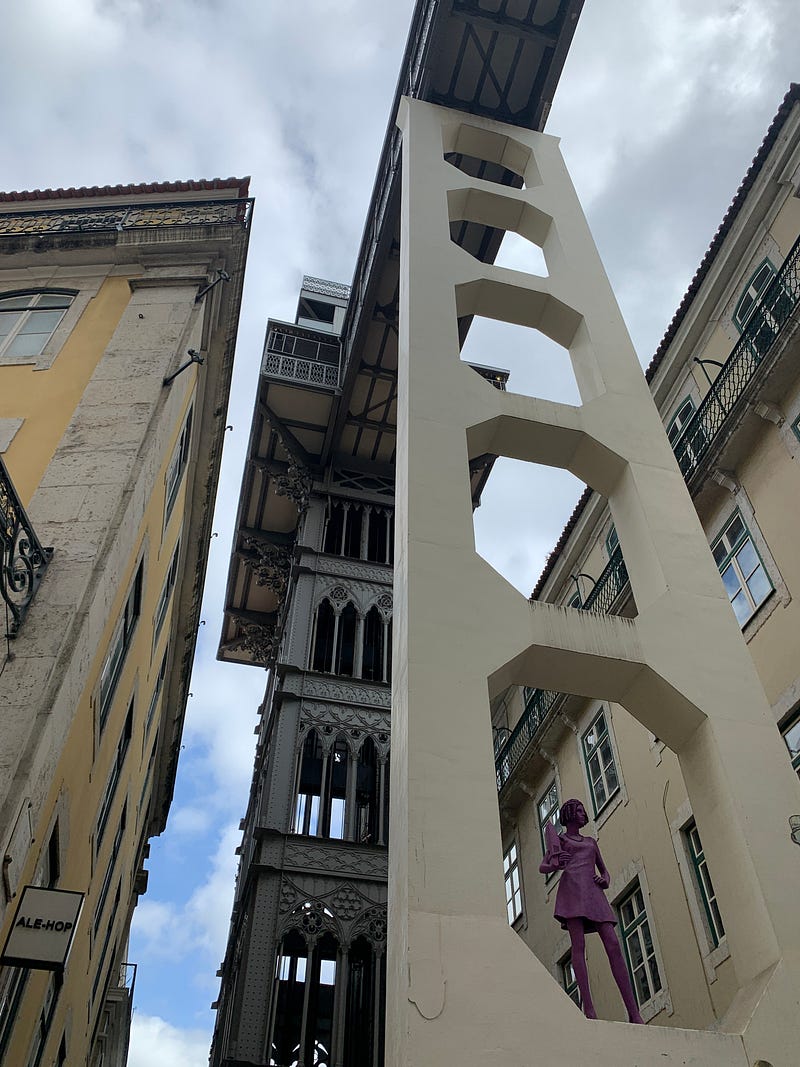
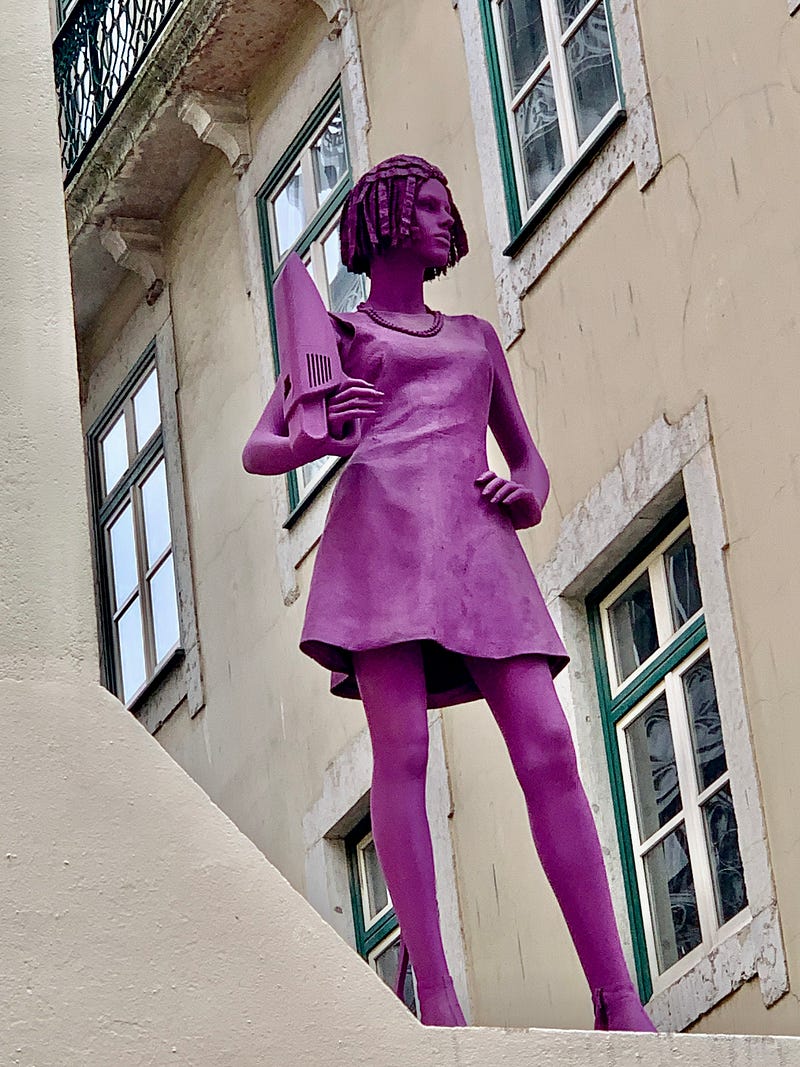
For example, here’s a statue of a purple woman, brandishing a dust buster right next to Lisbon’s famous antique elevator in the Chiado shopping district:
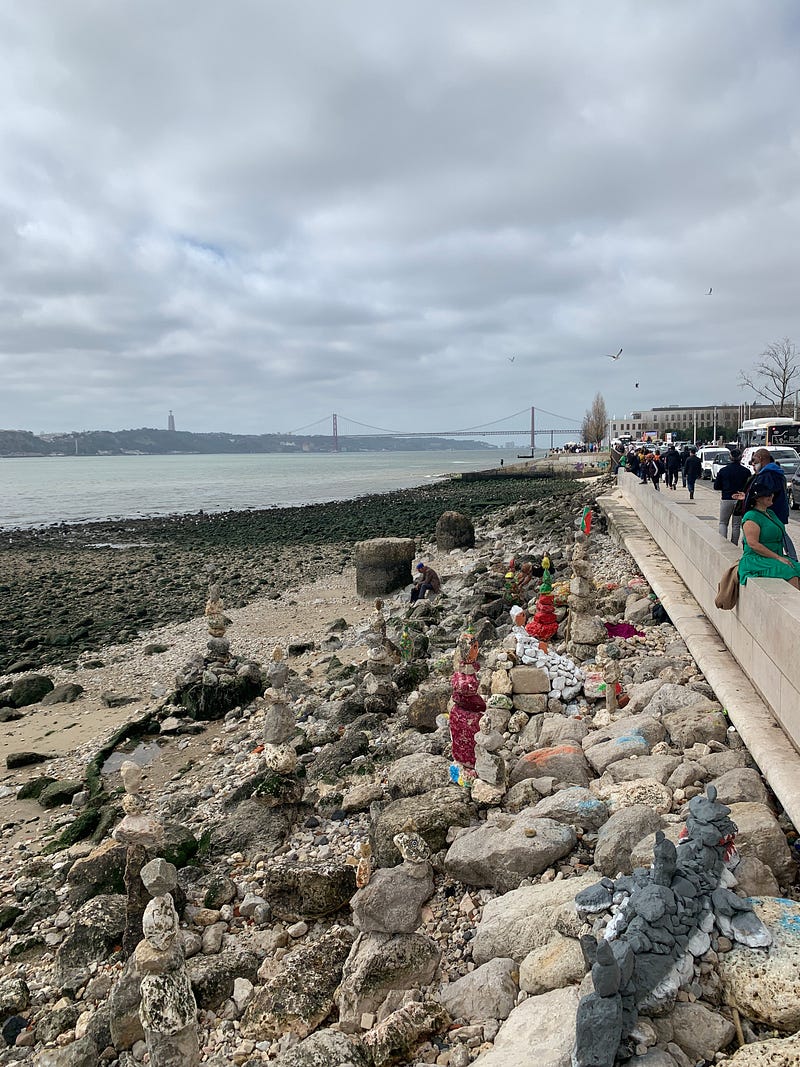
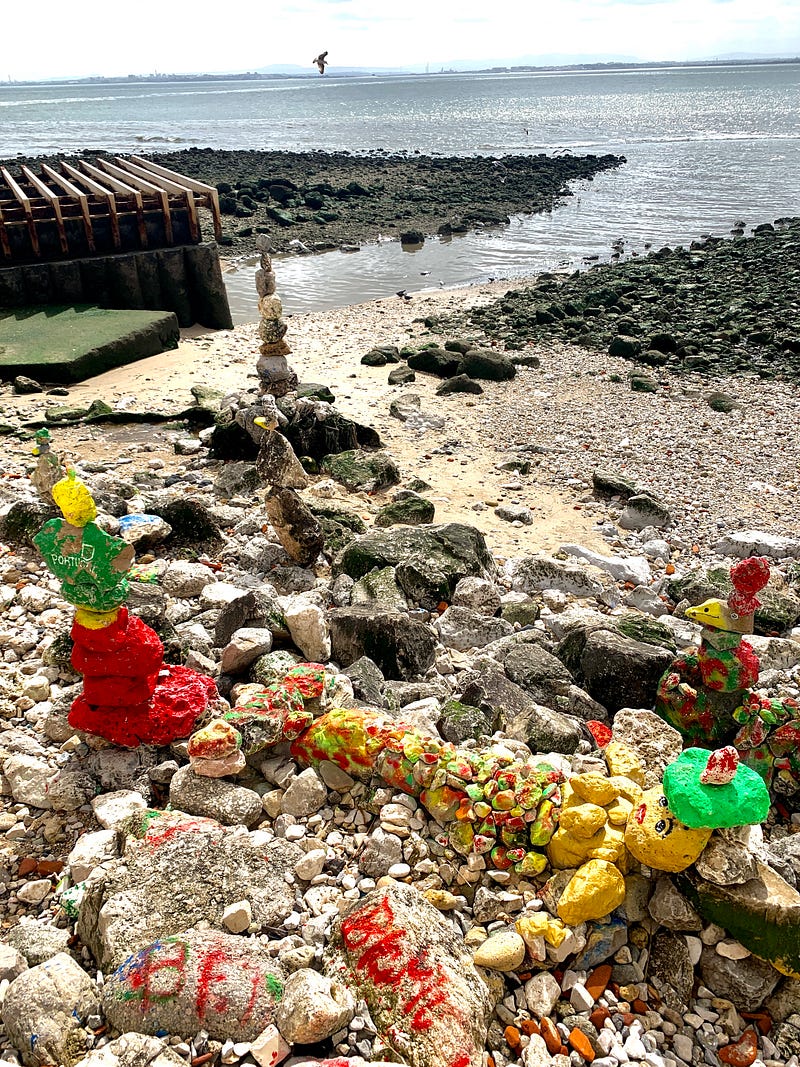
By the waterfront, I saw an old man painting and piling up stones into works of art. Here’s a shark he made (below left, in the lower right corner) and a supine mermaid (below right):
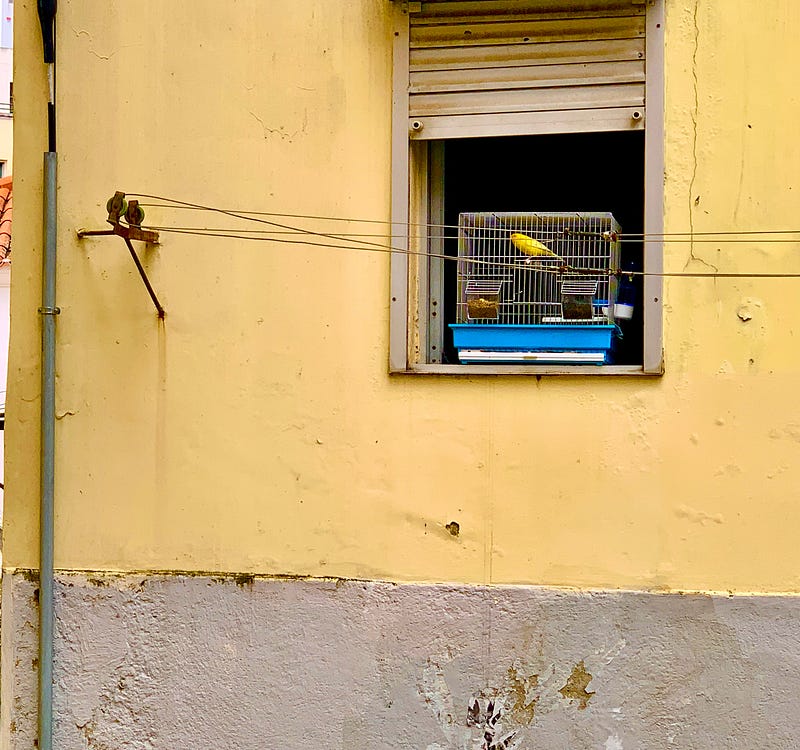
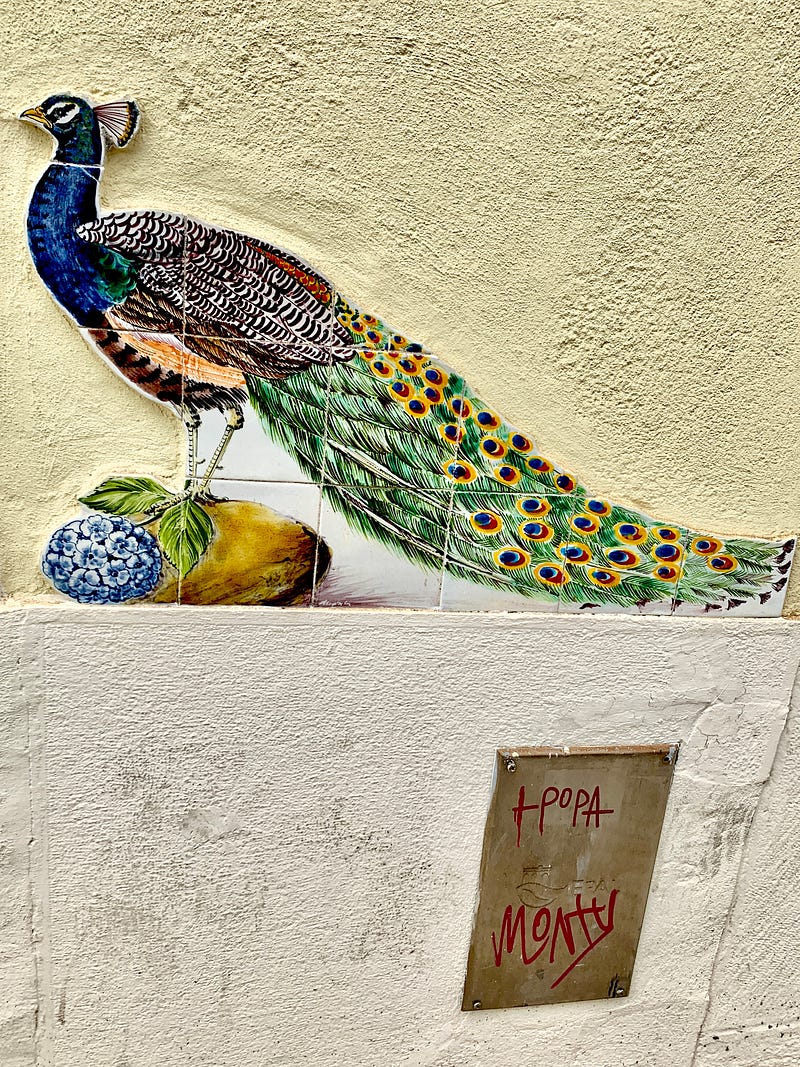
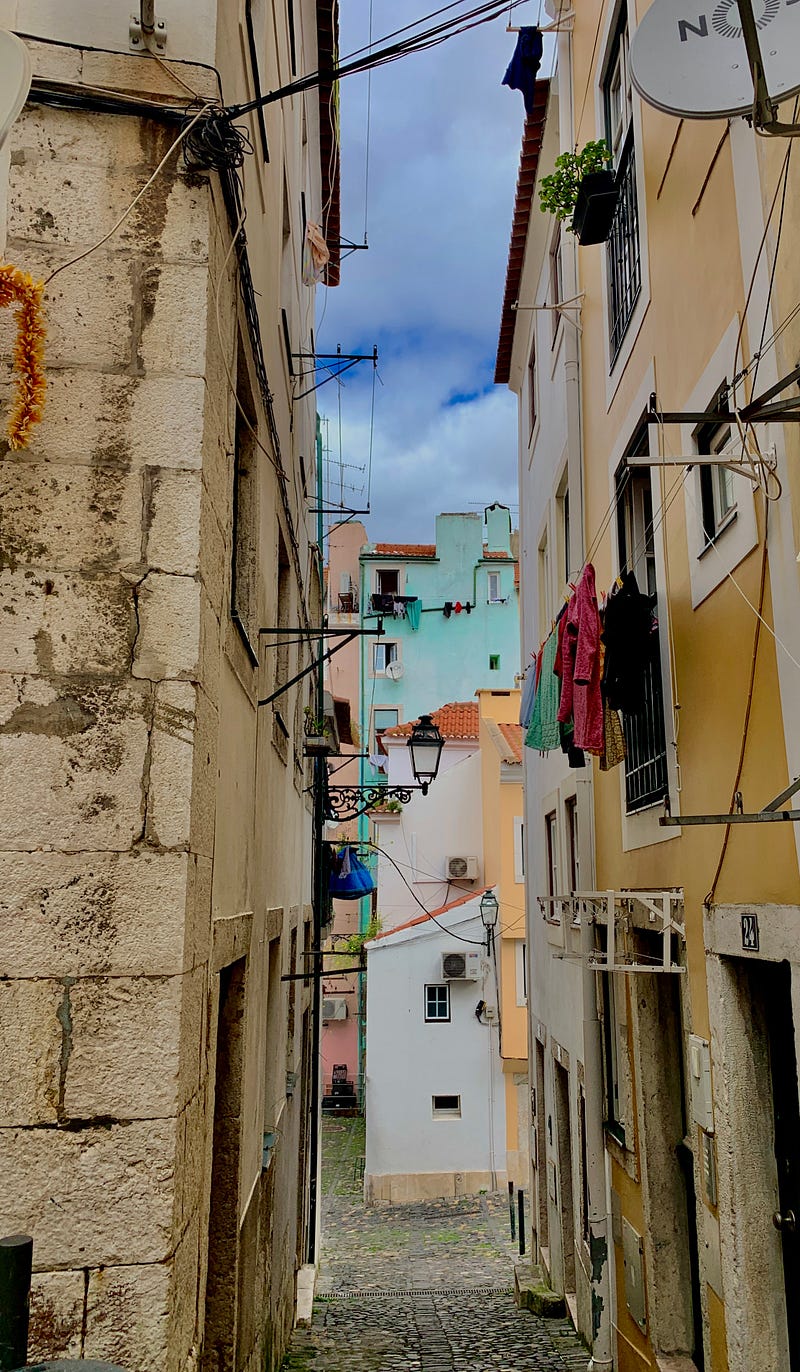
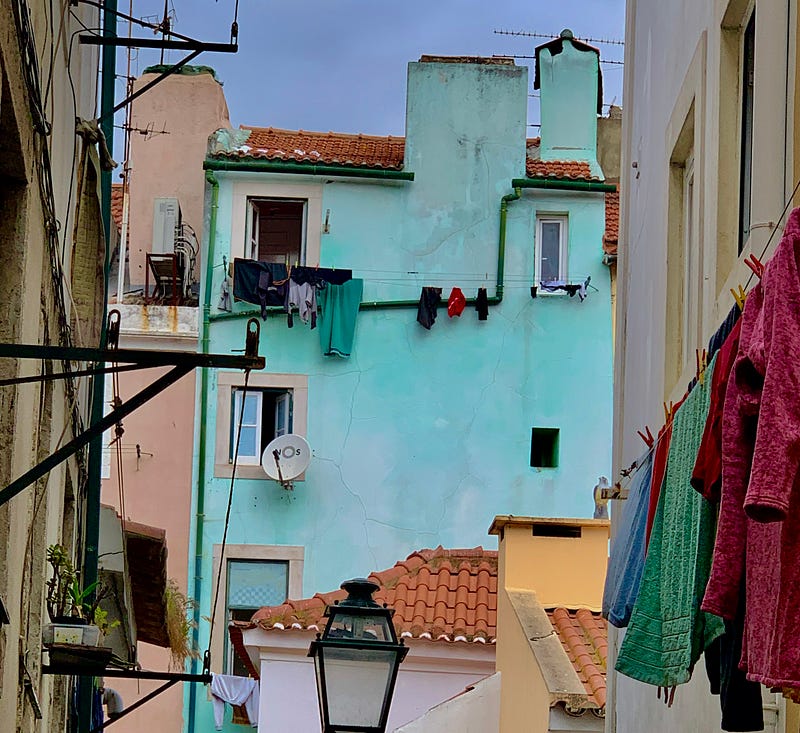
Teresa and I are still entranced by the winding, cramped streets of the old Alfama and Mouraria districts that surround St. George’s Castle. They offer surprising bursts of color and beauty: pink and turquoise laundry on a line that mirrors pink and turquoise buildings the next block over. A yellow budgie in a cage against a yellow wall. A peacock done in azulejos (tile art) on a random wall — and look at the unpredictable azulejos blue egg that peacock guards!
It is distressing, though, to see the many buildings that have fallen into disrepair in Lisbon, their windows broken or boarded up, doors chained shut, plaster falling off the walls. We found one grand apartment complex in the tony downtown Comércio district that was in bad shape. It bore a grey, mildewy banner advertising luxury apartments for sale, but obviously, the deal had gone sour years ago. No one had even bothered to pull down the embarrassing sign. (In case you are curious, the website displayed on the sign (below) no longer exists).

Clearly, Lisbon still has its challenges. One taxi driver told us the city is sinking due to last year’s prolonged drought. This sounded counter-intuitive, but he explained that the drought caused the water table beneath the city to drop. That exposed many of the old wooden pylons in the underground river that prop up the city from below. When the pylons began to dry out, they began to rot and weaken. Even though last year’s drought was ended by catastrophic floods in December, the damage has been done. As climate change persists, the problem will only get worse.
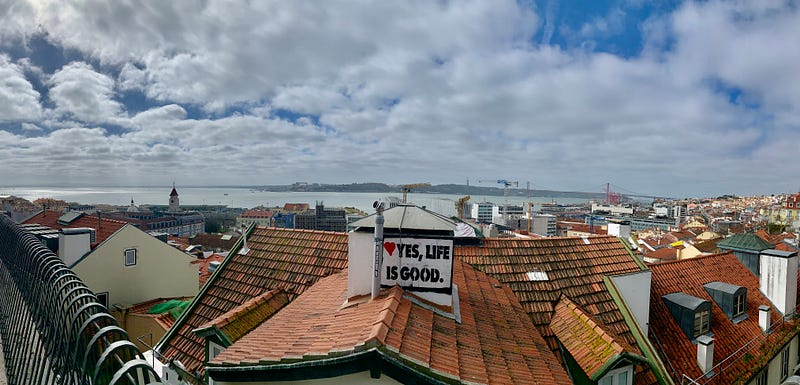
One afternoon I went out to drop off our laundry, and then decided to wander into the backstreets of the Bairro Alto neighbourhood. I decided that at each intersection I would simply take whatever turn went most steeply uphill. I zigged and zagged along quiet little backstreets, with the odd cafe on a corner or bakery shop, and then round the last corner I came to an open hilltop with a little park, two posh hotels, and a spectacular lookout. This turned out to be the Miradouro de Santa Catarina, a viewpoint that bore an optimistic message for all who made it up to the promontory:
Behind the viewpoint, in the center of the little park, a jagged rocky peak jutted up. No—on second glance it was a stone sculpture of a giant, his hair and beard wild as if in a tempest, his eyes bulging with fury. In front of him stood a small bronze man, with what I swear looked like a smartphone in his hands. His head looked up, as if he had just been texting and then discovered this menacing monster right in front of him.
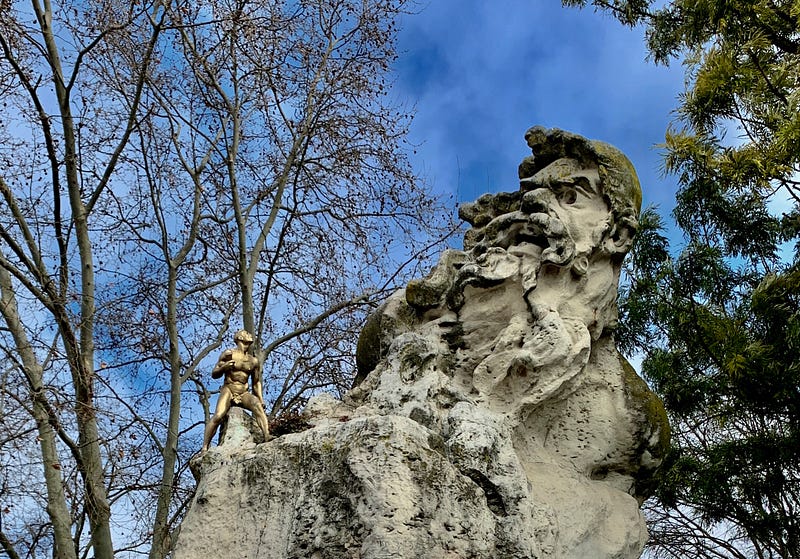
Well, this was not a modern cautionary tale for our device-addicted times. A plaque identified the statue as Adamastor. It turned out to be a sculpture of a pivotal character in Os Lusiadas, a Portuguese epic poem written by Luís de Camões the mid 1500s. The epic is to Portugal what the Odyssey is to Greece: a mythic rendering of Portuguese explorer Vasco da Gama’s sea voyage to India in 1497—the first such by any European. This was the voyage that marked the beginning of Portugal’s global empire and rise to power.
In the poem, da Gama and his crew must sail around the treacherous southern tip of Africa, then known as the Cabo das Tormentas, the “Cape of Torment.” Suddenly the Titan Adamastor rises from the wild seas, blocking their passage. He is both the rock of the Cape itself, and an embodiment of the terror of the unknown. Indeed, sailors of that time really believed that monsters inhabited uncharted seas. In facing their fears and successfully rounding the cape, da Vasco’s crew proved they had the spirit Portugal needed to reach their destination and find their destiny. In both the poem and in real life, da Gama renamed this treacherous place “The Cape of Good Hope.”
Standing on this magnificent viewpoint overlooking the ocean, I feel the aptness of that metaphor today, and not just for Portugal. Really for all of us. Adamastor looms. Do we have what it takes to face the terror of our future? I honestly don’t know. But I think we have got to look up from our phones and start paying attention! That sign, “Yes, life is good,” feels a little less comforting.
No wonder for me this tattered yet pretty city never gets old. Just when I think I know my way around, Lisbon confronts me with a big existential question.