
Oh, you’re just asking questions?
Well, I’m not answering them
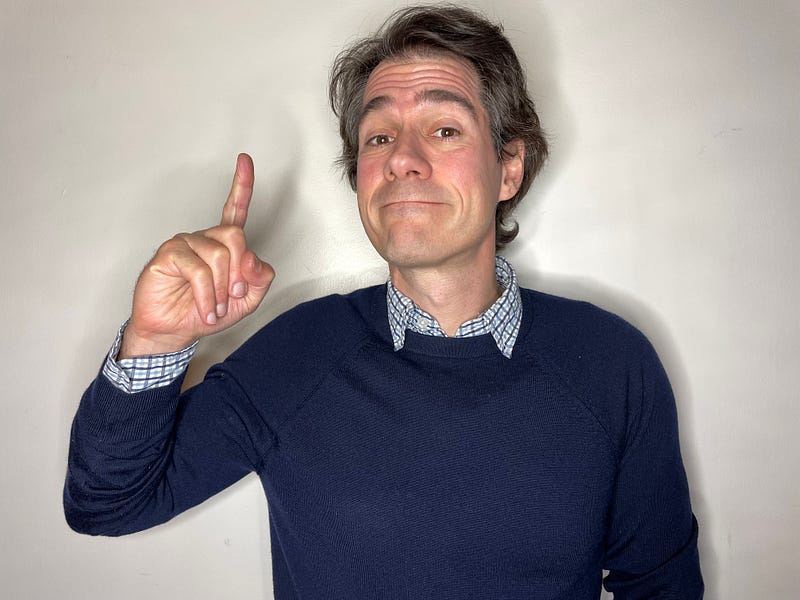
Do I like questions? What kind of a person wouldn’t like questions? Aren’t questions how we learn? ¿Don’t some cultures love questions so much they put question marks on both ends? Wouldn’t it be horrible to admit that questions can be annoying?
My life-long love of questions ended a few years ago, when I was interviewing an editor at Goop. An article in Goop magazine by osteopath Habib Sadeghi suggested that we stop lying, which seemed like a good idea for life, if not an article.
Sadeghi’s solution was not to examine the roots of our dishonesty. It wasn’t even to stop lying. Instead, he suggested we light a white candle, spend 12 minutes writing down our moral crimes, and burn them. The key here is the 12 minutes, since “the number 12 has great spiritual significance across nearly all belief systems. The examples given in the article include “12 hours of day and night” which is only true if your belief system lives on the equator.
When I asked this very smart editor how Goop believed in that, she said, “We come from a place of asking questions, looking for better solutions. We’re not like, ‘Don’t vaccinate your children. Don’t get chemotherapy. Don’t have that pneumothorax repaired’.” I asked what that last thing she said meant. “Punctured lung,” she explained, saying her dad was a pulmonologist. I asked what that last thing meant, which is “lung doctor.”
“There’s this anger at women in particular for daring to ask questions. We hear that we’re stoking fear. That women aren’t capable of parsing information. That we’re putting ideas in people’s heads. That we’re making them afraid of their tampons,” she said. “We object to this idea that we should only talk about things that are well accepted by the medical community. How dare we talk about things that aren’t yet well understood. Why are we not allowed to ask these questions? It’s exhausting. It’s a bummer.” She cited questions that were asked in the past that upended the scientific orthodoxy, including the danger of talcum powder.
I found this convincing. After all, I’m a journalist. A huge part of my job is asking questions. Often ignorant questions. I once asked Esther Williams, “Was there a guy in Hollywood you didn’t sleep with?”
But because questions are crucial to my work, I respect them. I’m not promiscuously pro-question. I’m a question snob. Like Socrates, only way more handsome.
When I talk to people, professionally and privately, I mostly ask questions. That’s not because I’m interested in you. It’s because it lets me control the conversation. Each interaction has its own Overton Window, and I like to define the limits of how stupid it can be.
If we decide to ask questions about whether vaccines have chips inside, why you can’t see the earth’s curvature from an airplane, why a guy in Detroit took a box from a white van into a polling center, what temperature skyscraper metal melts, and how much urine to drink to cure Covid, then those are the issues we’ll focus on.
There are lots of bad questions: Can I tell you about my passion project? No, I mean ‘Where are you from?’ Might it strengthen our marriage to have a threesome? Can you calm down and discuss this rationally? Could a brigadoon skyscrape this squeeze hatter?
I’m not accusing bad questioners of being insincere and JAQing off like a news channel host trying to win a debate. I’m concerned about people who spout conspiracy theories on the floor of Congress and hide behind the “I’m only asking questions” excuse the way people use “I’m only joking.” I both ask questions and make jokes for a living and I know that both are powerful.
A question mark isn’t a loophole. You’re responsible for your thoughts even when your voice goes up at the end. And I’m responsible for consenting to engage in conversations that take us back a few centuries. Society exists because of the questions we’ve answered. Relitigating the obvious is not innocuous. How can you verify an election, after all, until you’ve answered all the questions about it?
An open mind is only good if it’s not in a room full of arsenic.
Joel Stein is the senior distinguished visiting fellow at the Joel Stein Institute. A former columnist for Time, the L.A. Times and Entertainment Weekly, he is, amazingly, also the author of In Defense of Elitism: Why I’m Better Than You and You’re Better Than Someone Who Didn’t Buy This Book and Man Made: A Stupid Quest for Masculinity. Follow him on Twitter, Facebook, Instagram, Friendster, or Google+.


