
Oh Behave! Behavioral Economics
Why we do what we do.

Behavior: its Antecedents and Consequences
Behavioral Economics is a method of economic analysis that applies psychological insights into human behavior to explain economic decision making.
We are not Spock.
Behavioral Economics is an heroic attempt to refine the assumptions of classical economics when it comes to actual human behavior and decision making. It probably doesn’t come as a surprise to you that we humans are not always hyper rational in calculating the optimal solution to what is best for us. Sometimes we misbehave. Sometimes we make poor decisions. I know my closets and garage are full of less than optimal purchase decisions. Economics should take that into account.
It all started with The Wealth of Nations by Adam Smith published in 1776. Since then, Economics has made great strides in becoming a reputable applied science. It did so by abstracting human behavior relative to how we make decisions.
Classical economists kept the math easy by simply positing that we all optimize our decisions to give us the maximum satisfaction and benefit, all the time. Well guess what, it ain’t necessarily so.
Classical economics is good at describing events after the fact but not so good at predicting what is going to happen. Remember 2008? Or 1929?
As Canadian (like Mike Myers) Laurence Peter, of the Peter Principle fame, so wittily said:
An economist is an expert who will know tomorrow why the things he predicted yesterday didn’t happen today.
Economic events and catastrophes are essentially the aggregation of lots of individual behaviors colliding, and canceling each other out, and adding together into rogue waves. Perhaps part of the poor predictive power is because of over simplification when it comes to assumptions about human behavior.
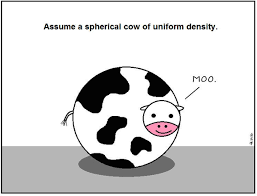
Physics is a pure science that sometimes has a similar relationship to everyday events. There is the story of the dairy farmer who enlisted a physicist to analyze his cows and milk production. The physicist reviewed the farm and the operation, went away for six months, and returned with his analysis. He began:
Assume a spherical cow of uniform density…
Simplification, reductionism, and abstraction are the methods of generating theory. Every theoretical system is built on assumptions that are taken as self evident, like the 5 axioms of geometry. Economics made great strides by developing analytical tools based on the simplified assumption that we are completely rational actors. In theory.
In practice, not so much. For over two centuries the ideology of free markets has dominated the world, bending politics as well as economics to its core assumption that market forces produce the best solution to any problem of allocation. Any problem. All problems. These days we are exploring more nuanced versions of capitalism and economics based on a more nuanced vision of behavior.
Behavioral Economics is a method of economic analysis that applies psychological insights into human behavior to help explain economic decision-making. Traditional economics assumes that people are completely rational actors and are always optimizing their decision-making.
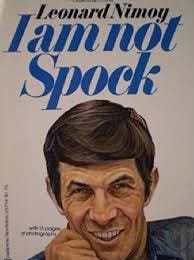
If that were a true and accurate description of our behavior, then supermarkets wouldn’t have impulse purchase sections by the check out line and their would be no advertising industry or influence selling tactics. Behavioral Economics attempts to paint a more subtle and shaded portrait of our decision-making behavior, our heuristics, and our cognitive biases. To paraphrase Leonard Nimoy: we are not Spock.
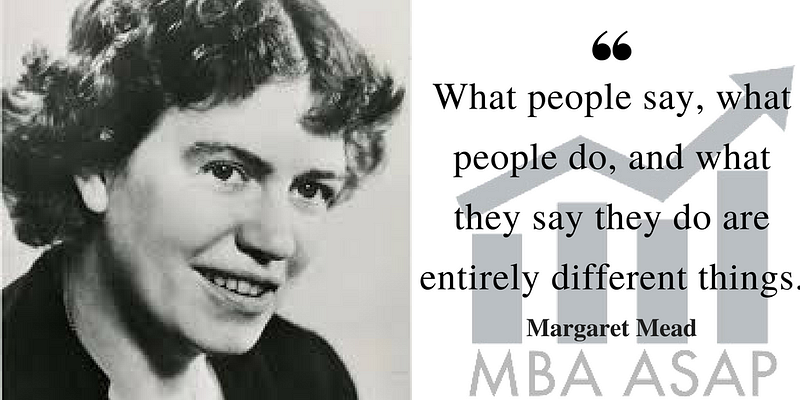
One of the big breakthroughs in thinking about our decision-making abilities came from looking deeply at the short cuts we use to quickly size up a situation and act. These shortcuts are called heuristics. Heuristics it turns out are highly practical problem solving techniques especially when one has to make a quick decision, like the fight or flight type we used to have to make on the savannah a couple hundred thousand years ago. They are not guaranteed to be optimal or perfect, just sufficient for the immediate circumstances. Nowadays, they can lead us into temptation and be manipulated by savvy marketers and hucksters.
Behavioral Economics can teach us about who we really are. Like Morpheus says in the Matrix: “You take the blue pill, the story ends. You wake up in your bed and believe whatever you want to believe. You take the red pill, you stay in Wonderland, and I show you how deep the rabbit hole goes.”
Check out this list of what I think are the very best books on Behavioral Economics.
Take the red pill…