avatarChristina R.

Free AI web copilot to create summaries, insights and extended knowledge, download it at here

3147

Abstract

ummer. There’s no shade on this trail, and summer temps are in the triple digits Fahrenheit. It’s an oven and isn’t afraid to roast you alive. The best time to visit is between November and March, but monitor the weather.</p><figure id="f7e8"><img src="https://cdn-images-1.readmedium.com/v2/resize:fit:800/1*_hb0XZuNn7h_oPoQ6J1Crg.jpeg"><figcaption>The fingers of an Ocotillo. Credit: Christina R.</figcaption></figure><h2 id="d0fe">Finding a Prehistoric Landscape</h2><p id="d6b4">So, with an offline map in hand, we begin our trek.</p><p id="6cbd"><i>“If we find just one fossil, I’d be happy,”</i> I say to my friend. We had heard people talk about finding fossil beds in this area before, but we were skeptical. Is there any public land left on this planet so untouched?</p><p id="18b0">Spoiler alert. The answer is: yes.</p><p id="8bc3">Within a mile on the trail, our eyes begin to adjust. There are fossils everywhere, and they are marine fossils. But what are they doing deep in a desert? We quickly realize that this was all once underwater. The Sea of Cortez, millions of years ago, extended over this now desert. As I scan the ridge line, I can almost picture giant, prehistoric animals swimming above and around me (and no, the sun hasn’t cooked my brain).</p><p id="5c18">It’s a fossil hunter’s dream.</p><p id="fd89">This trail has you walking over sea beds formed millions of years ago, and there, beneath your feet, you see fossilized clams, coral, oysters, sand dollars the size of salad plates, large gastropods, and other marine fragments. Timeless, raw, and fragile — it is one of the most impressive geological experiences I have ever had.</p><figure id="65e7"><img src="https://cdn-images-1.readmedium.com/v2/resize:fit:800/1*dUBpfec8zvSi_6tmAUB5sA.jpeg"><figcaption>A fossilized sea bed. Credit: Christina R.</figcaption></figure><p id="6050">Shouldn’t some of these things be protected? Maybe safeguarded in a museum?</p><figure id="c33c"><img src="https://cdn-images-1.readmedium.com/v2/resize:fit:800/1*c5FgsySyv7VN22HjJbb73Q.jpeg"><figcaption>Fossilized sand dollar peeking through the sand. Credit: Christina R.</figcaption></figure><figure id="2c02"><img src="https://cdn-images-1.readmedium.com/v2/resize:fit:800/1*QV6qr-P8Urlsshyv0wCv_A.jpeg"><figcaption>Fossilized clams littering the desert floor. Credit: Christina R.</figcaption></figure><p id="a1be">But they aren’t and so everyone must fight the urge to pocket small treasures. It’s a delicate place. Leave it as you find it.</p><figure id="f4d7"><img src="https://cdn-images-1.readmedium.com/v2/resize:fit:800/1*yWlIan3qCYGzf5nMLaijUQ.jpeg"><figcaption>Another spiral fossil shell found in the desert. Credit: Christina R.</figcaption></figure><h2 id="deb4">Exploring Ancient Domes</h2><p id="a71f">At approximately three miles into the hike, we see it — one of the first great domes, sculpted by windy fingers over millennia. Standing before this dome gives us the hushed feeling of standing in a cathedral.</p><p id="f7f3">I am reminded of an Emily Dickinson poem,</p><blockquote id="63a4"><p>Some Keep the Sabbath going to Church — I keep it, staying at

Options

Home — With a Bobolink for a Chorister — And an Orchard, for a Dome —</p></blockquote><p id="3604"><i>“If I die first, promise me you’ll scatter some of my ashes here,”</i> I say to my friend.</p><p id="2be7">She agrees, and a pact is made.</p><p id="d1ae">We pat the dome and run our fingertips over its curved design, climbing and sitting in the pockets of its cool surface, dangling our feet over the yawning chasm below. We could stay longer but know there is more to see.</p><p id="f7f6">And just a half mile further, we find them — the Domelands — a series of domed, wind-formed caves.</p><h2 id="f258">Deciphering the Story of the Past</h2><p id="26da">We climb into one and sit on the cool, sandy floor.</p><figure id="ea4a"><img src="https://cdn-images-1.readmedium.com/v2/resize:fit:800/1*Kn3bDUfMSdztne0_nZtLFw.jpeg"><figcaption>Inside a dome offers respite from the sun. Credit: Christina R.</figcaption></figure><p id="f901">We drop our packs and press our backs into the ancient walls of the cave. We light a small butane burner, boil water, and make coffee. Just taking it all in.</p><figure id="f42a"><img src="https://cdn-images-1.readmedium.com/v2/resize:fit:800/1*LQm9kLJLJGdhbN22IFEw8g.jpeg"><figcaption>Setting up the light-weight butane burner. Credit: Christina R.</figcaption></figure><p id="2bf6">For miles, there is an awesome vastness as far as the eye can see. We remain quiet, trying to understand the wind’s language. A ghost. A relic. It’s trying to tell us something of this place’s past — the story of us.</p><p id="843a">The startling emptiness is also a reprieve. From city noise. From the constant tension of life. From busyness. It provides space to breathe. A wider dimension.</p><figure id="7927"><img src="https://cdn-images-1.readmedium.com/v2/resize:fit:800/1*GKAB54OPeezTly6UsnIbTA.jpeg"><figcaption>A lookout point, where the sky yawns wide. Credit: Christina R.</figcaption></figure><h2 id="2731">Trekking Out</h2><p id="58d1">We could trudge on and descend into the slot canyons, but we decide to save that for another day. This is enough for us. And when we finish listening to the wind’s story, we pack our things and head back out, feeling humbled, awed, and elated.</p><p id="847d">On the walk back, flowers are blooming. I’m amazed that something so soft can thrive in a place so hard.</p><figure id="0f30"><img src="https://cdn-images-1.readmedium.com/v2/resize:fit:800/1*_D0Wr9lBCLNlqtJntmgn7Q.jpeg"><figcaption>A Desert Rock Daisy thriving in the crack of a boulder. Credit: Christina R.</figcaption></figure><figure id="74df"><img src="https://cdn-images-1.readmedium.com/v2/resize:fit:800/1*naNc_kS-e6I9Vq1eRPeVQQ.jpeg"><figcaption>A tall, triumphant yellow flower. Credit: Christina R.</figcaption></figure><figure id="b57c"><img src="https://cdn-images-1.readmedium.com/v2/resize:fit:800/1*a8wgWglx-auUcg7DBKopiQ.jpeg"><figcaption>Desert holly growing on a rock. Credit: Christina R.</figcaption></figure><p id="761b">There is no better way to experience this place than on foot.</p><p id="65f6">So go ahead. Ditch the cars.</p><p id="42f1">Leave the walled gardens.</p></article></body>

Off The Grid Travel: Domelands

Hunting for fossils in the land of extremes
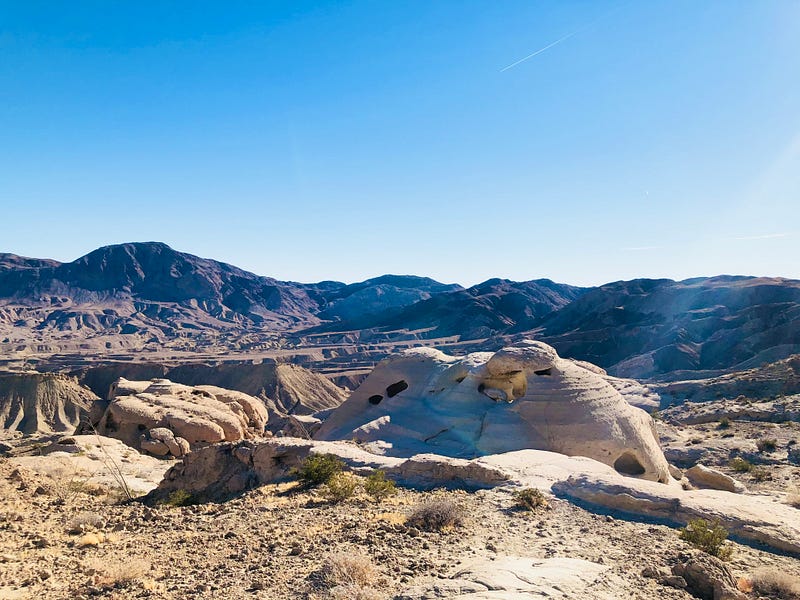
The Domelands provides us with a martian landscape. Credit: Christina R.

The bullet holes aren’t inviting.

It’s 6am and with the help of GPS, an AllTrails app, and a vehicle with four-wheel drive, I’m here. More accurately, I’m standing in the Coyote Mountains Wilderness, on the southwestern border of California.

There’s no cell reception, and at the moment, no other people in sight, except for one. I’m standing here with an equally intrepid friend at what we think is the start of the Domelands Trail.

Seeking Something More
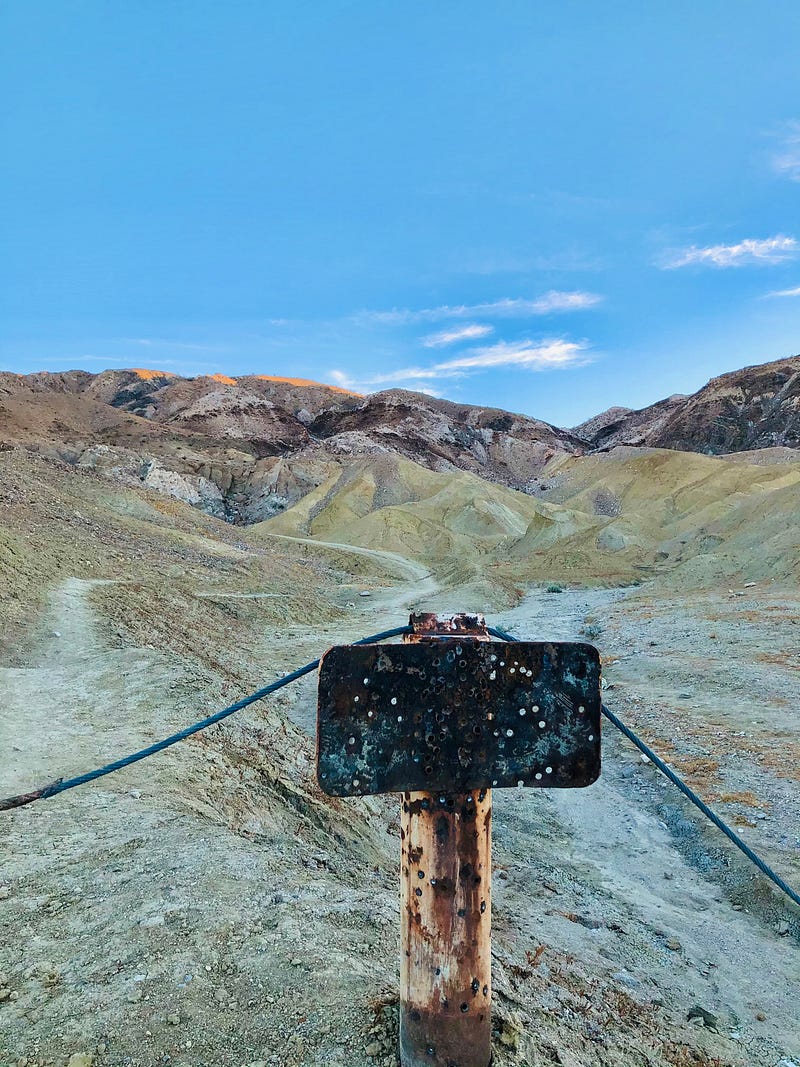
At the start of the Domelands trail. Credit: Christina R.

The sun is highlighting the tips of the mountains in orange, and we are out here because we are seeking something less garden, and more forest. Less Disney, and more Choose Your Own Adventure.

The desert is a home for mystics, misfits, outlaws, poets, and the rebel-hearted. It exists just beyond the grip of civilization, and I have a love affair with this cracked, baked earth, slapped by the bare hand of the sun and eroded by winds that’ll lift you off your feet. It’s a land that seems to stretch forever in a way that makes you feel free, and is full of extremes.

In the Southern California deserts, you’ll find rainbow quartz and roadrunners. Moonstone and meth labs. Sandstone and scorpions. You’ll see the Milky Way, Orion’s Belt, and even, in the middle of the night while your mind is quiet, a peek at the Andromeda galaxy.
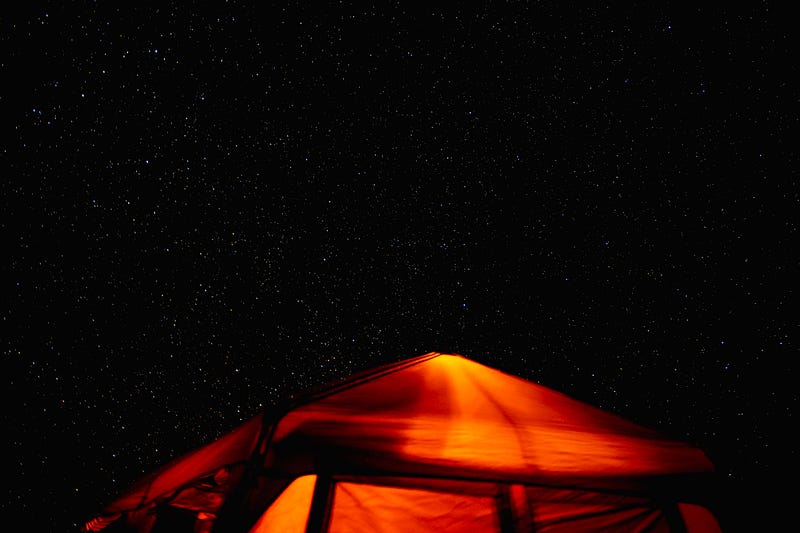
The desert sky at night. Credit: Christina R.

Moving Beyond Civilization

This is BLM land. No permits are needed, and you can stay overnight. But that also means you won’t find picnic tables or restrooms, and you’ll be lucky to find the trail in some spots. There’s no real cell signal (at least not if you’re using Verizon), unless you count the single text message that pings through your phone and erroneously reads: “Welcome to Mexico.”

I should tell you that before you set out on this trail, there are a few important reminders:

  • Water. Bring lots of it. This is the desert. Too many people have not heeded this warning and ended up injured, or worse.
  • Four-wheel drive. The “roads” to this trail are little more than sandy washes, and some patches can be deceptively soft. Don’t get stuck.
  • An offline topo map. Make sure you can navigate this trail offline. Cell reception is iffy at best.

Don’t attempt this in the summer. There’s no shade on this trail, and summer temps are in the triple digits Fahrenheit. It’s an oven and isn’t afraid to roast you alive. The best time to visit is between November and March, but monitor the weather.
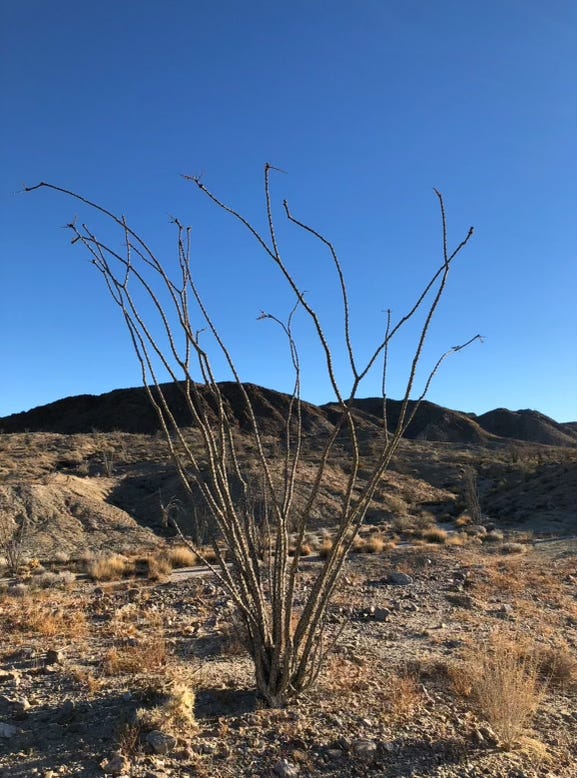
The fingers of an Ocotillo. Credit: Christina R.

Finding a Prehistoric Landscape

So, with an offline map in hand, we begin our trek.

“If we find just one fossil, I’d be happy,” I say to my friend. We had heard people talk about finding fossil beds in this area before, but we were skeptical. Is there any public land left on this planet so untouched?

Spoiler alert. The answer is: yes.

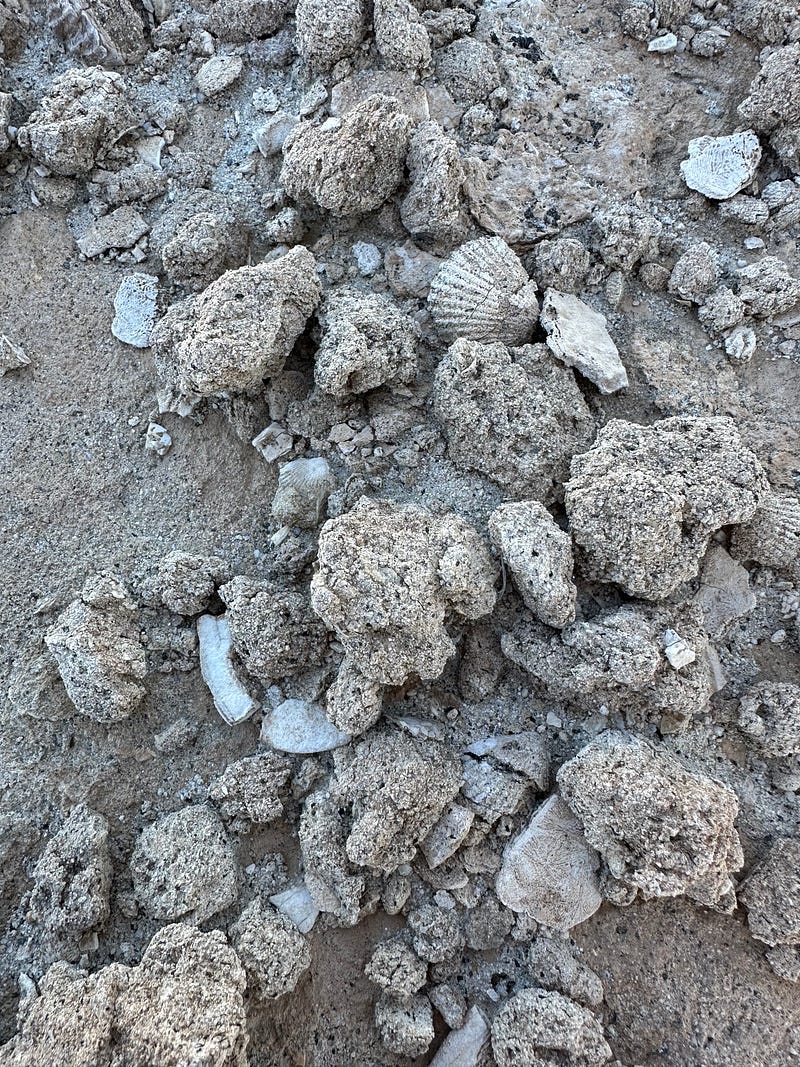
Within a mile on the trail, our eyes begin to adjust. There are fossils everywhere, and they are marine fossils. But what are they doing deep in a desert? We quickly realize that this was all once underwater. The Sea of Cortez, millions of years ago, extended over this now desert. As I scan the ridge line, I can almost picture giant, prehistoric animals swimming above and around me (and no, the sun hasn’t cooked my brain).

It’s a fossil hunter’s dream.

This trail has you walking over sea beds formed millions of years ago, and there, beneath your feet, you see fossilized clams, coral, oysters, sand dollars the size of salad plates, large gastropods, and other marine fragments. Timeless, raw, and fragile — it is one of the most impressive geological experiences I have ever had.
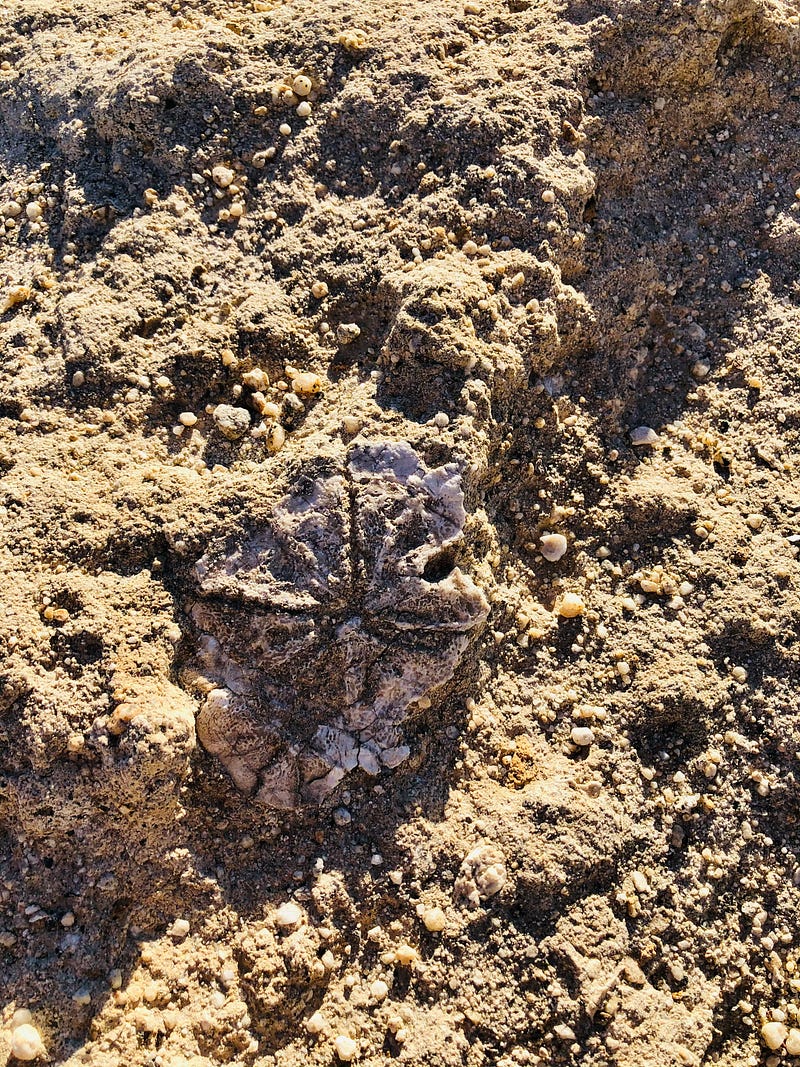
A fossilized sea bed. Credit: Christina R.

Shouldn’t some of these things be protected? Maybe safeguarded in a museum?
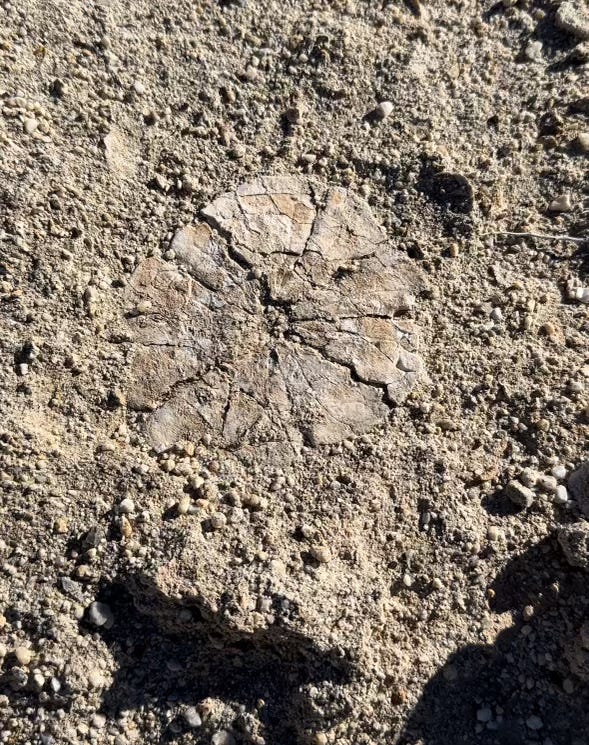
Fossilized sand dollar peeking through the sand. Credit: Christina R.
Fossilized clams littering the desert floor. Credit: Christina R.

But they aren’t and so everyone must fight the urge to pocket small treasures. It’s a delicate place. Leave it as you find it.
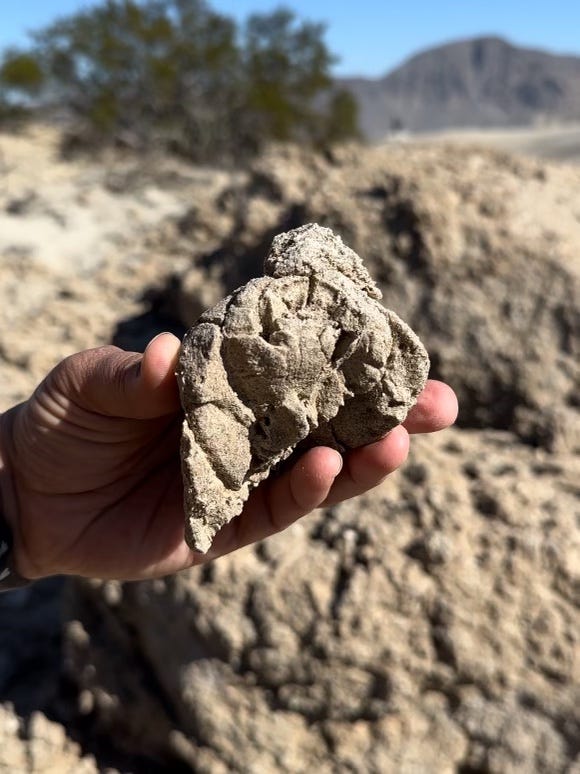
Another spiral fossil shell found in the desert. Credit: Christina R.

Exploring Ancient Domes

At approximately three miles into the hike, we see it — one of the first great domes, sculpted by windy fingers over millennia. Standing before this dome gives us the hushed feeling of standing in a cathedral.

I am reminded of an Emily Dickinson poem,

Some Keep the Sabbath going to Church — I keep it, staying at Home — With a Bobolink for a Chorister — And an Orchard, for a Dome —

“If I die first, promise me you’ll scatter some of my ashes here,” I say to my friend.

She agrees, and a pact is made.

We pat the dome and run our fingertips over its curved design, climbing and sitting in the pockets of its cool surface, dangling our feet over the yawning chasm below. We could stay longer but know there is more to see.

And just a half mile further, we find them — the Domelands — a series of domed, wind-formed caves.

Deciphering the Story of the Past

We climb into one and sit on the cool, sandy floor.
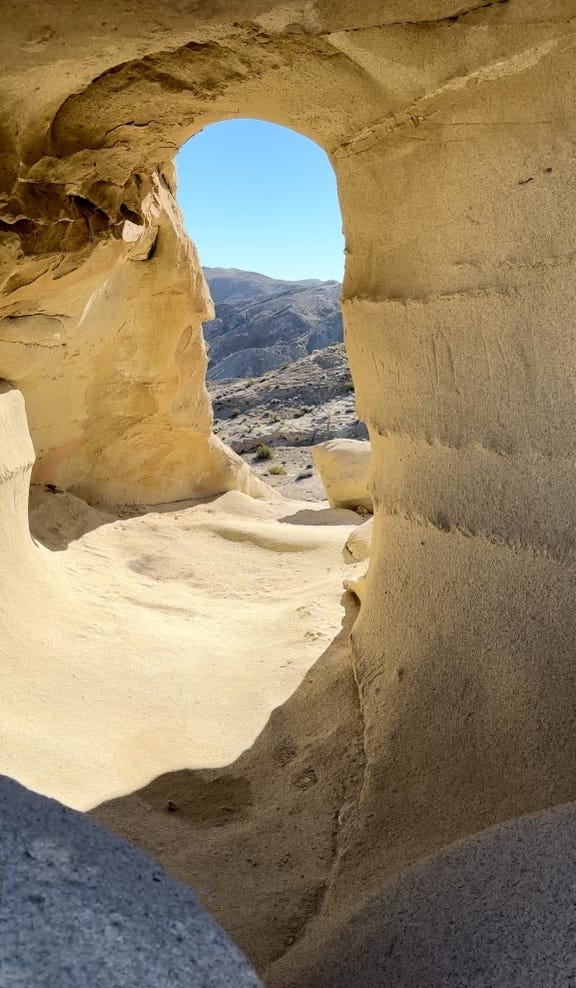
Inside a dome offers respite from the sun. Credit: Christina R.

We drop our packs and press our backs into the ancient walls of the cave. We light a small butane burner, boil water, and make coffee. Just taking it all in.
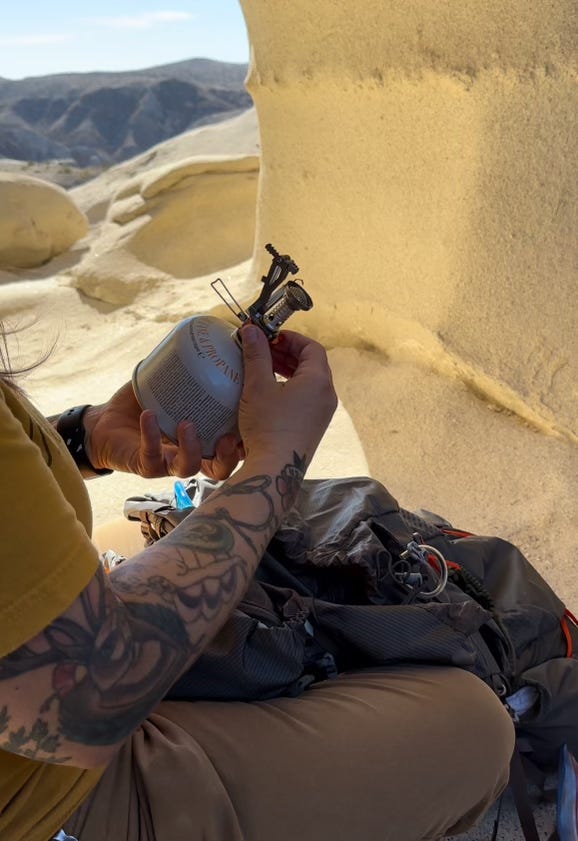
Setting up the light-weight butane burner. Credit: Christina R.

For miles, there is an awesome vastness as far as the eye can see. We remain quiet, trying to understand the wind’s language. A ghost. A relic. It’s trying to tell us something of this place’s past — the story of us.

The startling emptiness is also a reprieve. From city noise. From the constant tension of life. From busyness. It provides space to breathe. A wider dimension.
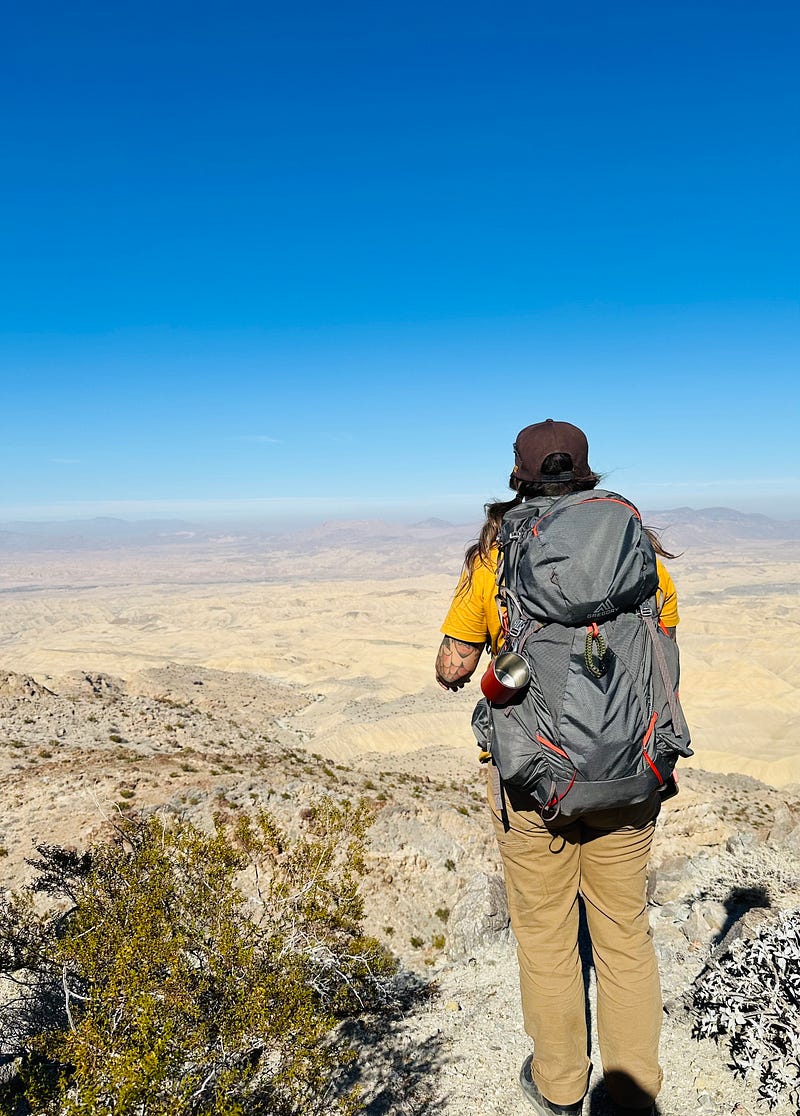
A lookout point, where the sky yawns wide. Credit: Christina R.

Trekking Out

We could trudge on and descend into the slot canyons, but we decide to save that for another day. This is enough for us. And when we finish listening to the wind’s story, we pack our things and head back out, feeling humbled, awed, and elated.

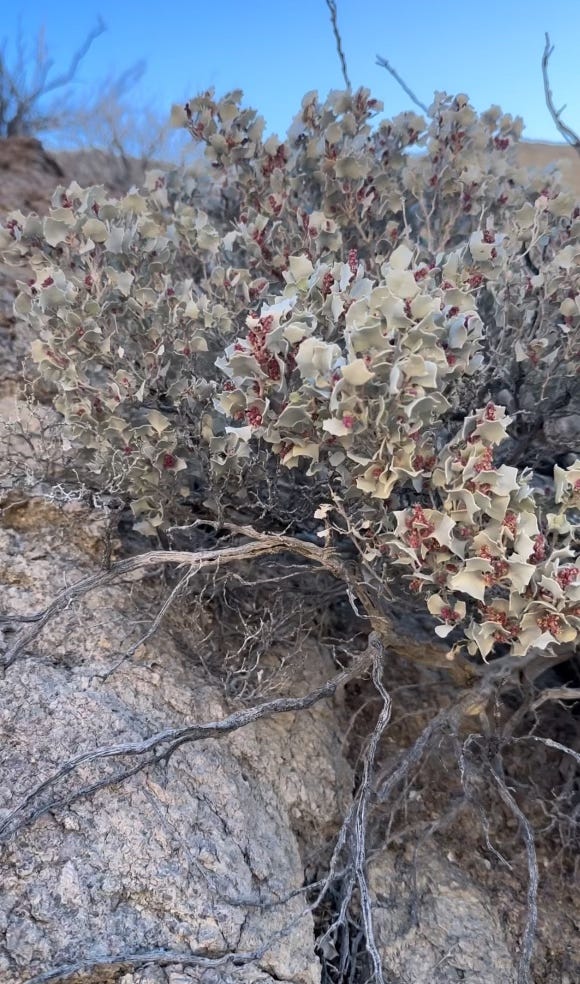
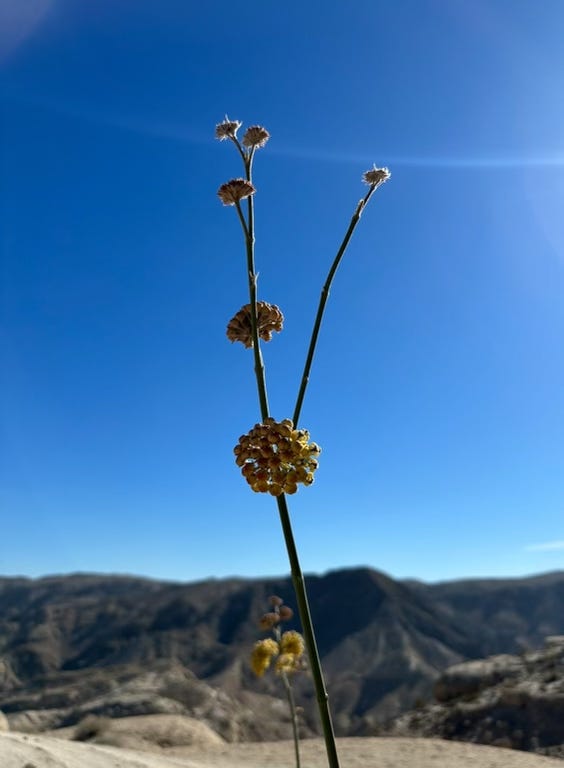
On the walk back, flowers are blooming. I’m amazed that something so soft can thrive in a place so hard.
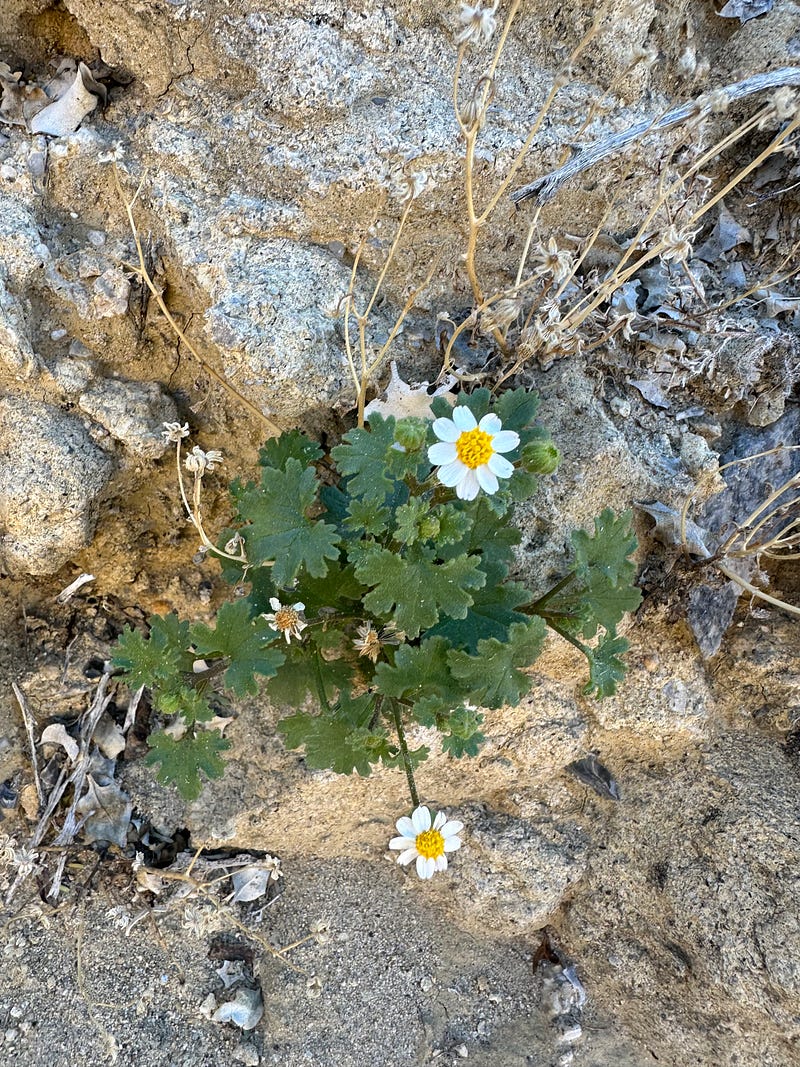
A Desert Rock Daisy thriving in the crack of a boulder. Credit: Christina R.
A tall, triumphant yellow flower. Credit: Christina R.
Desert holly growing on a rock. Credit: Christina R.

There is no better way to experience this place than on foot.

So go ahead. Ditch the cars.

Leave the walled gardens.

Adventure Travel
Desert
Hiking
California
Backpacking
Recommended from ReadMedium