
PERSPECTIVES
Off the beaten track: a young man explores different jobs and lifestyles
A “lifestyle journey” in 2020 takes Li Yaqi from the mountains of Tibet, to a Buddhist temple in Suzhou, to some deserted islands in the East Sea
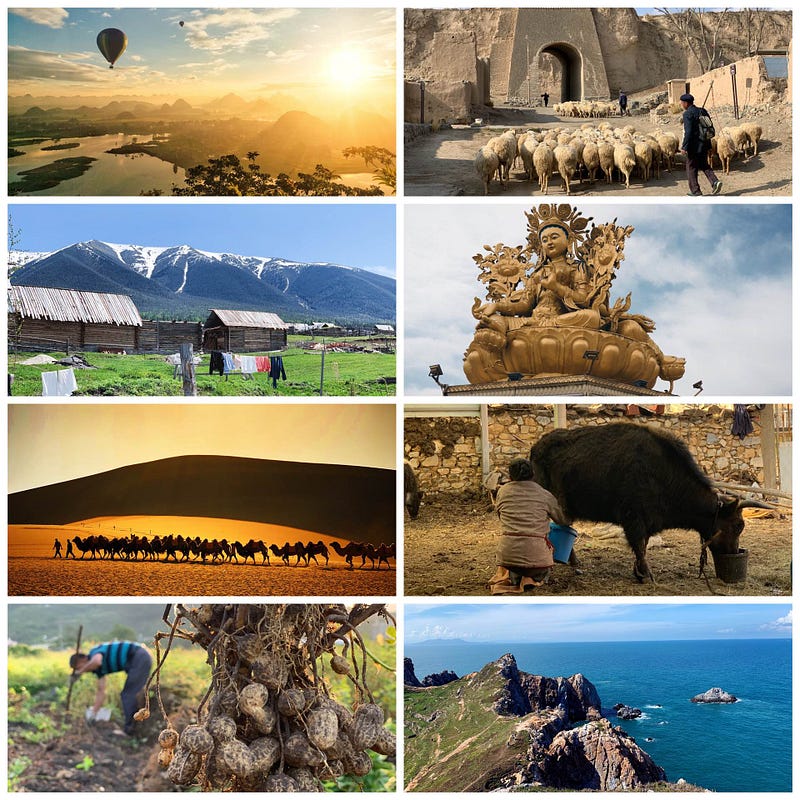
Imagine working as a hostel receptionist in Yunnan; a story writer at Qingqing Youth; a tour guide; a Buddhist monk at Baoshan Temple; a Taoist monk at Wudang Five Immortals Temple; a shepherd in Xinjiang; a farmer in Henan; and a fisherman in Fujian province.
A young friend of mine Mr Li Yaqi (Li is his surname; Yaqi is his name) did all that in 2020.
And in undertaking this “lifestyle journey”, he travelled far and wide and experienced an incredible variety of occupations and lifestyles.
I just had to find out more. This is his amazing story.
“Yaqi, you have been around the world on an incredible journey.
“First, tell me more about your explorations in society since you left junior college in Singapore.”
He said, “After graduating from Temasek Junior College (TJC) in 2014, I went on to pursue a bachelor’s degree of finance at the Ohio State University in the USA.
“And then after that I worked as a management consultant at Deloitte Consulting in Chicago for a year.
“I’ve also travelled to quite some countries on holidays, including those so-called ‘exotic places’ such as the Amazon jungle in Peru, and Maasai Mara national park in Kenya.
“My travel experiences were very crucial in shaping who I am today as well.
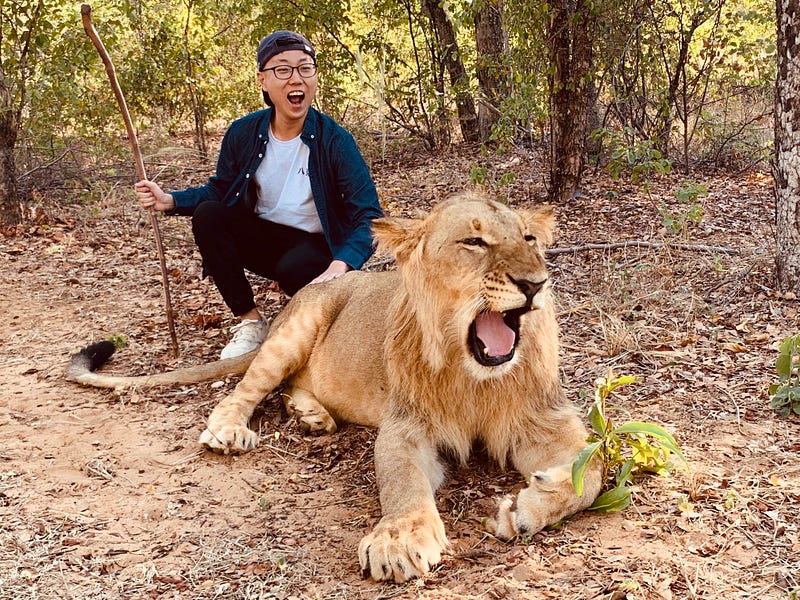
“Due to issues with my US work visa, I left my job in 2020, went back to China, and explored my home country in a unique way by experiencing the lifestyle of different social identities.
“I am now doing an MSc of Social Anthropology programme at the London School of Economics and Political Science (LSE) in the UK.”
I said, “Basically, after you left Singapore, and putting aside holidays, you went to the US to study, then back to China to try out — shall we say — different ‘career paths’, and now you are in the UK to read your MSc. You’ve travelled far and wide across the globe.
“What was the most memorable ‘career path’ or ‘alternative lifestyle’ you experienced?”
Yaqi replied, “When I was on my journey to explore China in 2020, I worked as a hostel receptionist, a story writer, a farmer, a shepherd, a Taoist, a monk, and so on.
“I would move to a new city (or often, a new village) every few weeks and change my social identities along the way.
“In doing so, I have travelled to most parts of China, from the snow mountain in Tibet to some deserted islands in the East Sea.
“Perhaps I could share one specific example here. I lived in a Buddhist temple in Suzhou in July 2021. I woke up at 4am every morning to engage in the morning chanting retreat with other monks. The ritual ends at around 5.30am and we would have a vegetarian breakfast afterwards. There are two other chanting retreats during the day. In between those hours, I would either meditate, read, or take a walk.
“This experience of being a monk has allowed me to look at the world from another angle. I remembered vividly when the abbot talked about death:
“We all will inevitably face death one day. For us monks, it is the final examination. We have to work hard to gain wisdom so that we can face death with calamity and peace.”
“His words inspired me to imagine the future moment before my own death: what have I done in my life? Do I have any regrets? What really matters at that point?”
On that reflective note, I asked him, “How did this entire experience make you feel? Actually, what inspired or motivated you to go on this journey?”
Waxing philosophical, he said, “Our values, desires, and understanding of the world are hugely influenced by the social contexts we grow up with.
“My behaviours could possibly be predicted by an (imaginary) super algorithm with my background as the input.
“For example, everyone in business school is striving to get a job in either consulting or investment banking — those two seem to be the only options. I was once stuck in this trap and felt horrified.
“The world is full of possibilities and there are so many ways to live a life. Yet my choices are so limited.
“So, I decided to go on this journey to escape from the ‘bubble’.
“I hope to witness or experience the lifestyle of other professions from different social classes to better understand the world. I also wish to build empathy with farmers, shepherds, or construction workers by becoming one of them and going through struggles they face.”
I nodded. “From this journey, what were some of the key lessons you learnt?”
He replied, “Knowledge, belief, value, and moral standard are all socially constructed. So never judge, and always respect different cultures.
“For example, there are still matrilineal societies today such as the Mosuo group in Yunnan. Fortune telling based on the book of Yi is not considered superstitious. Instead, there is a rigorous logic behind it. Nomads don’t necessarily need a house and they can still be happy moving around.
“The diverse ways of living made me wonder what kind of life I would want. And I am still in the process of searching for answers.”
I said, “I take it that you would find some answers through your studies at the LSE? The LSE is a wonderful school. (Full disclosure by writer: I am an LSE alumnus.) Perhaps you could share about what you are reading there, and why did you choose this course?”
Yaqi replied, “I am doing an MSc of Social Anthropology programme here at the LSE.
“I am somewhat familiar with cultures in East Asia and North America and would love to learn more about European culture. The UK, and especially London, is a great place to immerse myself into the history, art, religion, and philosophies of Europe.
“And the LSE is the school where early anthropology originated. It makes perfect sense for me to come to the LSE.
“Switching from finance to anthropology is quite a turnaround for me. It took me some effort to convince myself and my parents that this was the right decision (the concern and perception among my Chinese parents is that finance often leads to secure job opportunities while I might end up starving to death with a degree in anthropology).
“However, the subject fits well with my interests. I am curious about cultures, societies, and human activities. Anthropology provides a unique angle of looking at the world by examining and questioning everything, including the ‘truth’.
“For example, the course ‘The Anthropology of Development’ explores how anthropologists have critiqued and contributed to development. Many projects have produced positive outcomes on the surface but failed at their core because of the lack of local knowledge and ignorance of people’s real needs. A more comprehensive understanding of the specific region and specific issue is needed.”
I agreed. “That’s a relevant perspective. I’m not always sure that people understand that different regions can have entirely different cultures. I’m sure that you learnt that even Singapore has its own unique culture, or cultures, during your brief period in Singapore.”
I paused, and asked, “What are the next steps for you, after attending the LSE? Would it be another round of explorations?”
Yaqi reflected and said, “I am not entirely sure what I am going to do after graduation. It will be another exciting journey for sure.”
To wrap up, I asked him, “What is a message that you would want others to take away from your experiences?”
He said, “Know yourself.
“And see the world.
“Question and deconstruct everything about you, be it your motivation, passion, and belief, and look at the world with an open mindset.”
Thank you for reading.
Cheers, Shawn Seah


