avatarMelissa Gouty

Free AI web copilot to create summaries, insights and extended knowledge, download it at here

2901

Abstract

n” and “Old Woman” happened.</h1><p id="ad94">A big battle between the fishing industry and environmental agencies preceded the total collapse of the sardine “bust.” Agencies believed the decline in the sardine population was from overfishing. Fishing businesses did not believe that overfishing was the problem and wanted to continue to fish without limits on tonnage.</p><p id="7cc3">Now scientists theorize that the real reason for the disappearance of the sardines was the long-range change in water temperature.</p><p id="59c7">“Old Man,” translated from the Spanish term, “El Viejo,” is an atmospheric condition that creates warm waters off the Western Coast of the United States. “El Viejo” existed during the sardine boon of the 1930s and 1940s. Sardines multiplied and thrived in the warm ocean waters. Then “Old Woman,” known in Spanish as “El Vieja,” moved in, pushing the warm waters away from the coast, allowing nutrient-rich cold waters to rise, an environment that favored anchovies instead of sardines.</p><p id="776d">The sardines died or disappeared, disrupting lives and livelihoods forever.</p><h1 id="7036">An unexpected detective arrives to solve the mystery.</h1><p id="a9aa">Have you ever heard of the old-fashioned hobby of pressing flowers?</p><p id="43ff">Get this.</p><p id="7d0c">In the mid-1800s, <a href="https://www.smithsonianmag.com/innovation/scientists-use-seaweed-to-solve-marine-mystery-180975900/?utm_source=smithsoniandaily&amp;utm_medium=email&amp;utm_campaign=20200928-daily-responsive&amp;spMailingID=43565487&amp;spUserID=ODcyNjc0Njc3OTUxS0&amp;spJobID=1842373495&amp;spReportId=MTg0MjM3MzQ5NQS2">women used to press algae and seaweed</a>. They would press it, dry it, and arrange it into artistic creations. Since women were not welcomed into scientific fields, many females preserved botanical specimens from the ocean as a way of dabbling in science without offending tradition or appearing to be non-conformists. Large, extensive, beautiful collections of dried seaweed and algae exist in many libraries and museums across the world because of early collectors and the practice of pressing algae.</p><p id="7800">Who knew that what started as a hobby of dabbling in botany and artistically arranging dried seaweed would solve a mystery more than a century later?</p><p id="6d14">Scientists and researchers have been able to dissect these old botanical samples, analyzing them for amino acids and proteins. They examine the heavy metal compounds present and are particularly interested in the nitrogen isotopes.</p><p id="1006">The amonia of nitrogen in the stable isotopes indicate a type of red algae growth, correlating to the phenomenon of “upwelling,” the pushing away of warm water and pulling up of cold water that happens during “El Vieja” cycles. Dried seaweed was the detective that confirmed the clues about what scientists had previously theo

Options

rized:</p><p id="209a">Billions of sardines left because the water had turned cold.</p><p id="f735">Some woman’s dried seaweed collection from a century ago verified what researchers have long believed. I bet that lady would have been proud.</p><h1 id="79af">One thing leads to another</h1><p id="6d0a">In that vast and wonderous interconnectedness of life, one person never knows how her hobby, her passion, her art will affect the future. Or how research on some bizarre fact leads to a new understanding of an event I knew nothing about, like the demise of the sardine industry. One fact leads to another and reminds me that I can never know enough. (I’m an English major who didn’t know what John Steinbeck’s <a href="https://en.wikipedia.org/wiki/Cannery_Row_(novel)"><i>Cannery Row</i> </a>and <a href="https://en.wikipedia.org/wiki/Sweet_Thursday"><i>Sweet Thursday</i></a> were about until now.) I’ve just added those titles to my reading list where they’re swimming around in my head in the overfilled pool of weird and wonderful facts that buoy me up.</p><figure id="5ac0"><img src="https://cdn-images-1.readmedium.com/v2/resize:fit:800/0*oDMelpZmN3FWeAh_"><figcaption>Photo by <a href="https://unsplash.com/@ohforkyes?utm_source=medium&amp;utm_medium=referral">Elle Hughes</a> on <a href="https://unsplash.com?utm_source=medium&amp;utm_medium=referral">Unsplash</a></figcaption></figure><p id="5f5a">Melissa Gouty’s debut book, <b><i>The Magic of Ordinary: A Memoir,</i></b><i> i</i>s now available at Amazon, Barnes & Noble, Google, Apple, Kobo, and at online book vendors everywhere.</p><p id="aaeb">For More on the #30DaysOfScikuChallenge:</p><div id="ba0f" class="link-block"> <a href="https://readmedium.com/the-scikus-collection-446db93d06d7"> <div> <div> <h2>The Scikus collection</h2> <div><h3>S&S — Science-Inspired Haikus</h3></div> <div><p>medium.com</p></div> </div> <div> <div style="background-image: url(https://miro.readmedium.com/v2/resize:fit:320/0*t6Za1raJhRvkymJu)"></div> </div> </div> </a> </div><p id="e178">or Check this out by <a href="undefined">Ranjani Rao</a></p><div id="d29e" class="link-block"> <a href="https://readmedium.com/book-review-the-magic-of-ordinary-a0a9c96f9e47"> <div> <div> <h2>Book Review: The Magic of Ordinary</h2> <div><h3>Lessons from a simple life sprinkled with magic dust</h3></div> <div><p>medium.com</p></div> </div> <div> <div style="background-image: url(https://miro.readmedium.com/v2/resize:fit:320/1*JqhIXzQqcpOJOCVPiUr7pQ.jpeg)"></div> </div> </div> </a> </div></article></body>

Of Seaweed, Sardines, and Science

A Sciku acknowledging an unexpected detective
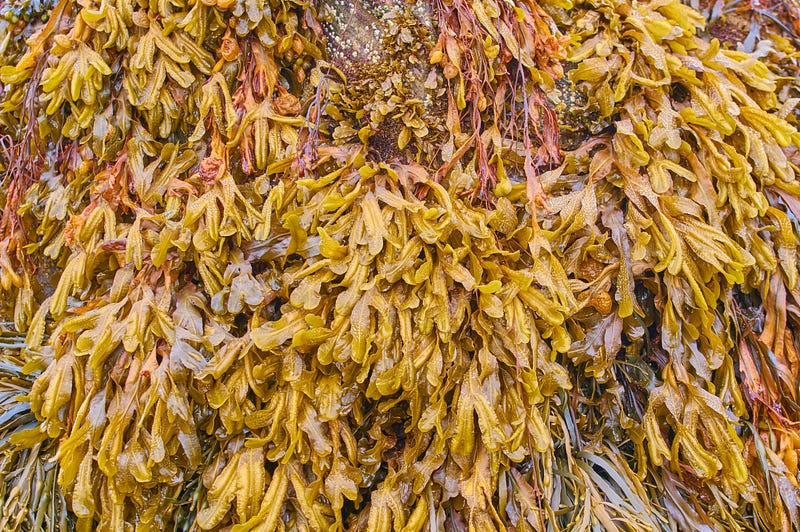
Photo by Wolfgang Hasselmann on Unsplash

Dried up detective of the deep: a science-haiku, “Sciku”

Common old seaweed Seeps secrets to scientists, Telling tales of death.

The Crash of the California Fisheries in the 1950s

Most of us have probably never heard of the crash of the California sardine fisheries in the 1950s, a bust that was heard around the world. The capture and canning of sardines was a massive industry in California, the largest industry of its kind in the Western hemisphere, pulling in more than a half-million tons of the tiny fish every year. The sardine fisheries in California employed over 30,000 workers and more than 4000 fishermen in the 1930s and 1940s.

Sardines are small, oily fish that were part of the food-chain that fed sea-birds, bigger fish, and marine mammals. But humans were the biggest consumer. During the depression era, sardines were in huge demand, a true budget food. Sardines were cheap, and families could make meals of them by mixing with tomato sauce and pouring over rice. Or, as my dad would often do, just eating them with crackers. During the Cold War, the government bought sardines for the military and for stocking in bomb shelters, but by the 1960s, sardine consumption began to decline.

You may be a fan of sardines, buying those little flat tins with the cool key that slips into notches and rolls the metal back, curling it like a jellyroll. You may love it when the fish come in mustard sauce. You may think sardines in oil is the cat’s meow. (You’d be right on that one.) Me? I’m not a fan of anything but the key that opens the tin, but I am fascinated by what would make millions and millions of fish disappear. Vicious, sardine-eating whales? An oil spill or chemical dumped into the water? A convocation of cracker-toting mermaids?

An entire industry was obliterated when the sardines disappeared. No more large hauls. No more product to can. No jobs. No income. A total collapse of a major business.

What happened?

Turns out it was long-range changes in the ocean temperature.

“Old Man” and “Old Woman” happened.

A big battle between the fishing industry and environmental agencies preceded the total collapse of the sardine “bust.” Agencies believed the decline in the sardine population was from overfishing. Fishing businesses did not believe that overfishing was the problem and wanted to continue to fish without limits on tonnage.

Now scientists theorize that the real reason for the disappearance of the sardines was the long-range change in water temperature.

“Old Man,” translated from the Spanish term, “El Viejo,” is an atmospheric condition that creates warm waters off the Western Coast of the United States. “El Viejo” existed during the sardine boon of the 1930s and 1940s. Sardines multiplied and thrived in the warm ocean waters. Then “Old Woman,” known in Spanish as “El Vieja,” moved in, pushing the warm waters away from the coast, allowing nutrient-rich cold waters to rise, an environment that favored anchovies instead of sardines.

The sardines died or disappeared, disrupting lives and livelihoods forever.

An unexpected detective arrives to solve the mystery.

Have you ever heard of the old-fashioned hobby of pressing flowers?

Get this.

In the mid-1800s, women used to press algae and seaweed. They would press it, dry it, and arrange it into artistic creations. Since women were not welcomed into scientific fields, many females preserved botanical specimens from the ocean as a way of dabbling in science without offending tradition or appearing to be non-conformists. Large, extensive, beautiful collections of dried seaweed and algae exist in many libraries and museums across the world because of early collectors and the practice of pressing algae.

Who knew that what started as a hobby of dabbling in botany and artistically arranging dried seaweed would solve a mystery more than a century later?

Scientists and researchers have been able to dissect these old botanical samples, analyzing them for amino acids and proteins. They examine the heavy metal compounds present and are particularly interested in the nitrogen isotopes.

The amonia of nitrogen in the stable isotopes indicate a type of red algae growth, correlating to the phenomenon of “upwelling,” the pushing away of warm water and pulling up of cold water that happens during “El Vieja” cycles. Dried seaweed was the detective that confirmed the clues about what scientists had previously theorized:

Billions of sardines left because the water had turned cold.

Some woman’s dried seaweed collection from a century ago verified what researchers have long believed. I bet that lady would have been proud.

One thing leads to another

In that vast and wonderous interconnectedness of life, one person never knows how her hobby, her passion, her art will affect the future. Or how research on some bizarre fact leads to a new understanding of an event I knew nothing about, like the demise of the sardine industry. One fact leads to another and reminds me that I can never know enough. (I’m an English major who didn’t know what John Steinbeck’s Cannery Row and Sweet Thursday were about until now.) I’ve just added those titles to my reading list where they’re swimming around in my head in the overfilled pool of weird and wonderful facts that buoy me up.
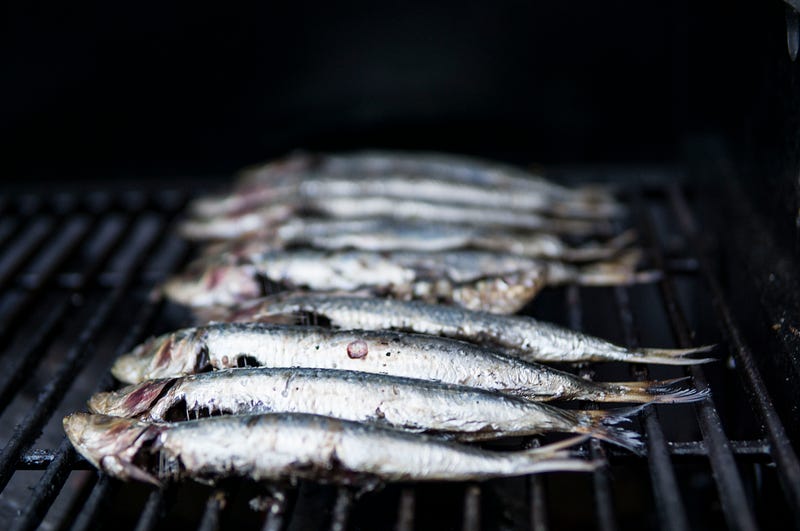
Photo by Elle Hughes on Unsplash

Melissa Gouty’s debut book, The Magic of Ordinary: A Memoir, is now available at Amazon, Barnes & Noble, Google, Apple, Kobo, and at online book vendors everywhere.

For More on the #30DaysOfScikuChallenge:

or Check this out by Ranjani Rao

Science
Climate Change
Climate
History
Fishing Industry
Recommended from ReadMedium