
Oedipus Rex a Play Created to Purge Society of Unwanted Emotions
To inspire, pity, fear and promote catharsis
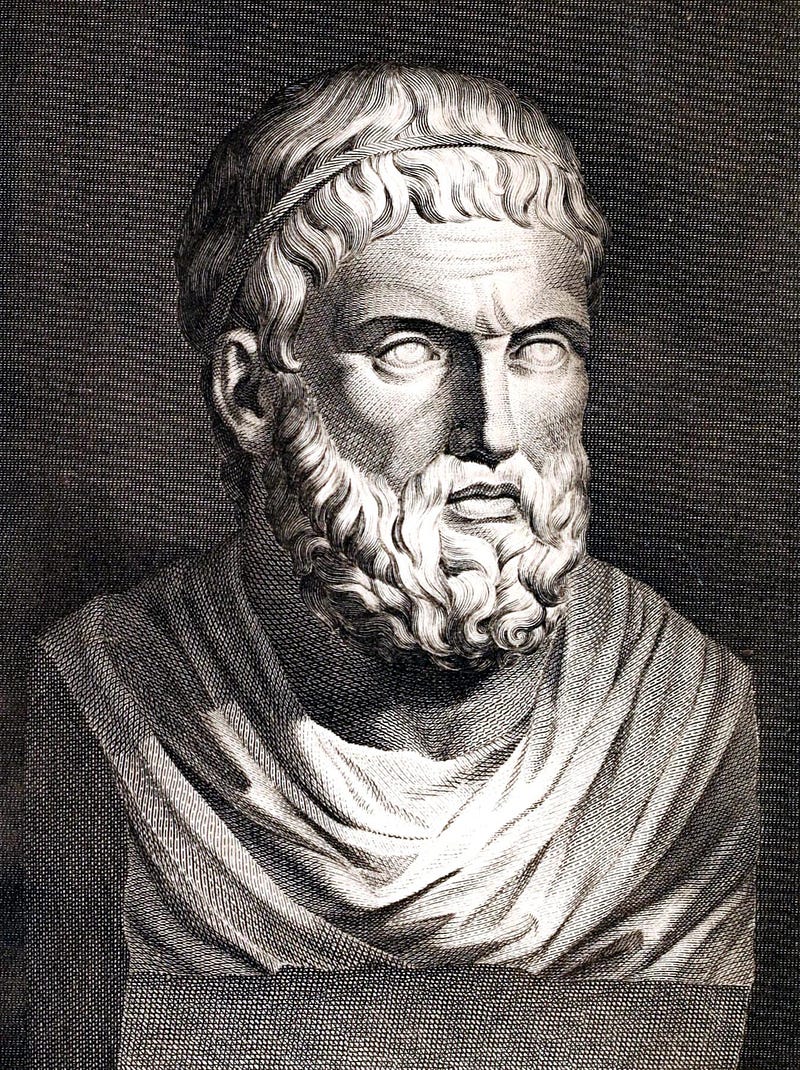
From the play Oedipus Rex, the contemporary reader can draw conclusions about the political and social contexts of the time. The ancient Greeks believed the Gods were always present, and their actions were determined by them. Oedipus’s tragic fate is a perfect exemplar to the contemporary reader, of the beliefs of the fifth century ancient Athenians. This article highlights the political and social context surrounding the play and Aristotle’s view on the functions of theatre, through the various themes and symbols and the characteristics of Greek tragedy.
Theatre had an important role in society in fifth-century Athens, which took a moralistic approach. ‘Oedipus Rex’ is a classic example of a play created to inspire, pity and fear and to purge society of unwanted emotions, according to the theories of Aristotle.
In fifth-century Athens, only men counted as citizens. Although it can not be confirmed, women did not usually appear in the Athenian audience. Instead only the ruling class and men considered of importance attended the ritual. The same can be said for the actors, as all were male in the Greek theatre. The tragic theatre of this time was a religious gathering and a ceremony for worship. Dionysia were the name given to the festivals of Dionysus, the God of wine, fertility and religious ecstasy. The annual festival would be held in the polis and go on for many days, every citizen would attend. The audience would be entertained with singing, dancing and special effects and be in admiration of the language used in the plays. The Choregio was an affluent citizen that bore the expense of providing the chorus. At the end of the year, prizes were given to the playwrights of the Great Dionysia and rivalry was strong among the chreogoi. (Wilson, 2003, [online])
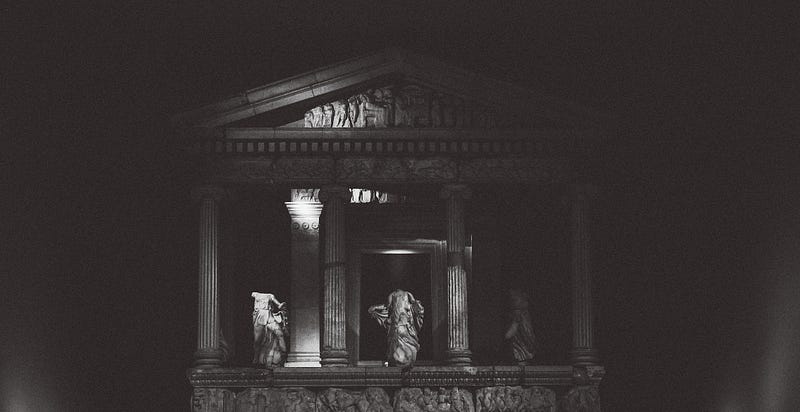
Sophocles won first prize at the festival of Dionysos in 468 BC. He was the writer of many Greek tragedies, Oedipus Rex being one of them. He wrote over one hundred plays and out of them only seven still exist. As well as being admired for his playwriting, he was thought to be involved in the city’s political and military associations making him a good citizen of the polis. He was also the city treasurer for a time and also worked as a naval officer. (Sophocles, 2002, 25)
The Polis was the name given at the time for the city state. Each polis was governed by citizens of the local community. At its centre was the acropolis and market place, the population lived in the surrounding areas of the town or countryside. The authorities were concentrated at the centre of the polis and authorized to control it by the hierarchy. There were several hundred independent city states across ancient Greece. Conflict over the structure of how they were governed was rife, producing countless civil wars. Each citizen had a responsibility towards the city. They should live by the laws, worship the Gods and take part in the festivals, complete military service and pay their taxes. (Howatson and Chilvers, 1996, [online])

To worship the Gods and attend the religious festivals was at the centre of Athenian culture. Aristotle, a highly regarded philosopher, believed that the function of the tragic play was to inspire pity and fear and purge society of unwanted emotions. He supposed that to achieve this, the audience needed to witness the protagonist’s ‘Hamartia.’ For Aristotle, this meant his misjudgement or ignorance over an action leading to his downfall. Moreover, the citizens attending the festivals would achieve catharsis from watching the plays. (Aristotle in Worthen, 2002, 82)
Catharsis, originally from the Greek word ‘Katharsis’ means purification. Aristotle refers to this as a means to release built-up emotions experienced whilst watching a play. To liberate these emotions gives us a deeper understanding of art, which in turn reflects life. In life it is not always possible to rid oneself of built-up emotions, therefore, theatre art becomes a form of therapy. For Aristotle the plot of Oedipus Rex was a perfect example:
Namely, the plot must be so structured, even without benefit of any visual effect, that the one who is hearing the events unroll shudders with fear and feels pity at what happens: which is what one would experience on hearing the plot of the Oedipus.
Aristotle in Worthen, 2002, 87
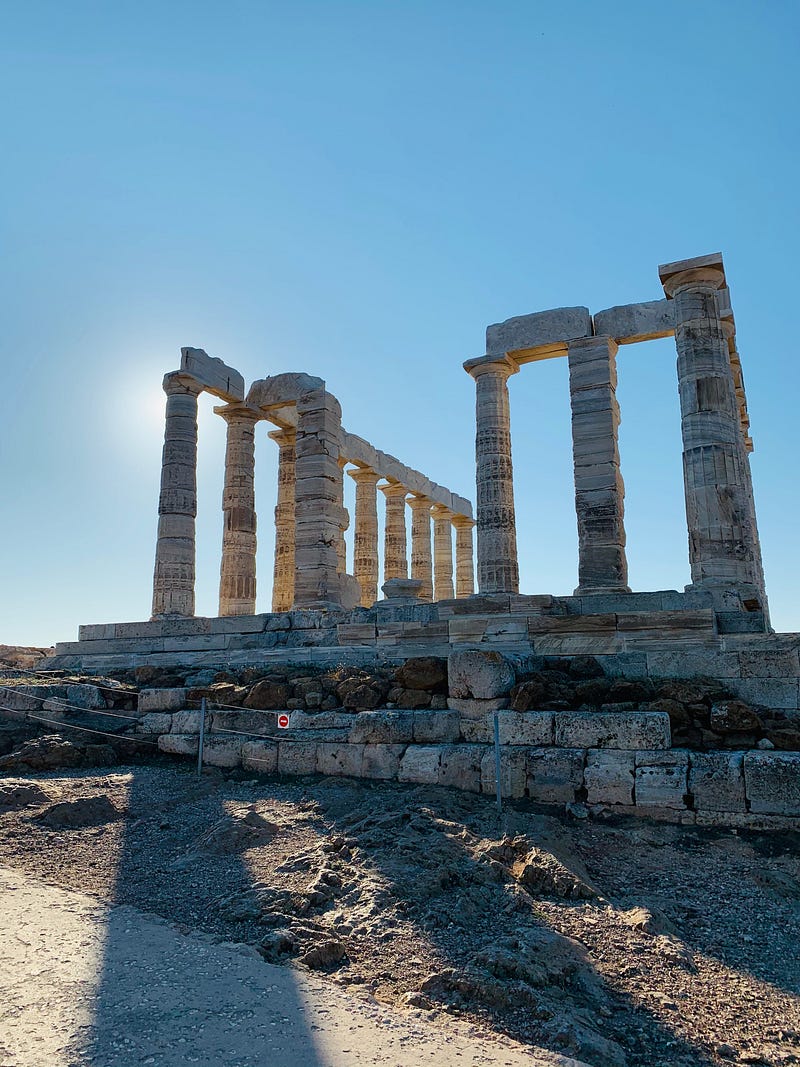
Aristotle’s theories supposed that knowledge relied on sensory experience. Therefore, one could not access thought or reasoning behind decisions made by the Gods. To acquire understanding one had to physically experience it, for example, to watch a plant grow from a seed, gives understanding into the development of that plant. Consequently, an understanding of the Gods could only be attained by witnessing their effects in the material world. However, as the Gods do not have physical form, man can never completely comprehend them. As a result they can only really be understood through resemblance of their effects. Thus, the tragic play according to Aristotle’s physical theory of knowledge, was the perfect medium to demonstrate this. (Hatfield, 2003, [online])
The tragic plot of Oedipus Rex clearly demonstrates to the contemporary reader that the Gods were a main feature in Greek society. The text also reveals that the oracles were consulted on important matters and to disregard their prophecies would lead to a disastrous outcome. In the play, the oracle at Delphi was consulted by Laius and Jocasta to learn the fate of their child ‘Oedipus.’ Similarly Oedipus sent Creon to consult the oracle for advise on the plague:
I acted at once. I sent Creon,
My wife’s own brother, to Delphi
Apollo the Prophet’s Oracle to learn
What I might do or say to save our city.
Sophocles in Worthen, 2002, 28
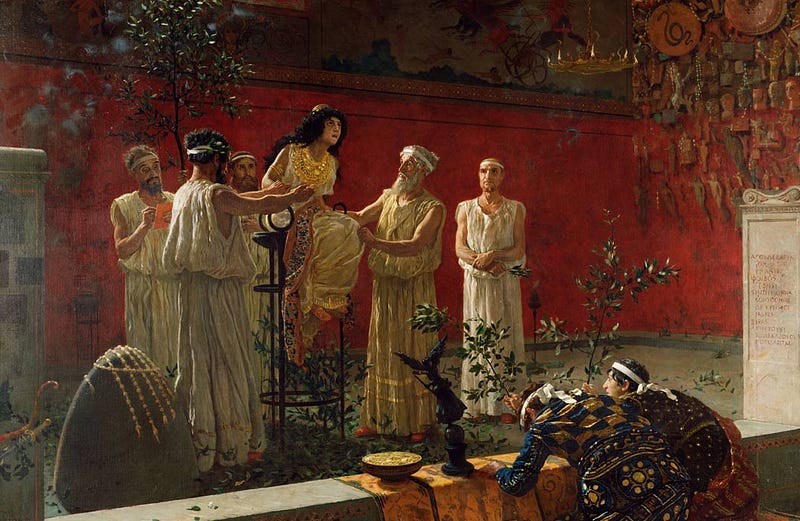
The oracle was consulted in Greek life to seek advice on different matters such as whether to marry, change career and also on health issues. However, when Sophocles wrote Oedipus Rex, “The rise of rhetorical training raised questions about the nature and significance of truth, even the truth of oracular revelation” (Worthen, 2002, 25) Therefore, the play was written in a time of uncertainty and questioning. This uncertainty is reiterated throughout the play as the characters try to avoid and question the prophecy. Nevertheless, when these predictions come true, they serve to remind the audience of the power of the Gods.
Certain themes serve to reinforce the tragic irony of the play. These themes provide an insight to patterns of human behaviour, thus underpinning the theories of Aristotle. The contemporary reader can clearly detect these themes and although they are not acknowledged in the same context, they can still be observed as a moral teaching.
The willingness to ignore the truth highlights this tragic irony. Throughout, Oedipus tries to seek the truth, however, both himself and Jocasta are unwilling to voice the apparent truth. Both are aware of similar prophecies given to them: Jocasta is told that her son would kill his father and Oedipus is told that he would kill his father and marry his mother. Similarly, when Jocasta informs Oedipus that her son was bound by the ankles and flung away, Oedipus does not feel obliged to comment on his own swollen ankles. They choose or perhaps pretend, not to see the truth; this is part of their downfall.
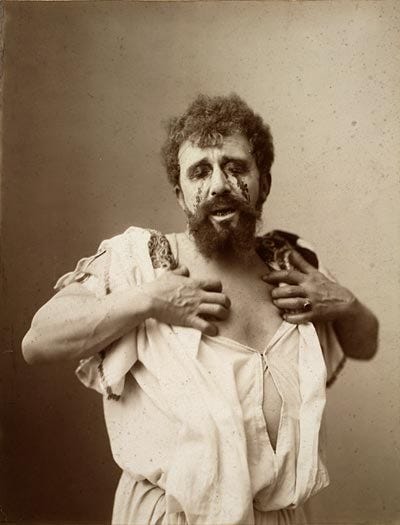
Suicide and blindness feature in the play and remind of the possible fate for questioning the powers that be. Jocasta hangs herself and Oedipus stabs out his eyes:
He rips off her brooches, the long gold pins
Holding her robes-and lifting them high,
Looking straight up into the points,
He digs them down the sockets of his eyes,
Sophocles in Worthen, 2002, 41
Oedipus is known for his intelligence, pride and insight. Suggestions of eyesight and vision are reiterated literally and metaphorically all through the text, “I have a terrible fear the blind seer can see.” and “Now I can see it all clear as day” (Sophocles, 2002, 35) These references to sight are often used to emphasise Oedipus’ intelligence, insight and quest for knowledge. However, they are also used ironically, to inspire pity at his impending fate. Once again this serves to highlight Aristotle’s theories on the function of the tragic plot. The ancient Athenians would have known the story of Oedipus Rex well, as all plays were based on mythological subjects. They would have been aware of the irony of the plot. For the Greeks the myth of Oedipus Rex begins:
“With Thebes oppressed by a state of plague that can be overcome only by a sacrificial act in which the king must play the role of scapegoat and at least symbolically die (Oedipus is blinded) so that the city might return — at least for a time — to life.”
Leeming, 2004, [online]
However, it is just as easy to interpret in the twenty-first century, as the references to sight are quite blatant and strengthened by Oedipus’ demise. He has been blind to the truth, therefore takes his own eyes, so as not to see his children. Once again we can conclude that even the most intelligent human of high status is inclined to make errors. Therefore, the Athenians believed that the human capacity for knowledge is limited and probably unreliable.
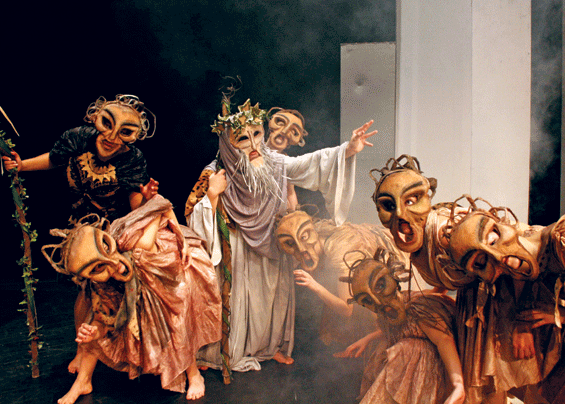
This unreliability and quest for information adds force to Aristotle’s physical theory of knowledge. In the text the Chorus asks the Gods to save Thebes from the plague. Directly after this Oedipus enters and says: “You pray to the Gods? Let me grant your prayers.” (Sophocles, 2002, 29) Here he seems to take on the role of a God. Aristotle conveys that knowledge can only be acquired from physically sensing it. Oedipus could not possibly presume to know how to take on this role. However, from the unravelling of the plot, Oedipus experiences their effects, which in turn is conveyed to the audience. This moment also serves to underpin his pride, which leads to his obstinate blindness and ultimately his downfall.
Symbols in the play also reinforce the high regard for the Gods and belief in the reliability of prophecy. Oedipus’s swollen foot and the three-way crossroads symbolise, that fate has played its hand since his birth. His scarring is a reminder that from very young, he would fulfill the prophecy of murdering his father and marrying his mother. The three-way crossroads indicate a place where a choice can be made that will affect his future. Oedipus is unaware of how his choice will affect his fate. In the play these crossroads add emphasis to the supremacy of the prediction, accentuating the drive to inspire pity. The irony of his scarred ankle adds further force to the prophecy, once more emoting pity that his movements have been controlled since birth. These symbols also emphasise that although decisions can be made, they have been put in place by a higher force.
The modern-day reader can clearly observe throughout the text, that the Gods featured highly in fifth-century Athenian culture. They are referred to throughout, not only by the main characters but also by the chorus, who add force to the themes and symbols. They could also deduce that even a man of high status would be unwise to go against them, as they are ultimately the highest power and not to be questioned. A reader today would conclude a moral teaching from the play and detect that Oedipus’s pride led to his downfall. They would also identify the tragic irony of the play and surmise that this served to strengthen the moral lesson.
The horrific close would make even the contemporary reader feel uneasy, giving insight to the function of tragic theatre. Aristotle believed that from witnessing the hamartia, (the characters one fatal floor) that leads to his downfall, society would feel pity and fear and ultimately it would purge them of unwanted emotions leading to catharsis.
Article written by Drama Llama | Educator | Writer | Academic | Consultant


