
Pets
Observations of Retail Shoppers with Pooches
Aisle see you there
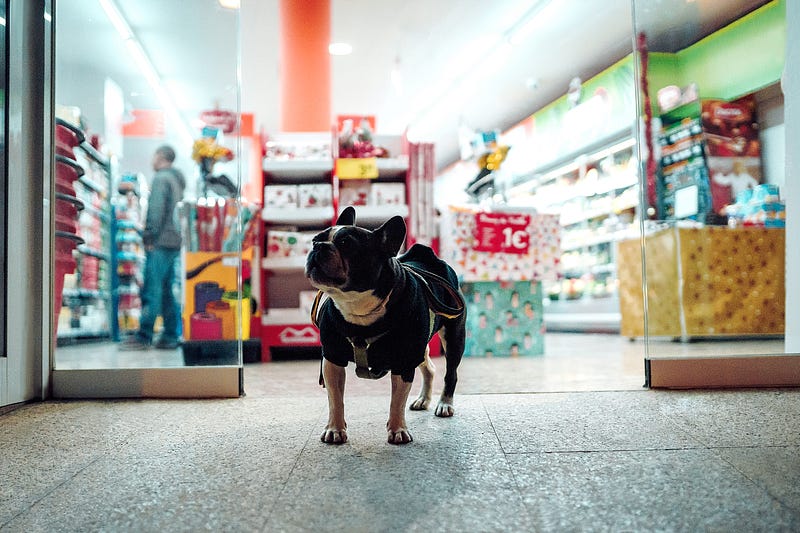
I love to watch the people and pets who frequent the commercial pet stores that allow you to shop with your precious pet. The people fall into two categories: those who can’t wait to show off their best friend ; and those who have severe separation anxiety and can’t leave their darlings home even for a 30-minute run to the food store.
The first group are the strutters. They go down every aisle because they don’t want to miss that dapper young man who’ll bend down and say, “Isn’t he the cutest little babydoll in the world?” Missing out on this experience for a loving pet owner is like skipping the National Skating Championship for a figure skater.
These pet owners are not there primarily to purchase foods and treats; they’re there to get “feel-good” vibes from other pet owners. As an afterthought, however, they are not oblivious to the sales and special displays aimed at their house budgets so they are amenable to buying overpriced holiday costumes. This is why you see so many French bull terriers wearing Santa outfits or antler attachments.
The most indulgent pet owners are those that tuck their babies in carriages. Now if you had told me years ago that some day I’d be seeing dogs in baby buggies, I would have told you to go back to the nut farm, but sure enough that day has arrived and these pet owners are as proud as punch of their woofing-pooping-vomiting darlings.
The second group of dog owners are the serious type. They bring their pet to the retailer for a specific reason, be it vaccination, grooming, obedience lesson, or daycare. You can see them rehearsing their pet around the store. You hear the “heel,” “sit,” and other commands that the pet will or will not obey as the case may be.
This group takes more pride in their dog’s appearance and education than in showering affection or showing off Rover’s “gimme five” trick. In fact, if you watch them carefully, they hardly crack a smile, leash taut in their capable hands, with the dog going through his paces as a preface to whatever task is at hand.
If, for instance, the honey-brown cocker spaniel is there for grooming, his owner will lead him down the long aisle that bisects the entire store in an effort to tire him out so he’ll be less “frisky” for the groomer. The report last time on Neville’s behavior during toe clipping was not favorable, and this owner wants to ensure his dog displays a marked improvement. This is important because the owner derives his own self-esteem from his dog’s actions.
But before I go any further into disclosing what I’ve seen and viewed in commercial pet stores, I need to point out that that there is a third group of pet owners you don’t hear about too much, and they frequent stores almost as often as the owners who bring their pets. This third group consists of those over-protective types who feel they must defend their pets from viruses, stray bacterial strains, and assorted parasites. They may be just as loving as the other two groups but a sizeable number of them is made up of anxious, semi-neurotic people who hold birthday parties for their pets, talk to them as they would a small child, and arrange playdates.
So it is that these three groups of pet owners contribute to a multibillion dollar industry that rivals purchases of frito-lay products. In fact the monies that pet owners spend on their progenies would be greater than frito-lay grosses were frito-lay to develop a chip that is dog-healthy. Then you can bet your best rawhide bone that many pet lovers would be first in line to purchase this new product.
A quick walk around the store allows you the opportunity to see which people fall into which groups. Go on weekends when there are more people to watch because the information you gather is invaluable. Many people are still deliberating which food is the most healthful for their dog so they will pause and listen to the spiels of various company reps, who toss around words like “natural,” “holistic,” “sustainable,” and “environmentally-friendly.”
For the millennials, who comprise the majority of consumers, these words are soothing in their blatant association with human products. Millennials want their dogs to eat as well as they do, so it’s vital that they hear the same jargon.
Down and around the cans and bags of dog food, people can surprise each other around those tight corners between the dog beds and the diapers (don’t ask!). Some breeds do not like each other, and that can have some surprising repercussions, but I’ve never actually witnessed a store fight since many of the dogs are puppies and have not tuned into their sexual hormones yet so they don’t react as adult dogs might. Also, each dog recognizes that this is not their terrain and they do not feel possessive about it; hence the generally amiable dispositions.
Actually the biggest surprise for owners is that their wonderfully trained and groomed puppy (who is more than likely on a vegetarian or fresh frozen diet) still has the same defecation instincts as the ASPCA rescue dog. Yes, I’m afraid to say I’ve seen a few odoriferous accidents inside the store. But owners are apologetic and helpful in the cleanup as is management, who knows where their bread is buttered.
Most experienced owners, however, give their dogs a little time outside in the parking lot to make a deposit, and smart retailers usually provide cute little plastic bags hanging temptingly on posts for that purpose.
I myself at one time used the pet store as a means of socialization for my “show dog.” Since a “show dog” must get used to weird noises and sights, the best place to take him/her, especially when the temps are high and you’re gasping for a breath of cooler than 100-degree air, is your neighborhood pet store.
There he can sniff and sidle up to strange dogs to his heart’s content. At the same time he is learning to walk properly on a lead. Obedience lessons are anathema to show dogs, who must not learn to sit on command due to a disturbing skill transference of doing same in the ring. However the walking part is crucial to conformation skills and informs your dog that no, your arms are not stretchable and he/she must adhere to leash lengths.
There are always the obstreperous dogs who cannot control their mouths or their limbs, but you can avoid them if you choose the right aisles to walk. My suggestion is to avoid the aisles near the puppy camps because overstimulation commonly results, and it’s not unusual to see a six-month-old mixed breed flailing his limbs over the floor in an excellent imitation of a dust mop.
A word to the wise is in order. While breed-specific dogs are a mark of elitism outside of the pet store, there is no distinction between AKC and mixed breeds inside the retail establishment. All dogs have the same opportunity to embarrass their owners with their jumping up on crippled people and tongue licking of two-year-olds.
Save the lengthy story of your pet’s amazing pedigree for those who appreciate it such as judges and handlers. Inside the store, your lab mix’s stomach is just as important to IAMS as the Bouvier with five ribbons at home who is crowding the aisle.
Although conformation, agility and earth dog or barn hunting are legitimate somewhat snobbish activities that AKC sponsors, most of the dogs who tread the aisles of commercial stores will be relegated to the status of companionable dog, couch dog, barco-lounger dog, and bed sprawler. Once in a while you will get to see the beginning training exercises of a dog for the disabled (blind, deaf, or limited mobility).
The commercial store is thus the United Nations of Dogs, and as a canine symbol of respect for domestic pets, it scores high. Whatever group you and your dog fall into, know this: that marketers only care about one thing, this being how much money per canine you spend there on an annual basis. If the stats are accurate, a trip down the aisles can eat into your wallet. But it’s hard to resist that superman T-shirt, isn’t it?


