
Object Constancy & Whole Object Relations — The Root of All Narcissistic Personality Disorders
How can it be?
How can a person with NPD treat you with such loving care for months, years, or even decades, then suddenly out of the blue treat you with such hatred and contempt? You have done absolutely nothing to invite the abrupt change. It is a humiliating, confusing, dehumanizing, extinction level experience.
You have been cast out of the garden without explanation. You are banished from the shared fantasy kingdom, and when you hit the ground with a thunderous crash, it is a disorienting surrealistic moment as you survey the ugly lack of color in this thing called reality. The dream is over as you soon begin to realize as you wake from the slumber that kept you away for so long.
How could they something so nonsensical? And why would they be so cruel?
It is the narcissistic cycle of idealize, devalue, discard. And it is the Holy Grail of pathological narcissism — so it is and so it will always be.
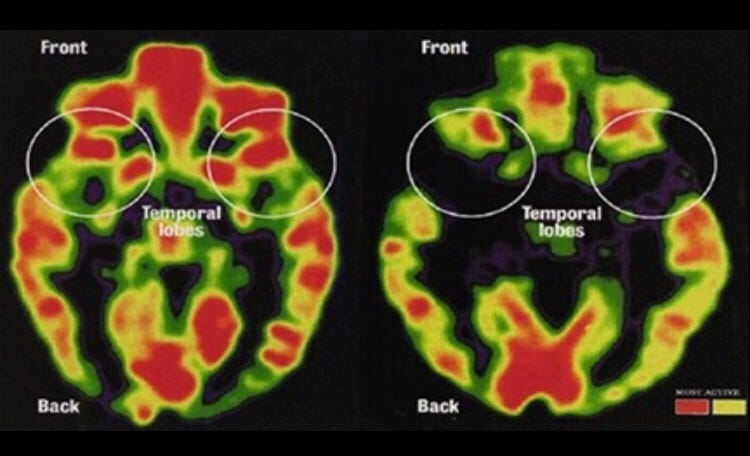
And the cycles come back to how the narcissist is hardwired, vacant inside, and physiologically developmentally impaired with brain disorders that can actually be seen on brain scans. They are not like a neurotypical person. They are alien, damaged, hollow, impaired, and incapable of being anything else. Ever. No matter how many times repetition compulsion demands that they repeat the cycle of abuse.
The just keep doing it because they don’t remember. A narcissist has discontinuous memory. The instant they walk out the door, they forget everything about you and about the two of you in your life together. They cannot attach because they have no continuous memory. And they fill in the gaps and holes with fantastical confabulations that never happened as they disremember the things that actually did occur.
And all this brings us to a couple of other significant features of malignant narcissism — object inconstancy and a lack of whole object relations.
“See those empty circles in the mesotemporal lobes? That’s where emotional memory is stored, and people who suffer from Cluster B personality disorders just can’t do it. They are impaired in their ability to remember what previous experiences felt like. This is why they have trouble learning from their mistakes, and it’s also why each and every time they fall in love, they think that they have found “the one” who will save them. They haven’t, of course, but they just can’t remember being so-in-love before in their lives, so their maladaptive relationship pattern continues.” — Alan Taylor
People with NPD have abnormal brains and no matter how hard they try ot how hard you try or anybody else, it cannot be repaired, and they will never feel what regular neurotypical people feel. But in addition to a damaged non-functioning brain, there are other markers that a narcissist has that sets them apart from everyone else.

Narcissists don’t possess the capacity for object constancy. When the ‘devalue and discard’ phases of narcissistic abuse happen, they feel such contempt for you, they have no problem treating you with cold indifference and cruel loathing.
Object constancy is the ability to retain a bond with another person — even if you find yourself upset, angry, or disappointed by their actions. This particular cognitive skill develops around 2 or 3 years of age. The narcissist suffered interrupted healthy develop in a number of critical areas needed for building a healthy human, and this is only one of them.
The narcissist can only see people as good or bad. The good ones are the ones that provide fuel in the form of affection, adoration, attention, adulation. The new fresh objects of their infatuation which adds up to nothing more than a 6th grade crush in terms of true connection or intimacy. That phase never lasts, and sooner of later the narcissist moves on to fresher “fuel” or “supply.”
Bad people are the ones who fall from grace when the “shared fantasy” bubble begins to burst. They are then devalued and ultimately discarded. It could take months, years, or even decades to cycle through these stages depending on the quality of residual benefits and personality traits to be co-opted and absorbed. If there is an abundance of money, connections, unboundaried sex, and other benefits, the narcissist may stick around for quite awhile.
Good and bad have no moral implications to the narcissist. They paint you white or paint you black. there is no gray or blurred lines. You are either a devoted acolyte who supports their false persona, or you are a threat and an enemy that fills them with contempt and hatred for you.
According to psychological research, object constancy is the ability to believe that a relationship is stable, hopeful, and intact, despite the presence of setbacks, conflict, or disagreements. People who lack this might experience extreme anxiety and abandonment issues. Narcissists have avoidant attachment styles and are incapable of attaching or bonding to anyone. This would require empathy, continuous memory, accountability, and intimacy — none of these are possible for the person with NPD.

When I was with my husband, for 16 years I managed to be shrouded in some kind of deniability cloak. I knew there was something wromg with him. I saw the red flags. I had the intuitive gut feeling that this was something larger than life in the best and the worst kind of ways. And through it all, I defended his indefensible behavior, made excuses for the things he did, and walked behind him repairing, fixing, mending and doing damage control for the series of impulsive, thoughtless mistakes he continued to make.
As long as I saw him as my savior, proxy parent (mutual parentification is a primary marker of these kinds of pairings), flawless partner, and the man I had always dreamed of, he was able to take the fuel I provided that kept him alive like a life-saving transfusion.
But finally, his betrayals went too far, and I could not hide the anger and hurt and fear and revulsion I felt about what he did. I didn’t leave although clearly a healthy person would have done so. I stayed and reminded him that I hated what he did and how it fractured the whole family dynamic in irreparable ways. I knew that this time, even I could not cover it up and pretend that it wasn’t any big deal.
He withered in my disappointment and resentment. The fuel lines dried up. The teat from which the mother’s milk so abundantly flowed shriveled up.
He was starving, as all narcissists do, without the fuel of affection, adoration, attention, and more. So he began looking for my replacement in the shape of someone new and fresh and innocent and unaware of what would follow.
In his eyes, I had betrayed him. In his eyes, I broke the covenant. In his eyes, I abandoned him. He believed that he had been the perfect husband and that I was contemptible for witholding the flow of fuel that he needed to survive.
But I was there. Loyal and devoted, fighting to slowly forgive the unforgivable, fighting to create a fresh start and new beginning with better outcomes. I never gave up. Part was addiction to the trauma cycles that bound us, part was my own codependency and borderline traits, but part of it was unconditional organic love.
It wasn’t enough.

Narcissists don’t understand love. They don’t know what it is, and they can’t feel it, so how could they truly experience it or give it to you? They are just acting a part and believing their own magical thinking. Love is just a word you say — an abstract concept.
Because of a lack of object constancy, I became 100% bad. Anything we had shared or experienced or any happy memory or good qualities he once thought I possessed just EVAPORATED into thin air.
He could not form whole object relations because that childhood development stage was interrupted, and he was never able to achieve it by internalizing the concept. What is meant by whole object relations? This is the ability to form an integrated, realistic, and relatively stable image of oneself and other people that simultaneously includes both liked and disliked aspects and also strengths and flaws.
The narcissist is not whole or integrated or realistic or stable. And they cannot perceive others as complex layers of good and bad all at the same time. They either are infatuated (never in actual love) or they hate you with every fiber of their being and are repulsed by your very existence. And it can change on a dime.
In the weeks and months before the discard, I could feel that things were changing, and the intermittent cycles of abuse increased. I discounted them and minimized them because when you have merged and fused with a disordered partner, you cannot acknowledge abuse. It is a blind spot, and you simply cannot accept it.
There were acts of kindness and closeness and cuddling and the everyday things that make a marriage a source of peace and comfort. I chose to focus on all of those things. When the criticisms and mocking and cruel picking me apart occurred, I dismissed them and carried on with our comfortable routines that acted like anesthesia.
In the end, the narcissist is incapable of doing anything else except following their cycle of abuse: infatuation/idealization, devaluation, then discard. They cannot do or be anything else. They are single minded and programmed to try to be a real human (they all know they are different and not like everybody else). The only way to do that is to merge and fuse, go though the steps, and then throw you away so they can “individuate” and become real.
That is their quest. They will always fail, but they will always try again and again because they have no emotional memory of the past.
In the process, you will be the “all good” person for a while, then you will be “all bad” and must be punished. There is no other ending.
You won’t believe it until it happens to you.

The person you were before the narcissist is gone. They murdered that person. Invaded them. Stole their valuables, and now wear them as their own.
If you want to live, you must give birth to a new you. It will hurt, but it is the only way to get the narcissist out of your head and be truly free.


