
MICROBIAL MARVELS
‘Obelisks’: What Does The Discovery of These Virus-Like Entities in Our Gut Reveal?
Observed for the first time by Scientists, these “viroids” are believed to have a potential impact on gene activity within the human microbiome
Recent advancements in biomedical research have led to the identification and exploration of previously unrecognized structures within the human body. These discoveries challenge traditional notions of human anatomy and contribute to a more nuanced understanding of physiology. Back in 2018, A network of fluid-filled cavities, previously unknown to science, had been identified throughout the human body.
Researchers behind this discovery proposed that these cavities meet the criteria for a new human organ, which they named the “interstitium.” More recently in 2023, scientists discovered another organ — a set of salivary glands situated in the head and neck. These glands are positioned at the nasopharyngeal end of the auditory tube within the throat. By continually uncovering and studying these components, scientists aim to refine their comprehension of how the human body functions at a microscopic level.
Biologists, in their pursuit of gathering and scrutinizing extensive genetic sequences from plants, animals, and microbes, continue to come across unexpected phenomena, some of which pose challenges to the conventional definition of life. A recent revelation introduces a new category of virus-like entities residing in bacteria within the human mouth and gut.
Termed “Obelisks” by the Stanford University team leading the discovery, these entities possess genomes seemingly comprised of RNA loops, with their sequences discovered globally. Scientists validated a single host for these viroids: a prevalent mouth bacterium known as ‘Streptococcus sanguinis’. Although additional hosts have not been confirmed, there is suspicion that at least a portion of them may be bacteria.

“…comprise a class of diverse RNAs that have colonized, and gone unnoticed in human, and global microbiomes,”
~ Study Team
Viroids are small, infectious, and circular RNA molecules that are distinct from typical viruses. Unlike viruses, viroids do not possess a protective protein coat. They were initially discovered in plants, causing various diseases, and were later identified in fungi. Viroids are known for their ability to replicate autonomously within host cells, co-opting cellular machinery for their own reproduction.
Initially believed to exclusively infect plants, recent research suggests viroids may extend their reach to other hosts, including animals, fungi, or bacteria. In the current study, researchers delved into the genes of microbes inhabiting the human body, exploring the potential existence of viroids in this domain. They termed newly found viroids “Obelisks” due to their predicted 3D structure resembling a thin rod when they fold onto themselves.
To identify them, the researchers analyzed gene activity in various microbial communities within the body using previously published data, specifically focusing on “metatranscriptomes” — summaries of gene activity. In their examination, researchers discovered the presence of Obelisks in approx. 7% of the metatranscriptomes, obtained from human feces — offering insights into gene activity within the gut microbiome. Additionally, the newly labeled viroids were found in 53% of the mouth metatranscriptomes, specifically identified in 17 out of 32 samples.
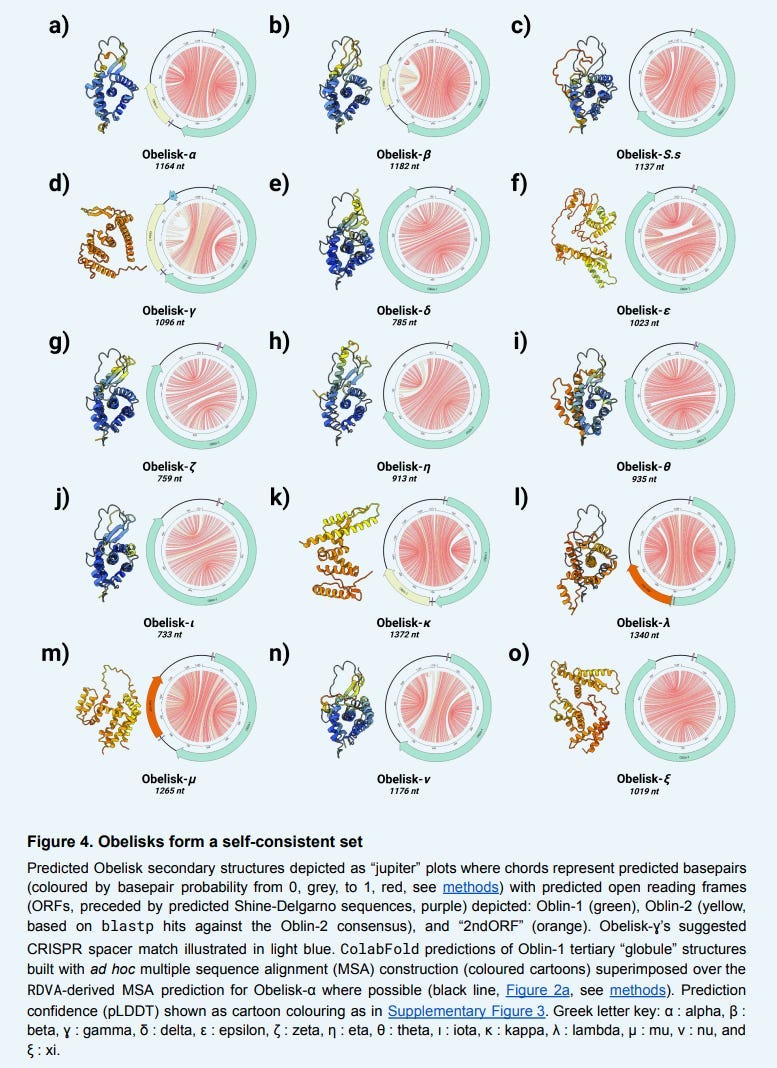
Recently discovered Obelisks appeared to include instructions for replication enzymes, rendering them more intricate than previously described viroids. However, akin to most viroids, they still lacked directives for a protective outer shell. The impact of these viroids on human health remains uncertain, although they could potentially influence the human microbiome by infecting bacteria. Additionally, ongoing discussions surround the evolutionary relationship between viruses and viroids — fueling the debate & questioning whether viruses evolved from viroids or vice versa.
In essence, these recent discoveries not only add layers to our understanding of human anatomy but also underscore the ongoing process of discovery and refinement in the field of medical science. The impact lies in the potential to enhance our ability to diagnose, treat, and prevent various health conditions through a more comprehensive understanding of the human body’s intricate workings. Complete research was published in the Preprint server bioRxiv.
➱➱➱➱➱➱➱➱➱➱➱➱➱➱➱➱➱➱➱➱➱➱➱➱➱➱➱➱➱
Read my daily newsletter by subscribing to Faisal Khan on Substack.
Stay informed with the content that matters — Join my Mailing List.
➱➱➱➱➱➱➱➱➱➱➱➱➱➱➱➱➱➱➱➱➱➱➱➱➱➱➱➱➱
Originally published at https://khanfk.substack.com.