Sustainability
Nuclear Power and Doomsday Scenarios Connected
Consequences of some possible catastrophes on nuclear power plants
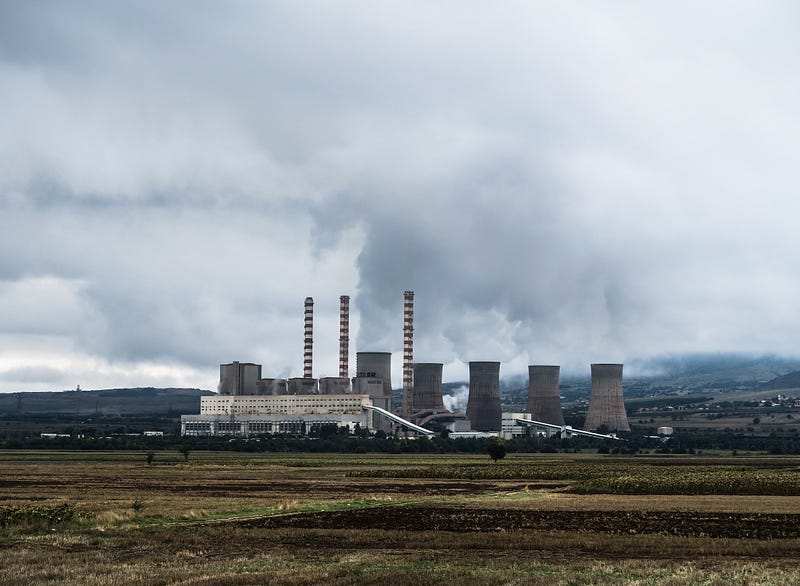
Nuclear power seems to be a relatively clean energy source. But when something happens, the situation can get very dangerous. Let’s look at the consequences of some possible catastrophes on nuclear power plants.
We all know what happened in Japan on the Fukushima Daichi nuclear plant after the Tōhoku earthquake and tsunami on March 11, 2011.
Who wants to know more details on this event look at the following links:
- Fukushima Nuclear Accident (IAEA)
- Fukushima Daiichi Accident (World nuclear association)
- Fukushima accident (Britannica.com)
This accident is a template for this article. It shows what happens when a nuclear plant goes out of control due to a collapse of the external infrastructure after a big natural disaster.
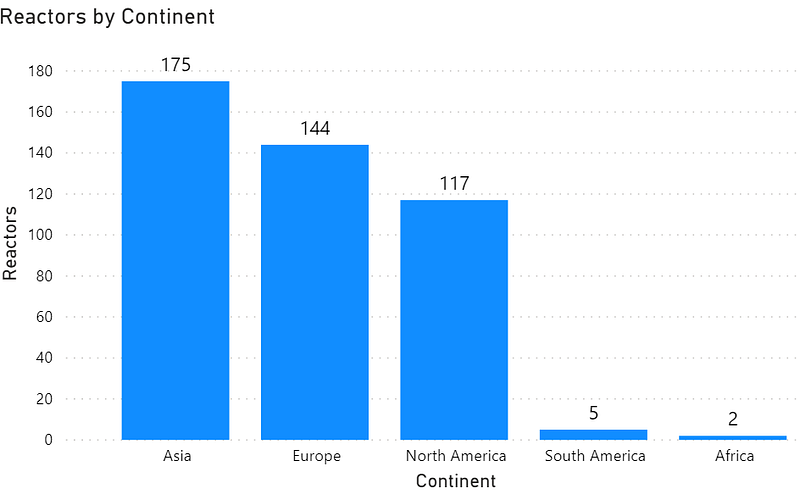
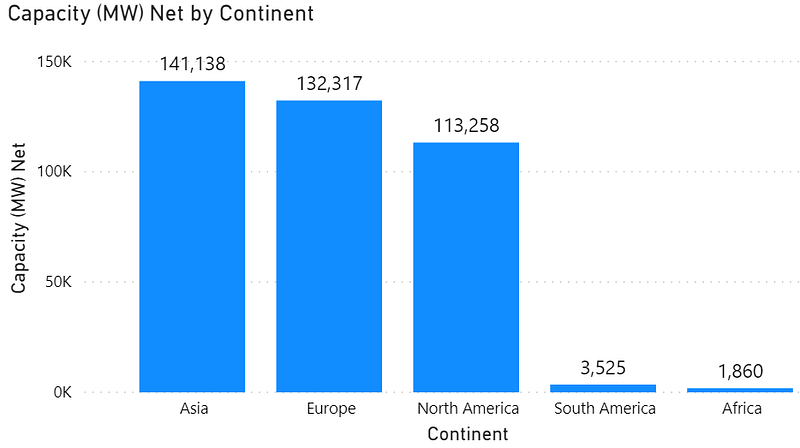
According to IAEA, there are over 400 active nuclear plants active on the world, as per the end of 2019. The U.S.A. has the largest number of nuclear reactors in all countries.
Here you can find out more on the reactions inside a nuclear reactor: Physics of Uranium and Nuclear Energy.
Unfortunately, I was not able to find out precise numbers of how long nuclear waste remains radioactive. But the remnants of our nuclear reactors will stay dangerous for many thousands of years if not hundreds of thousands of years.
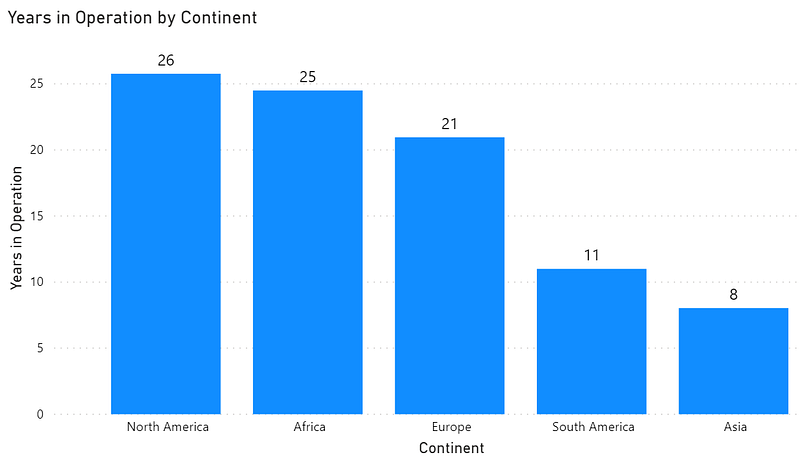
Comparing to a world-wide commercial average lifetime of a nuclear reactor of ~20 years, this is an extremely long time.
Imagine that the German government is searching for long term storage of nuclear waste which can store this stuff for up to one million years. This is the scale that we are talking about when we talk about nuclear waste.
What can happen to humanity?
Well, a lot. We can get a deadly pandemic, which wipes away 50% (or more) of the world population.
We can experience a runaway climate crisis. The most extreme scenario, caused by climate change, is the melting of both ice-caps. Such melting of ice would cause the rise of sea level of up to 60 meters (~200 foot).
A giant solar flare could hit us from our sun, which can have a global impact on our atmosphere and our power grid.
We can experience a catastrophic asteroid impact with the potential to cause local destruction and a worldwide climate catastrophe up to a new ice age.
A supervolcano can go off and cause widespread destruction and change of global climate. Possibly a new ice age.
Let’s take a closer look at each of the mentioned scenarios and what are the possible consequences to nuclear plants.
A deadly global pandemic
In case of a global and deadly health crisis, we are in danger to lose many highly qualified personnel, which drives our electric grid and operate the nuclear plant. As a consequence, the lack of know-how will cause failures of critical systems, which, in turn, can cause damage and disruptions in many nuclear plants.
In this case, we have the situation that many reactors will go out-of-control and lead to a core melting or explosions, like in the Fukushima catastrophe.
Rising sea levels
Rising sea levels pose a critical danger to nuclear plants.
Most of the nuclear plants are built near water (on the shore of the sea or rivers), because of the need for cold water to cool the reactors.
Nuclear plants can be flooded by the rising water level and cause disruption.
We would be able to shut down the reactors in time.
But:
- Floods can disrupt electrical supply to the grid, causing interruption of electrical supply to the nuclear plants. But energy is needed for cooling during the shutdown period over days or even weeks (here a more technical resource on this topic: Reactor Shutdown on Science direct)
- Water, especially seawater, can erode the containment vessel of the reactors over time and expose the highly radioactive core to the environment.
This situation is serious because this will contaminate the seawater on a large scale, causing disruption in the food chain in the ocean.
Solar flare
Our sun looks bright and quiet as seen from earth.
According to ACS, our sun radiates 63 × 106 W·m–2 of energy from her surface. This is something around one Trillion ( 1 X 10 to the power of 12 or 1'000'000'000'000) Hiroshima size Atomic explosions every second.
On earth, we get an average of 342 W·m–2 from a distance of 150 million km. This looks like a tiny amount of energy compared to total radiation energy. But it’s enough to heat our home planet and allow a vibrant nature.
The strong magnetic fields on the sun can cause giant explosions, called solar flares, which ejects gigantic masses of solar material. Such an Ejection is called CME (Coronal Mass Ejection), and it can contain 1 billion tons of solar material that can be accelerated to several million miles per hour.
On 1859 a solar flare exploded with the power of 10 billion atomic bombs. This flare is called the Carrington Event. You can find more information about this event on the following websites:
- A Perfect Solar Superstorm: The 1859 Carrington Event on history.com
- Carrington Event on Wikipedia
- Duration and extent of the great auroral storm of 1859 on NCBI
- This Multi-Trillion Dollar Disaster Is Coming, And Solar Astronomy Is Our Prime Defense on Forbes
Such a solar flare can happen at any time. In 2012 we were lucky to have been missed by such a solar storm: The solar storm of 2012 that almost sent us back to a post-apocalyptic Stone Age on ExtremeTech.com.
When a CME hits the earth, it can cause a gigantic EMP (Electro-Magnetic Impulse) and disrupt our electric grid and destroy electric devices all over the world.
Our electric power grids are in a sensible equilibrium. For example, the power grid in Europe connects power plants overall countries in Europe with several control stations spread over the entire continent.
One Event can disrupt power supply in one segment and can cause a domino effect which can lead to power outages on a large scale.
Asteroid impact
Earth was the target of asteroid impacts many times since his birth ~4.5 billion years ago.
But only a handful are visible today.
Here a list of well-known impacts or events:
- Chicxulub event which killed the dinosaurs (Smithsonian Institute)
- Barringer event in today Arizona 50'000 years ago (More information is available here)
- Tunguska event in Russia in 1908
- The Chelyabinsk meteor in 2013
Here a video on the Barringer crater and the impact event which caused it:
In 1908 a meteorite exploded above the Tunguska region in Siberia.
We need to realise that if the Tunguska object arrived just a few hours later, it would have hit central Europe, causing significant damage in a densely populated area.
You can imagine what would happen to the numerous nuclear plants in a densely populated area, like Europe, when an asteroid hits such a region, causing extensive damage to the infrastructure.
A supervolcano explodes
To understand what a supervolcano eruption means, you need to know the Volcano Explosivity Index (VEI).
A Supervolcano is the location of a volcanic event, which erupted 1000 cubic-kilometres, or more, of material which translates to a VEI of at least 8.
The remnants of such an eruption are called a Caldera and can cover a large area. I’ll come back to the size of Calderas in a moment.
One place of such a Caldera, which is well known to most people: It’s the Yellowstone Park.
The Krakatau eruption in 1883 was the loudest explosion in written history. Now imagine that the Caldera of the size of the Yellowstone supervolcano erupts more than 100 times the material of Krakatau.
I have to point out that a supervolcano rather explodes than erupts.
I want to refrain from explaining the possible effects of such an event, as I would copy/paste information from other sources. But the effects would be like the impact of an asteroid.
You can watch this video, which explains some of the impacts of an eruption of the Yellowstone supervolcano:
The movie 2012 (2009) featured a simulation of such an eruption.
The fact that the Yellowstone caldera is just a fraction of the size of another supervolcano is frightening:
- Yellowstone: 37 miles across
- Lake Toba on Sumatra: 62 miles long and 19 miles wide
There are seven known supervolcanoes around the world. If one of them explodes, the effects are potentially global.
What can our nuclear plant leave behind
Now we know what can happen.
Some of those events have a local and temporary impact. Some can cause long-lasting and global damage.
But to make things worse, we have hundreds of nuclear reactors spread all over the world. And an out-of-control atomic reactor can explode and spread highly radioactive material over a large region.
We can remove the remnants of a catastrophic event, or nature can reclaim destroyed regions. But Radioactivity will be there for thousands of year — potentially severely contaminating many square-miles or square-kilometre (The unit doesn’t matter at all on that scale) for a long time.
We will not be able to inhabit those regions any time soon.
And the effects on wildlife and the food chain are unpredictable.
From the CO2 point of view, nuclear energy is a relatively clean energy source. But the dangers and the remnants of this form of energy source are more than questionable.
We would leave behind a dirty legacy for the next 10'000 generations in the form of highly radioactive material. We must make sure that the generations that will come, long after we are gone, still understand what kind of material is stored in the long term storage locations, in case someone finds it.
But this is another thing that we must tackle to improve the security of our children, grand-children and all of the future generations.
If you consider that we face a challenge while translating written text from 10'000 years ago, 1 million years is an extremely long time to pass over information.
I have no detailed answers or solutions to these questions. We need to go ahead in transforming our energy sources to renewable sources as soon as possible and shut down and dismantle our nuclear plants very soon.
We have to do this transformation not only for us but for all generations that will come after us.
Update (03. November 2020):
I found this Essay in favour of Nuclear power and I want to show this as well. This way you can form a complete opinion on this topic:


