avatarDr John Frederick Rose

Free AI web copilot to create summaries, insights and extended knowledge, download it at here

1146

Abstract

9d13">As the thing in itself cannot be known, we are left with patterns of rationality as the only relevant reality (idealism). These patterns of intelligibility structure reality, and like living things they can develop towards more rational states. The name for this kind of extended mind in German is <b>Geist</b>, meaning a combination of mind and spirit.</p><p id="8020">The development of Geist is driven by two processes: <b>differentiation / articulation</b>, and <b>integration</b>. Together, they comprise the <b>systematization</b> of the world itself. This autonomous system gradually evolves as it synthesizes opposing ideas through the dialectical process. In this way, rationality (and thereby reality) realizes itself, ultimately becoming self-aware in the form of the World Spirit (or God).</p><p id="ce4a">One of the consequences is that God, as the self-organizing principle of reality, is again seen as rational, and we can again access the divine through rational reflection. Hegel is effectively translating religion into philosophy.</p><p id="fbc4">While popular in his time, Hegel’s ideas faced critiques on numerous front

Options

s:</p><ul><li>Schopenhauer (and later Nietzsche) considered the intelligibility patterns to be driven by will (Will to Live, Will to Power), making them fundamentally irrational and arbitrary.</li><li>Kierkegaard criticized Hegel’s philosophy for being a purely intellectual system lacking in the participatory knowledge needed to cultivate wisdom. From the Kierkegaardian perspective, our attempts to realize the divine have been severed from personal transformation (they do not compel us to take the “leap of faith”).</li><li>Marx saw religion as an opium distracting us from the reality of how socioeconomic forces shape history through conflict. The participation that Hegel inherently lacked, Marx provided through a call to political and economic revolution.</li></ul><p id="dc4e"><a href="https://readmedium.com/summary-of-awakening-from-the-meaning-crisis-by-john-vervaeke-chapter-23-romanticism-0ded8b29cb29">Previous chapter: Romanticism</a></p><p id="24a8"><a href="https://readmedium.com/summary-of-awakening-from-the-meaning-crisis-by-john-vervaeke-chapter-25-the-clash-a8ea65710b2d">Next chapter: The Clash</a></p></article></body>

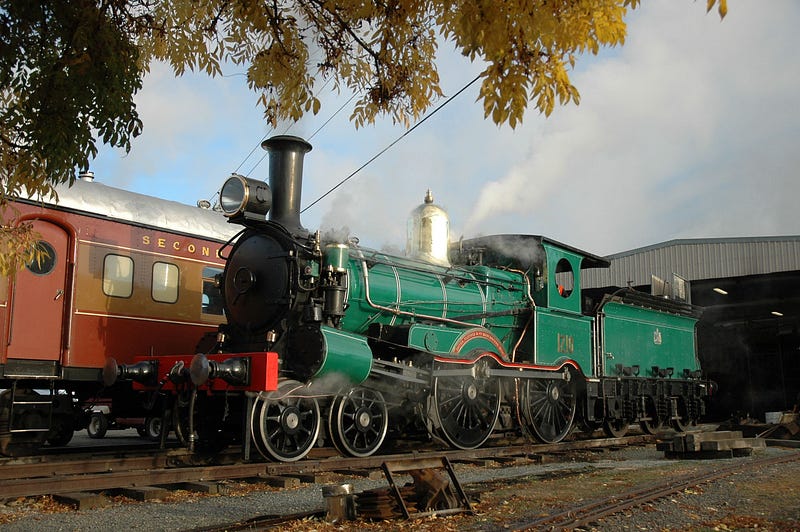
NSWGR Z12 Class Steam Locomotive

Classic British steam locomotive still runs on Australian Railways.
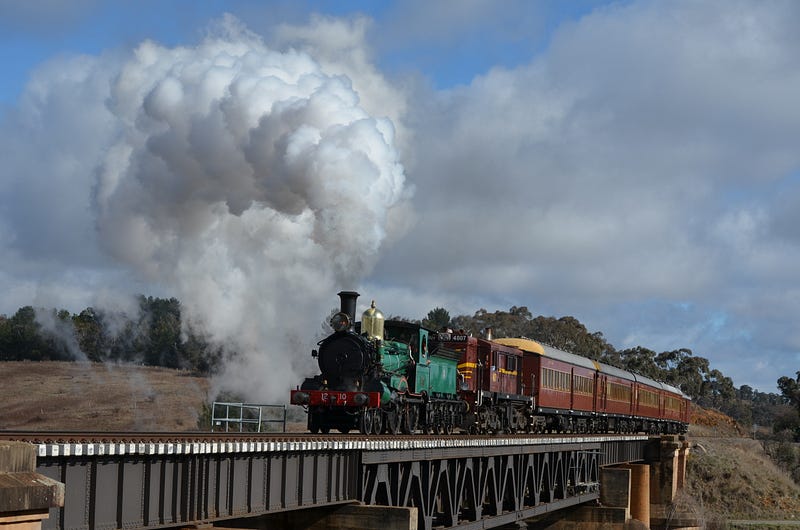
1210 pulls Heritage Rail Tour. Picture taken on 21 July 2013 by Arhsact — Own work, CC BY-SA 3.0, https://commons.wikimedia.org/w/index.php?curid=27791852
Picture taken on 23 April 2011 by Arhsact — Own work, CC BY-SA 3.0, https://commons.wikimedia.org/w/index.php?curid=27791853https://commons.wikimedia.org/wiki/File:ARHS_ACT_Locomotive_1210_a.JPG#/media/File:ARHS_ACT_Locomotive_1210_a.JPG

Z12 class 4–4–0's first class of locomotive on NSW Government Railways built in relatively large numbers, Started early 1880's, Most withdrawn 1930's, Remainder served on niche light lines and less demanding country duties.

Two Z12’s remain, 1210 started 1878 last steamed August 2012, Overhaul abandoned permanent display 2020, 1243 started 1882, Permanent display 1988.

Both locomotives in heritage service and historical reenactments, 1243 stared 1970 film “Ned Kelly” with Mick Jagger, Come 1970’s 1210 and 1243 were double headed in railfan trips, That’s when I saw these sterling locomotives.

Vintage Trains suspended March ‘74, By this time both locomotives especially 1243 had undergone many changes and part replacements to suit historical replays, Must be truthful preferred much loved 32 class 4–6–0.

English Heritage
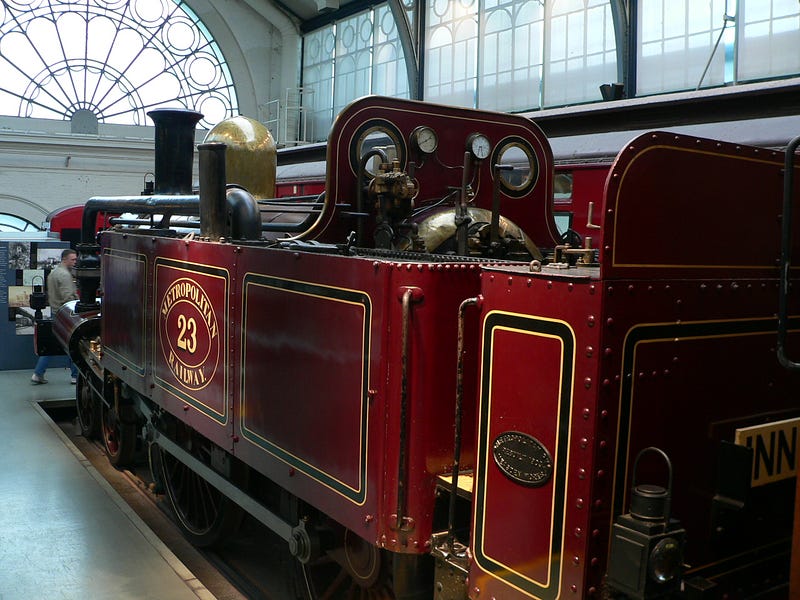
Preserved A Class №23 at the London Transport Museum. Picture taken on 26 March 2005 by Chris McKenna (Thryduulf), CC BY-SA 4.0, https://commons.wikimedia.org/w/index.php?curid=235530. Built 1866 and is the only surviving locomotive from the world’s first underground railway.

Z12 class design derived from Metropolitan Railway A Class 4–4–0T of 1864 built by Beyers, But in turn Beyers based A Class design on locomotive built for Tudela & Bilbao Railway.

68 were built, First batch of 30 built by Beyers and placed in service between 1877 and 1879, These Z12’s were first NSWGR loco’s imported with Westinghouse continuous air-brakes already fitted.

Over many years locomotives underwent many changes including Belpaire fireboxes and new cabins, But to my knowledge none were superheated.
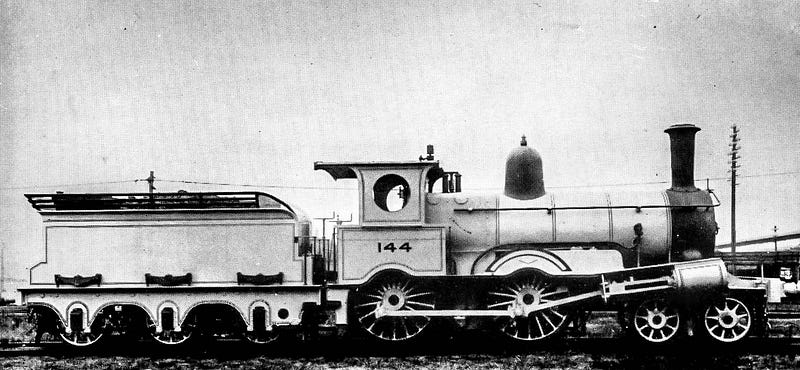
NSWGR Class C.80 (later Z12) Class Locomotive after reboiler and Belpaire firebox fitted Picture By NSWGR Archives — NSWGR Archives, Public Domain, https://commons.wikimedia.org/w/index.php?curid=27719129

Author’s note.

Looking back, Regret not appreciating and loving Z12 class like my C32 class, But that’s life.

Blessed be.

Railfanning
Steam Locomotive
Poetry
Nsw
Locomotives
Recommended from ReadMedium