avatarDr John Frederick Rose

Free AI web copilot to create summaries, insights and extended knowledge, download it at here

1338

Abstract

ills crude Z19 loco, Model fascinating, Pulled all my rolling stock compared with larger models, Only loco that didn’t derail on hand-built tracks, Guess I was 13 going on 90.</p><p id="912e">Thought to build live steam model, My very own Z19, Purchased <a href="https://www.myford.co.uk/">lathe</a> learnt skills but never mastered <a href="https://www.uvm.edu/riskmanagement/silver-soldering#:~:text=Silver%20soldering%2C%20also%20known%20as,the%20joint%20by%20capillary%20action.">silver soldering</a> required for carefully crafting copper boilers, Life intervened.</p><p id="b670">Z19 remained much loved, Remember seeing shunting carriages, Sometimes saw them working <a href="https://www.nfsa.gov.au/collection/curated/steam-harbour-darling-harbours-working-trains">Darling harbour</a> goods yard, Busy bees in sterling service, Now just fond memories.</p><h2 id="2cf8">Z19 History</h2><p id="6563">Introduced 1877 Last used shunting at <a href="https://en.wikipedia.org/wiki/Port_of_Newcastle">Port Waratah</a> in 1972.</p><p id="1253">Original configuration used<a href="https://en.wikipedia.org/wiki/Long_Boiler_locomotive"> long boiler</a> Stephenson’s 1842 patent, <a href="https://en.wikipedia.org/wiki/Firebox_(steam_locomotive)">Firebox</a> behind rear driving axle giving excellent heating surface powerful and efficient,

Options

Centre of gravity low limited size of driving wheels and forced choice of outside cylinders.</p><p id="887c">Original configuration appealed to my young eyes, Short wheelbase and no leading bogie meant sometimes derailed, Restricted to max 25mph relegated to shunting and branch line traffic, Low speed enabled handling sharp curves and badly maintained track in goods yards and <a href="https://en.wikipedia.org/wiki/Rail_transport_in_New_South_Wales">NSW branch lines</a> with <a href="https://nswtrains.fandom.com/wiki/Camden_railway_line">steep grades</a> up to 4%</p><p id="1af9">Sometime after 1898 improvements introduced, <a href="https://en.wikipedia.org/wiki/Belpaire_firebox">Belpaire boilers</a> which provided greater <a href="https://en.wikipedia.org/wiki/Surface_area">surface area</a> at firebox top improving heat transfer and steam generation making for more power and better efficiency while reducing coal usage.</p><p id="b730"><a href="https://en.wikipedia.org/wiki/Westinghouse_Air_Brake_Company">Westinghouse</a> brakes improved stopping, New cabs added protection of crews from poor weather conditions, Final configuration after <a href="https://en.wikipedia.org/wiki/NSWGR_steam_locomotive_classification">reclassification</a> became much loved Z19 class.</p><p id="e4ae">Blessed be.</p></article></body>

NSW Z19 Class Steam Locomotives

Valiant stout hearted steam engines dating from 1877.
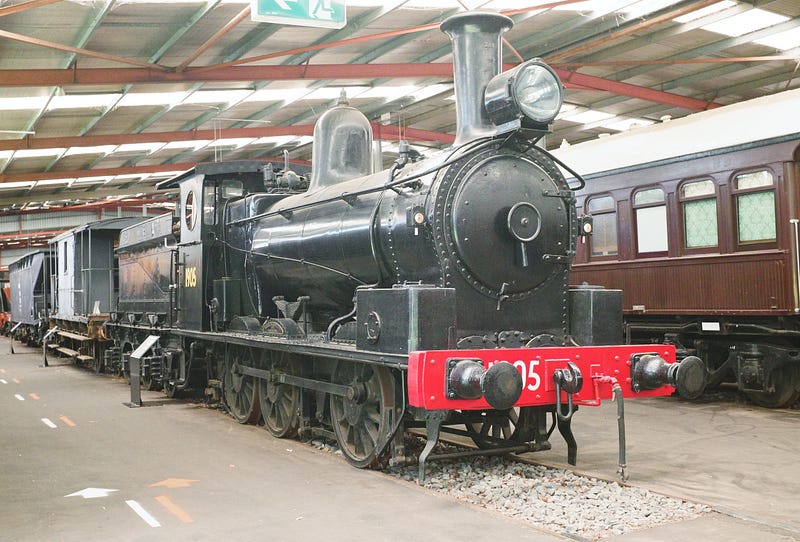
First Z19 class to cross the Sydney Harbour Bridge. Dates from 1877. Trainworks Rail Museum in Thirlmere, NSW. Photograph by VirtualWolf, CC BY-SA 2.0 <https://creativecommons.org/licenses/by-sa/2.0>, via Wikimedia Commons
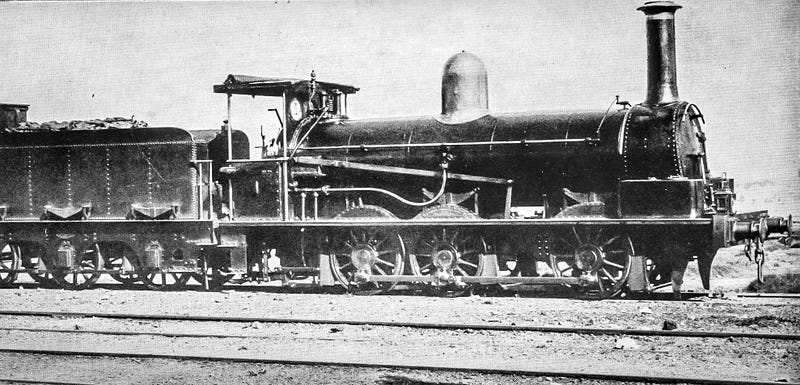
Original configuration, A93 class, progenitor of NSWGR Class Z19 Locomotives (NSWGR Archives)

Steam and Me.

Funny how things start, Remember toy locomotives, Progressed to fine scale models, One fine day impulsively bought white metal kit of Z19, Must admit end result of modelling skills crude Z19 loco, Model fascinating, Pulled all my rolling stock compared with larger models, Only loco that didn’t derail on hand-built tracks, Guess I was 13 going on 90.

Thought to build live steam model, My very own Z19, Purchased lathe learnt skills but never mastered silver soldering required for carefully crafting copper boilers, Life intervened.

Z19 remained much loved, Remember seeing shunting carriages, Sometimes saw them working Darling harbour goods yard, Busy bees in sterling service, Now just fond memories.

Z19 History

Introduced 1877 Last used shunting at Port Waratah in 1972.

Original configuration used long boiler Stephenson’s 1842 patent, Firebox behind rear driving axle giving excellent heating surface powerful and efficient, Centre of gravity low limited size of driving wheels and forced choice of outside cylinders.

Original configuration appealed to my young eyes, Short wheelbase and no leading bogie meant sometimes derailed, Restricted to max 25mph relegated to shunting and branch line traffic, Low speed enabled handling sharp curves and badly maintained track in goods yards and NSW branch lines with steep grades up to 4%

Sometime after 1898 improvements introduced, Belpaire boilers which provided greater surface area at firebox top improving heat transfer and steam generation making for more power and better efficiency while reducing coal usage.

Westinghouse brakes improved stopping, New cabs added protection of crews from poor weather conditions, Final configuration after reclassification became much loved Z19 class.

Blessed be.

Poetry
Steam Locomotive
Railfan
Railways
Preservation
Recommended from ReadMedium