
Nowhere Man 13
Philip comes home
Nowhere Man 1 Nowhere Man 2 Nowhere Man 3 Nowhere Man 4 Nowhere Man 5 Nowhere Man 6 Nowhere Man 7 Nowhere Man 8 Nowhere Man 9 Nowhere Man 10 Nowhere Man 11 Nowhere Man 12
Before Katie was pregnant, she worked at London’s King’s College Hospital. She was unafraid of pregnancy, any part of it. This was not the same for me. I was terrified. The idea of becoming a father, honestly. It intimidated the hell out of me. It took me back to my first solo flight. Get it wrong and I’m dead as dirt!
Fatherhood, holy Jesus. It’s a lifetime commitment. Where the hell do I join up for boot camp?
At 8 months pregnant, Katie admitted favoring a girl. One of us, anyway, was going to be wrong. I was ushered into the delivery room right after Philip was born, but he’d been whisked away to be cleaned up and swaddled. I was assured mother and baby were fine. Ten minutes later, the nurse returned Philip in to Katie’s arms, sweet smelling and clean. He weighed 7 lbs 10 ozs. He had my nose but Katie’s eyes.
Philip and Katie remained in hospital a further 10 days before being allowed home. Our child adjusted well to breast feeding, but that meant long waking nights, and sore nipples. Feeding every couple of hours.
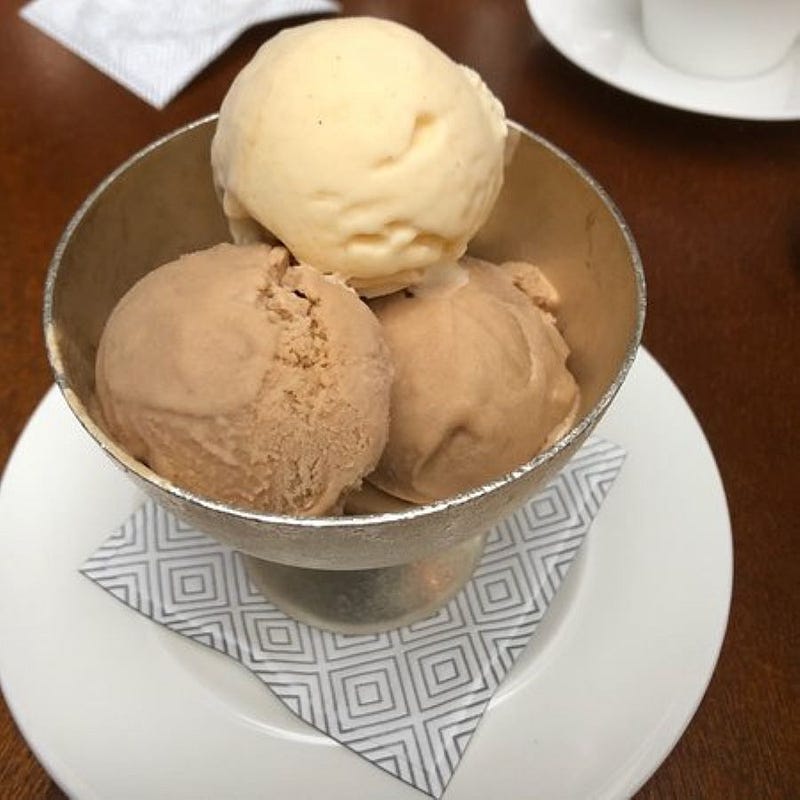
Before Philip’s birth, Katie’s craving for midnight snacks, Smith’s crisps and pickled onions, appeared to have no detrimental effect on Philip. After the birth, the new craving for both of us was Devonshire ice cream. While Philip fed during the night, so did we. The detrimental effect on me could be weighed in pounds.
Not knowing my biological parents, I was always going to be there for Philip; he was going to know me, love me, trust me, learn from my example. It was the most exciting prospect I could have imagined. He was going to be a child of the sun, climb railings, tempt treetops, laugh, linger, stretch out on the grass, filling every afternoon before supper, and then sleep?
That’s the dream.
When I did find a father in my life, or him find me, I took liberties with his love. I often ignored his instructions, stretching his day to the length of mine until the warm sun stumbled and fell off the water’s edge.
I could never get enough of the long cloudless evenings, the butterfly chases, watching the hedgehogs wait in hedgerows for darkness.
When the bell ended the school day, I was the first kid bursting out, looking for the first daisy in the grass, running and yelling.
From the schoolyard to way out yonder, beyond somewhere, I never did find the rainbow’s end. Many times I tried to go both ways. Running over the hills, crossing Sundays, hiking passed September in my mind. I remained on the shoreline, pushing tides back into winter, staying close to dad.
At 18 I told the town goodbye, setting off to see what I could discover. Finding a life where death was always imminent.
Such was the confusion. Love will kill or cure you — either way, it is worth it.
Philip was a year old when I rejoined Greenpeace aboard Sirius.
A month from leaving home, the Norwegian coastguard boarded the ship. We had intervened to stop a whaling fleet from carrying on the slaughter in the North Atlantic.
The bridge windows were smashed to take control of the vessel after skip refused to unlock the doors. After arresting the Sirius, the coastguard ordered skip to sail to Stavanger in Norway. I had been injured the day previously, when a Norwegian coastguard vessel rammed our inflatable. The Norwegian navy flew me to Oslo, where I was operated on and a intramedullary rod inserted into my broken femur. I wasn’t a lot of help to Katie on my return home. I returned to work with Greenpeace six months later on a mission that was either to end my Greenpeace activism, or my marriage.
On 7 July 1985 the Rainbow Warrior, flagship of the Greenpeace Organization, an international body concerned with conservation and environmental issues, arrived in Auckland. Moored up at Marsden Wharf.
On the night of 10 July 1985 disaster struck. Shortly before midnight two high explosive devices, attached under water to the hull of the Rainbow Warrior, detonated 20 minutes apart. The force of the explosions were such that a hole, 8 feet wide, was ripped open below the waterline at the engine room. The vessel sank within minutes.
Earlier that evening approximately 30 people had been aboard, but were invited to attend a birthday celebration on a nearby yacht. At the time of the explosion 12 people, including the captain, were still present onboard. Only 11 made it off the ship alive, three being blown into the waters. Fernando Pereira, crew member and official photographer, was drowned while attempting to retrieve photographic equipment from his cabin when the second explosion occurred.
The incident was treated as a homicide enquiry and under the guidance of Detective Superintendent Allan Galbraith there began one of the most far reaching investigations New Zealand had ever seen. As a major international scandal it was, ironically, to give Greenpeace far more publicity than would have occurred had the ill fated Rainbow Warrior completed her voyage to Muroroa Atoll, protesting nuclear testing.
The Rainbow Warrior was gone. I’d never know the like of her again.
I’d seen her as few ever had, lying at rest under a sinking sun, sailing through storm torn skies, when lightning was so sharp it stitched clouds together. She was not mine of course, she belonged to the world, a symbol of mans hope. Now, whenever I sit on a windy shoreline, looking out across any ocean, it all comes back, the sense of smell, long after the burning has gone, yet still lingers in my nostrils.
“Lay still, lay absolutely still, Greg.” It was the voice of my friend, Steve. Tears falling down his face.
“Steve, I can’t feel my legs.” He was holding my head against his knees.
“You must lay still, do you understand?” Sirens sounded in far off streets. The hissing of steam filled the air. As if someone had placed a red-hot poker into water just behind my head.
“What happened, Steve?” I whispered.
Steve didn’t answer. My fingers were burning with cold. I saw myself in the reflective glow of a fire burning in his eyes. It occurred to me I might be dying, right there in Steve’s lap. I began to think of all the things I wanted to say, so as not to die unforgiven.
“When my son has grown, Steve, tell him I love him.”
“Listen,” he said, “you’re going to be all right. Don’t think about anything else. We dragged you from the water. You’ve got a chunk of metal in your back, do not try to move — do you understand?”
And there was no more to be heard.
I woke up in a hospital. For four months, I lay still while surgeons played around with my spine.
Katie had made the long, worrisome flight to my bedside. She wouldn’t look at me. The eyes of the woman I loved stared blankly at my broken body. I was loved deeply. She could not look at me in pain. It is something I was never to forget.
Katie was not going to be loved this way. No man was going to occupy a place in her life, her heart, or the lives of her children and risk himself for ideals.
Philip’s birth had changed her perspectives.
Her eyes were saying. ‘You have no place in my life. You are an intruder.’ This is what she would tell me when I was stronger, if she didn’t weaken.
Why was I so bloody difficult? Why couldn’t I just love her like other men love their women? Adore her the way other men adore? Lust like other men lust? But that was never my way.
Katie had sailed into my life like a storm-christened rigger, taking my breath away. She had shown me, proved to me that she was an by exceptional person.
It was all too much. What if I never knew her smile again, her strange words, the predictability of her in my life? She would have to say something — but of course, I was all I said and my truth affected her and touched her. She placed her hand in mine, resting her head on my chest and sobbed.
“Come home, Greg” She whispered.
I lay still, knowing her pain, feeling her heartbeat heavy in her breast. I wanted to be with her forever, to stand at her side as real as a mountain. I wanted to hold her, fire a blue and white electricity into her hurting emotions and make them better.
“You’ll walk. I just know it, Greg. I just know it, and the doctors say you will.” She kissed my cheek and turned away, tearful.
I watched until she turned the corner. That disappearance broke every barrier that was holding up my dignity and pride. Sobs rose from my stomach and caught in my throat. They were there, when a minute later she walked back toward me. She took a tissue from her bag and held it to my face.
“I’ve never seen you afraid before.”
There was no wild fury left. I was indeed afraid.
“It’s done, Greg. Your time is done. No more. We are your life now. You come home and you stay. You stay, Greg. You are a father and a husband. You will not put us through this again.”
Katie had walked away without saying it but now, returning with new strength, said what she had wanted to say for a year or more. She held my hand and kissed my mouth.
“No more, or we cannot make it.’”
She turned and walked briskly away. I never saw her tears but I knew her heartbreak was unimaginable and fierce.
The surgeons played it right. After the fourth month of treatment, I walked out of there.
The French had bombed and sunk the Rainbow Warrior, killing one friend.
Goliath had come for David and won.
I don’t know why, when I look out to sea, it should all come back to me so vividly. Not when there are so many beautiful memories of the Warrior, so much achieved. The Rainbow had her failures, of course, but how she had handed me so many friendships and adventures.
Katie and I walked out together on the bend of Tobermory. Our son was growing fast, and our second son, Daniel, was on the way.