
Now That It’s Hit the Fan
Using our current discord as the fertilizer for a better culture.
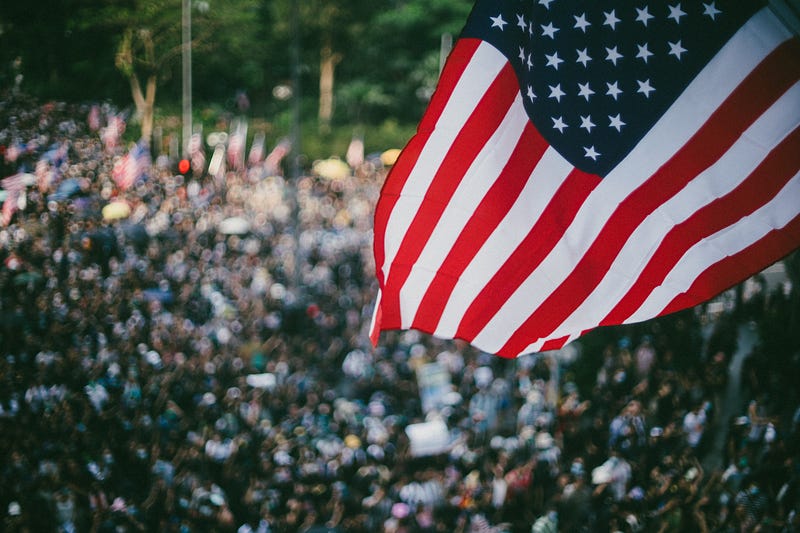
This week’s insurrection has brought to a head all the inflammatory incitement our president has been fomenting for the past four-plus years. Sure, there’s hope because the sun is about to set on his disastrously divisive administration. But because one man goes away doesn’t mean the problems go away. (And he’ll still be very public, by the way, just without power or a sanctioned platform.) The worst thing we can do at the beginning of a new administration is to turn away from this — sweep it under the rug and pretend that we’re moving forward when we’re simply walking with blinders on. I’m concerned about this because, historically, that’s what we’ve done more often than not.
I am, however, hopeful for our future. And the reason why can most appropriately be explained through an environmental metaphor — an agricultural practice known as regenerative farming. You can learn about it by listening to this past week’s episode of the terrific podcast, “How to Save a Planet.”
Regenerative farming uses the natural cycle to agriculture’s advantage. It takes time, but the whole goal of it isn’t just bigger harvests, it’s creating a healthier soil — and thereby healthier ecosystem — that leads to better harvests and actually helps fight climate change naturally. And it all starts with poop.
Regenerative farming starts by letting animals (e.g., geese or cows) onto the land to eat everything and poop it out. Once the land is covered in a nice layer of poop you move the animals from the area. Regenerative farming has begun its process making the soil, crops, air and surrounding ecosystem healthier.
Vastly oversimplified, but the point is: poop is crucial to doing the work of creating healthy soil. And things don’t grow well in poor soil. It’s been revealed to us that we, as a society, have had poor soil for a long time. But we’ve also clearly been doing a whole lot of pooping recently. Metaphorically speaking. After the events of this past week, our entire field is now firmly covered in a good layer of crap.
Now’s the time to dig in, through all that crap and beneath the surface to really see what’s going on — that’s where the work is being done, that’s where we get healthy. All the healing happens beneath the surface, the more we focus on that the more the poop becomes good fertilizer and the more beautiful and bountiful our crop will be.
“Superficial reconciliation can bring only superficial healing.” –Archbishop Desmond Tutu
Once a new president is sworn in, we can’t turn away and say, “well, the fire is no longer being given air so it’ll smother and die naturally.” Because we know it won’t. But if we actually face and address our issues — of racial injustice, of economic disparity, of native mistreatment — our soil will become healthier.
Of course we should make sure there’s punitive justice. We need to hold accountable those who stoke polarization through lies and mistruths. The politicians who hit the campaign trail promising the return of jobs they know full well to be long gone. The media companies who prey on our fears and present their own opinions and agenda, as if it were fact. The social media that actually promotes extremist groups over reasoned dialogue.
There are all sorts of ways to do this. We must talk with one another, and we must listen. Openly and without taking others' opinions as personal insults. We must expose the politicians who have lied, and who voted to overturn our democratic vote, and make sure they’re elected out of office, recalled or pressured to resign. There can be no room or exception for allowing to remain in office seditious actors who would baselessly vote to overturn our democracy simply because they didn’t like the choice people made.
We must also make sure the media and social media that provides the news to us is trustworthy, honest, and accountable. Luckily, there are ways to do this now. First is to separate the issues with the media companies or the laws that regulate them from the hard-working journalists busting their butts and risking their safety to report events to us. It’s in vogue to blame a monolithic media culture for much of these problems. That’s not what this is. But that doesn’t mean there aren’t problems with our media.
As Andrew Yang succinctly tweeted this past week there are a few ways we can combat this. One is by supporting local papers, which are traditionally less-partisan. To that end, there is a bill currently in Congress called the Local Journalism Sustainability Act to help keep these papers from shutting down. For news media we should revive the Fairness Doctrine, which President Reagan repealed. It required any news to show both sides of a political issue. Lastly, the thorniest issue: social media. We need to change the incentives (and punishments) for how these platforms operate. Additionally, some media outlets, like Forbes are already voluntarily taking steps to hold accountable those who work to damage our society.
Doing these things today will help ensure that tomorrow’s news is more factual and less inflammatory, and that our social media actually serves us rather than brainwashes us. That may actually lower our polarization and open avenues to actual conversation again. But, as is the case with democracy, the real work will fall to us, the people. That’s the point of giving our voice power — we have responsibility, and we must be accountable to ourselves and each other.
This means an honest reckoning of our views on racial and gender equality, our institutional systems, our culture of violence, our perceptions of poverty, our role in destroying our environment and our general non-acceptance of “others” — all the people who are not like us.
We can be better, our soil can be healthier, but it requires us doing two of the most difficult things for humans to do: admit our own faults and change. If we commit to all doing that together, then we can be better. Our society can be more equitable and just. We can come together to fight the climate crisis. We can be the leaders in these fights for social justice, climate and democracy. We can be the beacons of hope throughout the world once again.
But first, we gotta dig into the poop-covered soil and get to work.