DIGITAL INNOVATION
Now Is the Time to Improve Your Digital Supply Chain
Your digital assets can either weigh down your business or become part of your competitive advantage

Want to improve your competitive advantage? If so, you need to look at your digital supply chain for the answers.
If you don’t you could be left behind as a new world unfolds before our eyes.
The consequence of not taking action include reduced market share, which means working harder to achieve less.
With the global pandemic in mind, this article looks at the digital supply chain past, present, and future.
History
In the last 30 years, technology has evolved at a phenomenal speed. We’ve seen the introduction of many technological innovations.
Take ERP for example, introduced in the 1990s, required a huge commitment to realize its true potential.
Many organizations, however, did not commit. Rather they settled for unstructured data to drive activities both in and out of the ERP system.
It’s estimated that “75% of ERP projects fail”, with 60% taking longer to implement than expected (Mbtmag.com).
“Right before Halloween in 1999, Hershey’s couldn’t deliver on $100 million worth of chocolate because the company’s ERP implementation failed. The stock dropped by eight percent due to the operational disaster.” (Mbtmag.com)
IT departments are often gatekeepers. As such, business cases for further development are difficult to get approved, partly due to uncertainty from past experience.
During this time ‘systems’ were a constraint rather than an enabler for progress to enhance competitive advantage.
Lean is mostly adopted by process industries and manufacturers. It led to the evolution of Warehouse Management Systems (WMS), imperative in the eCommerce world today, and Preventative Maintenance Systems (PMS).
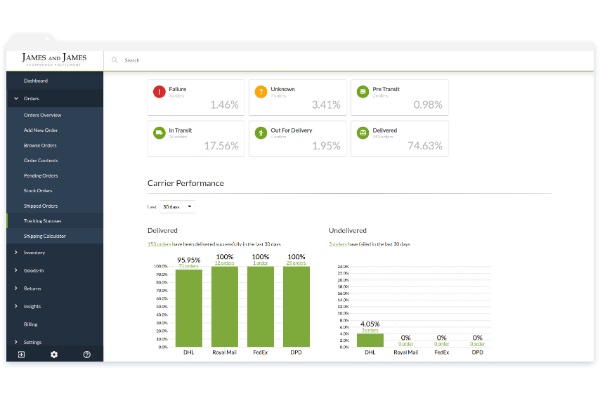
The appetite for multi-stack system integration begun when demand for operational data increased. Online retailers knew this decades ago.
Lean synchronization is not just popular, its necessary.
In the past, automation existed as an island, independent verticals. The benefits they provided were negated due to the lack of integration. These islands were bridged elsewhere, using Excel for example. A cumbersome, labor-intensive, and error-prone approach with big-data in mind.
Problems grew as big-data came to the fore.
Automation transformed into autonomy. The need for in-demand data, visualization dashboards, and accuracy increased as planning cycles and response times reduced.
In parallel, consumer demand fuelled by instant gratification exploded, to become what it is today. This is evident by our appetite for the next day or even same-day deliveries.
“When a disruptive technology appears it may confound an existing player because the technology itself is so radically different.
More often, Christiansen found that the problem was not technological but psychological and organisational: it is hard for an organisation to pay much attention to a piddling new idea that makes little money and invites a yawn or a blank stare from important customers.
Microsoft bought Hotmail, yes — but it was always going to be hard for Microsoft to pay more attention to Hotmail than Outlook.
Microsoft core corporate customers saw Hotmail as an irrelevance. Googles users did not. Google only made web applications and Gmail was a natural fit” (Hartford, 2011).
Ecommerce
The online retail industry leads the way with respect to the digital supply chain innovation. The recent pandemic has witnessed other industries pivot in an instance. A reaction to what we’ve known for years.
If you’re not online your business is dead, or soon will be!
In recent weeks I’ve been in touch with high-street retailers, restaurants, bars, and other traditional non-digital businesses. Industries that ignored the 25 years notice they had before a black swan event as COVID-19 struck.

There’s a common theme from those I’ve spoken to in recent weeks, they all say: “we never had a digital presence.”
Need has no place in innovation because the need is in the now. It’s based on existing market boundaries, the same thinking that got them there, Need does no foresee the future, its a response.
“What got you here won’t get you there” — Marshall Goldsmith
Talking about a need, this month I’ve witnessed a ‘need’ transform into more than a want. An urgency. I’ve seen more companies have moved online in the last few weeks than in the previous year, or decade even.
What got you here, won’t keep you there, you need to be game-changer.
Innovators
Psychologist, Jordan Peterson, proposed that innovators are revolutionaries. He said that “if you worry” about “disturbing the social structure, you’re not going to put your ideas forward” (Jordan Peterson).
Before the digital revolution existed, playwright, George Bernard Shaw, profoundly put it:
“The reasonable man adapts himself to the world: the unreasonable one persists in trying to adapt the world to himself. Therefore all progress depends on the unreasonable man” — George Bernard Shaw
Companies make rules and reduce risk whereas creative digital innovators break rules and take risks.

When Thomas Edison’s’ assistant asked him “what are the rules around here?” Edison responded:
“Hell, there are no rules here — we’re trying to accomplish something.” — Thomas Edison
This quote by the foremost inventor of his generation resonates with the essence of digital supply chain innovation.
From a cultural perspective however it represented a huge challenge for some industries in recent years.
Until now.
Every business is going online.
Organizations have been forced to dispel corporate necessities to reinvent their digital supply chain.
Final Thoughts
For any technology deployment project to be successful, it’s vital that leaders conduct discovery and planning from the outset. So to recap here are five takeaways:
№1 — Set a digital target: Undertake a cross-functional survey to assess both the awareness levels and the perceived data analytics, reporting, and automation needs of your supply chain is a good starting point to create a digital vision for a business.
№2 — Evaluate current capabilities: Once your vision is in place, do some deep-dive interviews with people in core functions to understand the baseline of existing digital capabilities. This process is an opportunity to build a roadmap, a functional list of current and planned initiatives that span the entire business. This will reveal the gap between existing capability against the digital vision.
№3 — Assess technology: Consider solutions and create a shortlist. The next step is to create a list by researching various technology offerings that address current and future needs. Solutions should be based on performance impact ROI, between out of the box or proprietary, customized solutions. Prioritize digital capabilities with immediate needs in mind in the context of strategic goals. Then go and find what technologies can meet those criteria.
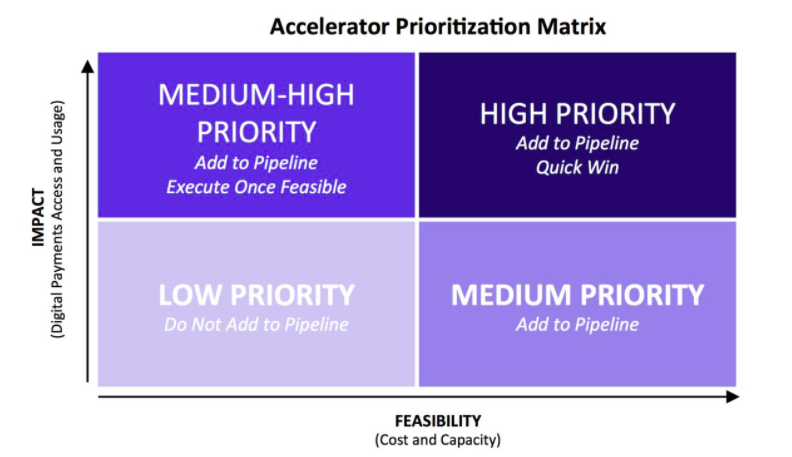
№4— Prioritize digital projects: Next is a refined roadmap. A business should create a shortlist of projects, resource demand, and technology impact to assess the benefits versus implementation time.
№5— Execute and pivot: The final step is to put the wheels in motion. Don’t be afraid to pivot if integration issues arise or benefits cannot be achieved.
Companies that invest in digital transformation benefit from a mix of customizable and off-the-shelf solutions.
Now is the time for business leaders to move to enhance competitive advantage, otherwise you risk spending years playing catch up.
References
- Kobayashi, Bruce H., and Larry E. Ribstein. “Law’s Information Revolution.”Ariz. L. Rev. 53 (2011): 1169.
- Gabriel, Y. (1995). ‘The unmanaged organization: stories, fantasies, subjectivity’, Organization Studies Vol. 16 №3, pp. 447–501.
- Michael Porter (2008) “The Five Competitive Forces That Shape Strategy”, Harvard Business Review (January) (pp. 79–93)
- Tidd, J. and Bessant J. (2009). Managing innovation: integrating technological, market and organizational change. (4th edn). Hoboken: John Wiley & Sons.
- Simon Sinek (2011), Start With Why: How Great Leaders Inspire Everyone To Take Action. Penguin
- George Friedman (2010) “The next 100 years — A forecast for the 21st Century”. Allison & Busby; POLS edition (p. 325–350).
- Luft, Joseph, and Harry Ingham (2004) “Johari Window.” The Power of the 2 x 2 Matrix: Using 2 x 2 Thinking to Solve Business Problems and Make Better Decisions (2004): 255.
- Gregory G. Dess, et all. Organisational dynamics: Changing roles, Leadership in the 21st Century (p.18–34)
- John P. Kotter (1995) “Leading Change: Why Transformation Efforts Fail”. Harvard Business Review (March-April) (pp.59–67)