
Now Is the Time to Get a Free MBA-level Education and Increase Your Business Knowledge
Replace your boredom with a world-class business education.

It starts with restlessness, then boredom. Maybe a little cleaning. A sudden urge to cook new things. Occasionally, you stand by the front window and dream about actually leaving the house. Maybe you eat traffic with sock puppets.
You know that feeling… it’s that intolerable longing to explore you get when you’re stuck indoors for weeks on end. And if there is no end in sight, one sensible thing to do to keep your sanity is to explore mentally and to set yourself a really big goal that will take lots of time to achieve — time that needs to be spent indoors.
I spent just over 10 years meaning to start a postgraduate degree of some sort, but never felt I had the time around work. I recently had an epiphany while I was on maternity leave when I suddenly realised I finally had the time.
Here I was stuck indoors most of the time with a sleeping baby — what better time to start studying was there? I was instantly set on the plan and enrolled in an MBA.
You might be thinking similarly right now, but there’s actually no need for you to go spending your fortune on a complete MBA. Not yet, anyway. Right now, it’s easy enough to just start by obtaining the knowledge gained by studying an MBA. Even if you do want to do an MBA for real one day, getting the knowledge first will give you an incredible advantage over your peers, especially if you are really organised about your study.
Considering Jack Ma’s (of Alibaba) life story has clearly demonstrated that new ideas and adaptation are more important than typical studies in business, you might be tempted to give all that learning a miss, too. He had no business training or technical knowledge at all, yet he has built one of the top e-commerce businesses in the world.
Jack Ma once said in a lecture:
“It is not necessary to study an MBA. Most MBA graduates are not useful … Unless they come back from their MBA studies and forget what they’ve learned at school, then they will be useful. Because schools teach knowledge, while starting business requires wisdom. Wisdom is acquired through experience. Knowledge can be acquired through hard work.”
But to avoid MBA knowledge just because a few people made it big in business without one… that wouldn’t make much sense. Better to heed the advice they give: if ideas and adaptation are the keys to business success, look for ways to have better ideas and adaptation skills.
MBAs are actually quite good at teaching the general principles behind business because they were designed specifically to do so.
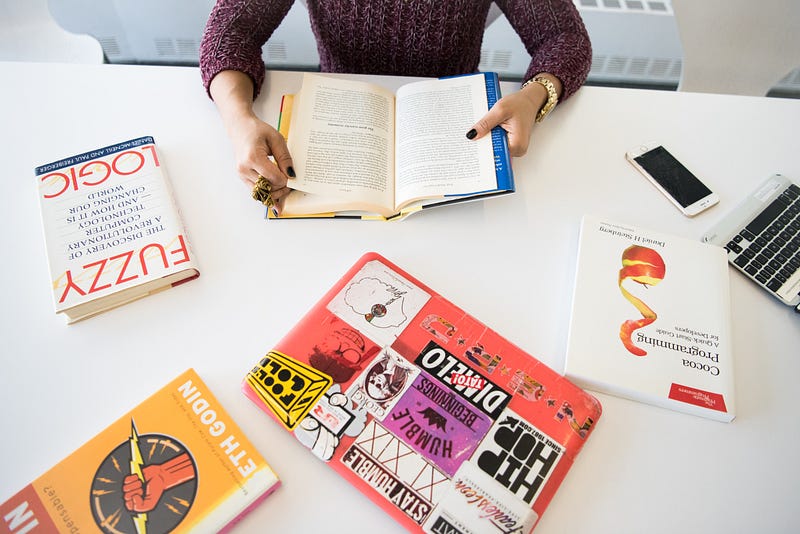
Another detractor of the typical MBA is the marketing genius, Seth Godin:
“It’s hard for me to understand why this is a better use of time and money than actual experience combined with a dedicated reading of 30 or 40 books.”
In fact, it was probably this exact train of thought that caused Seth Godin to go on to create the now-famous altMBA course. It’s not that MBAs aren’t worth doing — as someone who is halfway through one, I clearly believe that they are. It’s just that if you don’t have the funding or time to do an MBA, there are many other ways of getting a similar level of information and understanding into your head.
For my part, I believe that MBAs are for people who want to learn about business, but also want to demonstrate that they’ve learned this. An MBA is for people who want to improve their CV in order to show they know enough about business to be in charge of someone else’s company as the CEO or to act as a reputable consultant. If you want to start your own business, though, all you need is to know what you’re doing — There’s no need to get a piece of paper to prove you have that knowledge.
You know what? It’s surprisingly easy to do a free MBA.
It’s also well worth doing your own free MBA study even if you are considering enrolling in an MBA in your future. You see, during a typical MBA you’ll be extremely busy with assignments and dissecting specific case studies — possibly while still doing your regular 9–5 job. Exams will be looming and you might not have a lot of time spare to prepare for them. You’ll be expected to do a lot of reading for the course, including lots of required reading from academic journals and textbooks, while also demonstrating extensive self-directed academic reading and business knowledge in general. It actually makes good sense to prepare yourself for the MBA by doing some self-guided learning in advance.
Here’s my take on how you can get an MBA-quality education without enrolling in a degree. The DIY MBA, if you will.
Before you start your MBA learning…
You need to remember that you’re doing this for yourself and that it’s all about actually learning the material. It’s better to find out how you like to learn and follow that path, rather than forcing yourself to do something you hate. Try learning from a variety of relevant formats and work out what suits you. Try video, audio, books, courses. Know yourself.
Another thing to do, especially if you’re following this up with a paid MBA, is to keep track of your references and notes from the very beginning. This is absolutely crucial to preparing for an MBA! It’s no good half-remembering a great quote when you’re in the middle of writing an essay. You need to know exactly what the quote was and where you read it. Start keeping track now, and you’ll be able to easily put those great ideas into essays for years to come.

Keeping track of your best findings will also help you solve business problems in real life. Pay particular attention to diagrams and frameworks for business strategy and models that describe best-in-class scenarios. They’ll help you to find the best solutions for your own business.
MBA Textbooks You’ll Want to Read
In most MBAs, there are a core set of business topics that get covered. Sure, the individual subjects might have a different focus and each institution will cover things uniquely, but they’re usually going to ask you to read 90% of a standard postgraduate-level textbook (or two) for each subject — and those things take some time to get through!
Try to get hold of an appropriate textbook for each of these core MBA subjects:
- Economics
- Accounting
- Marketing
- Business Strategy
- Business Research
- Business Analytics
- Business Planning
- Business Ethics
- Leadership & Management
- Project Management
- International Business
- Operations Management
- Innovation & Entrepreneurship
To choose appropriate textbooks, you could search for an MBA booklist from your favourite university, choose the books by the top publishers of textbooks, or do a bit of research into the top textbook authors in each discipline.
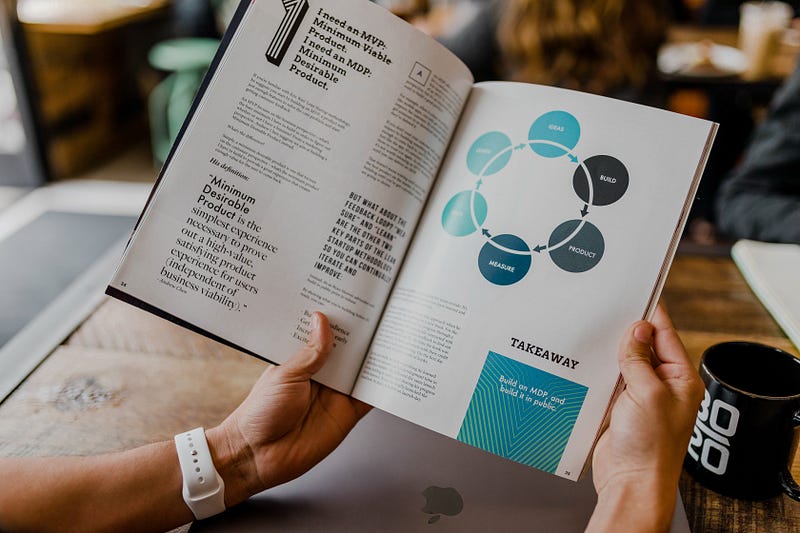
For instance, try finding books by Paul Krugman for economics, or Philip Kotler for marketing, or try searching for the topic as a Pearson textbook or an Oxford University Press textbook.
Now, don’t worry too much about the cost of these textbooks as you won’t need to pay full price. Unlike during a regular degree, you have absolutely no reason to buy any particular title or edition. Head to your favourite bookstore and search for the title or author, then find a cheap second-hand textbook that might be a few revisions out of date. It’s largely the same material, so you will learn plenty from it, regardless.
I found so many textbooks this way and essentially only paid for the postage. And no-one said you need to buy the full set of books all at once. If something you want to read is not cheap, don’t buy it! Wishlist it and wait. Or find it in a library.
MBA MOOC Learning
It’s no secret these days that you can put together your own MBA by auditing the right subjects in free MOOCs either directly from the university or through a site like Coursera or edX. If you prefer learning from something that resembles a course format, it’s definitely worth doing this. Many reputable universities are offering content for free this way, such as MIT, Harvard University, Northwestern University, University of Michigan, University of Pennsylvania, Columbia University, Macquarie University, and University of California, Berkeley.
These free online business courses are incredibly high quality and can be done on your phone whenever you like. There really isn’t any good reason not to try them.
MBA Academic Readings
Google Scholar is an enormous rabbit warren of academic knowledge. If you start with a vague search on any topic and let yourself run wild for a while, you can follow the reference lists infinitely for more and more knowledge. There are also numerous other free academic paper portals and apps to check out, like Academia.edu and the Researcher app.
However, it’s worth noting that for an MBA the most often-cited journal around is the Harvard Business Review. If you’re determined to learn a lot about business and stay on the cutting edge of your field, simply read as much of that website as possible. Often the people writing the journal articles on HBR are the people who wrote your business textbook!
Other Business Books
There are so many amazing business books out there that are a much easier read than a textbook, yet impart some of the most important lessons you can learn. Top business people keep an eye on business bestseller lists and MBA summer reading lists and try to read everything. It’s also a good idea to find lists of top business books recommended by MBA professors or HBR to add to your reading list.

MBA Case Studies
An MBA just wouldn’t be complete without case studies. In a Harvard MBA, I hear that’s all they do from dawn to dusk.
Philip Delves Broughton wrote that Edwin Gay, the first dean of the Harvard Business School, chose to model the case teaching method from the law school. The goal was to focus on analyzing real situations and discussing them in class in order to derive general principles applicable throughout their careers. This “learning by doing” method has persisted to this day.
The reason is simple:
There is always more to be found by exploring the same subject over and over.
A determined business scholar will take some time to uncover as many business case studies as possible, and think through every conceivable problem while immersing themselves in this MBA knowledge. With every case study comes real insight and actionable ideas, plus you can look up how each and every company fared afterward to see if they made the right moves.
When you’ve taken a look into the workings of hundreds of different companies, you can really be confident with your business choices.
Your Professional Network
The contacts that are made during an MBA are a much-appreciated aspect of an MBA degree that you can’t replicate easily. You can instead try to make an effort to follow MBA holders and prominent business people on LinkedIn, and join professional networks locally.
Another way to connect to professionals is to get your ideas in writing. If you write about the interesting business lessons you’re learning on LinkedIn and Medium, it will show your network that you know your stuff. People might start to follow you just to learn your key takeaways and to discuss ideas with you in comments.
Drip feed your new business ideas to your network as soon as you uncover them. Gary Vaynerchuk is absolutely right when he says that if you focus on sharing your discovery process, rather than posting nothing now and showing up as the expert years later, you’ll reap the benefits of sharing that journey. Start posting now, while you’re just starting to learn.
When I hear people complaining about being stuck indoors, I am so grateful that I’ve already got a plan to keep myself occupied. My bookshelf has overflowed and business books are stacking up in messy piles around it, threatening to cut off all access to one part of the bedroom. I could never be bored here.
Taking on independent study in an organised fashion is not something the average person would even try. It takes planning and management, dedication and time, grit and determination, self-discovery and open-mindedness. And all these things will make you a better business leader in the end.
Tracking your academic reading from the very start and documenting your learning progress together form the basis of your future business understanding and will build your professional network. This clear understanding of business will be echoed in your future MBA assignments and your own professional conversations.
It’s never too late, or too early, to start learning more.
It’s never too late to take a deep dive into subjects that will serve you for years to come.
So, if your Netflix habit is costing you $13,437.86 per year right now, maybe it’s time to invest in yourself instead.
Take a chance and use your free time wisely. You’ll never regret time spent learning.


