
Now is the Perfect Time to Rediscover Author Robert B. Parker
Meet the Man Who Saved the Hard-Boiled Detective Novel
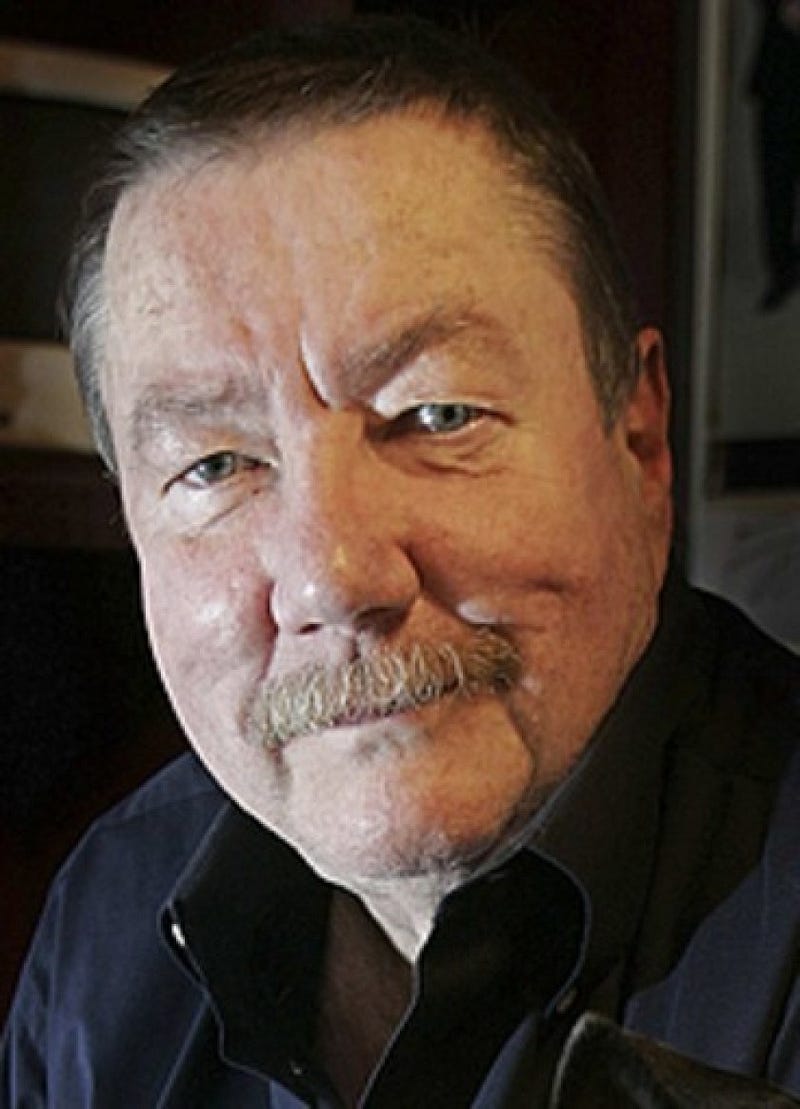
It has been more than ten years since Robert B. Parker, author of the Spenser detective novels, died at the age of 77. Starting in 1973 with The Godwulf Manuscript and continuing until his death in 2010, Parker published 40 Spenser novels, and particularly through the early books single-handedly saved the hardboiled detective legacy of Raymond Chandler, Dashiell Hammett, and Ross Macdonald.
It is not going too far to say that nearly every author writing detective fiction today owes a debt of gratitude to Robert Parker. Writers from Dennis Lehane to Robert Crais have acknowledged this fact in interviews, and for you Janet Evanovich fans, just understand that Spenser’s enigmatic partner Hawk paved the way for Stephanie Plum’s Ranger.
It is no secret that Robert Parker idolized Raymond Chandler, and in what had to be one of the greatest experiences of his life was asked to finish the manuscript for Poodle Springs, a novel begun by Raymond Chandler before his death in 1959. He later wrote Perchance to Dream, the sequel to Chandler’s classic The Big Sleep. His work on both novels is only fitting, as Parker long ago joined the ranks of the Big Three of Chandler, Hammett, and Macdonald.
I first started reading the Spenser novels over 35 years ago, and since that time the trio of Spenser, Hawk, and Susan Silverman have been my companions through long winter nights and lazy summer days. Through them I discovered the city of Boston, not necessarily as it is but as Spenser (and Parker) saw it, which is likely better by far. And I identified with Spenser’s unique brand of romantic cynicism.
Various critics have said that some of the books, particularly in the mid-1980s, were not up to the standard set by the earlier novels, but that misses the point entirely. While some of the plots were better than others, what readers cared about was the characters; over the course of the series we got to really know and care about them, and each new book was like a reunion with an old friend. The fact that there will be no new reunions is still hard to fathom.
As a quick aside, if you’ve been in a bookstore or library recently you might think I’m wrong about that last line because there are “new” Spenser novels on the shelves. Avoid these like the plague; they are not written by Parker but by authors his heirs commissioned to keep making money on the series after his death. You can easily spot them, as the cover will say “Robert B. Parker’s” above the title with the actual author (Mike Lupica and Ace Atkins, for example) at the bottom. These books may be fine novels, but they are not Robert B. Parker novels.
If you are fan of audiobooks, the Spenser series is something of a mixed bag. The narrator for the first 15 or so reads in a monotone voice best suited for insomniacs needing sleep. The later books are narrated by Joe Mantegna (from Criminal Minds) and Burt Reynolds (yes, that Burt Reynolds); both do an outstanding job, which you would expect from professional actors.
I never met Mr. Parker, but I feel I got to know him somewhat in the only way one can ever really know an author: through his characters, particularly the inimitable Spenser. He said in an interview once that there were a number of similarities he shared with his famous character: they were both Korean War veterans and both loved baseball, jazz, and fine food.
“He does a great many things I don’t believe,” Parker once said in an Associated Press interview. “I don’t know if he’s more violent than I am. But he’s more willing to enact it than I am. Let’s just say we’re not dissimilar.”
So to Robert Parker I say thank you, for everything. While he may be gone, readers and fans can be comforted by the fact that Spenser lives on, just like Hammett’s Sam Spade and Chandler’s Philip Marlowe. And through him a part of Robert Parker will live on, both for those of us who grew up reading his words and for generations not yet born. I can’t think of a much better legacy than that.