
Now Is Not The Time For ‘Seeing-The-Good’ Stories
Feel-good news is the white way of avoiding the conversation
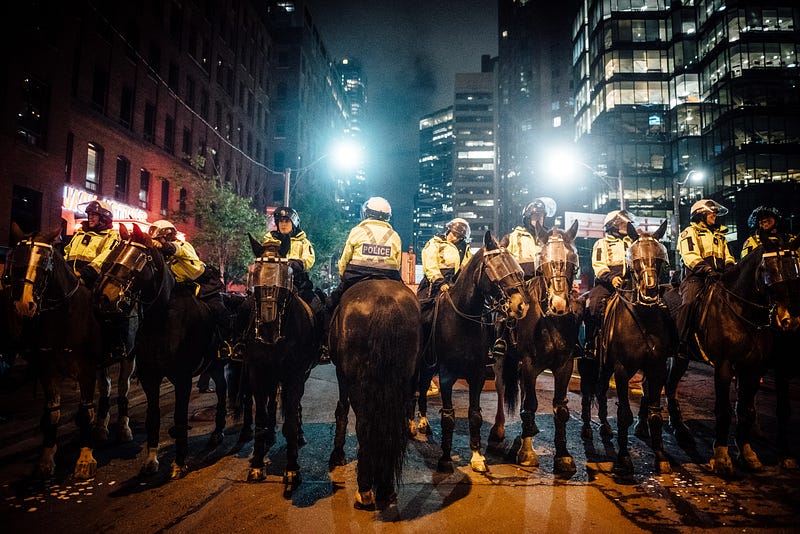
Stories have been going around, on Facebook and beyond, of police doing the ‘right’ thing.
In Flint, Michigan, that was the police force marching with protestors. In Austin, Texas, police marched and linked arms with protesters. In Houston, that was the police chief decrying police violence. In Florida, it was police kneeling in solidarity with protesters.
I’ve seen a lot of these stories shared with a caption like, “Look at the good things people aren’t sharing.” It makes us feel good to see some semblance of reconciliation. Look at what we can accomplish if we put aside our differences.
These stories are all nice gestures. But that’s all they are. Nice.
But putting the spotlight on police officers who want to walk with protesters detracts from the real conversation here. For far too long, the police have come out on top of this narrative at the cost of American lives.
Ask yourself: How do these feel-good stories actually change reality for black Americans? An abusive boyfriend can turn around and give the love and attention their partner has deserved all this time. That doesn’t mean they won’t do it again. These gestures don’t mean these police officers know their privilege or the way their own actions have been racist in the past. Or they might, and just don’t care. All this means is that they don’t want to be seen as the bad guy.
These gestures feel shallow, especially for those cities that don’t have confidence in their police force, like Flint, Michigan, where Sheriff Chris Swanson spoke with the crowd and said he wanted a “parade, not a protest.” And then, the issue was effectively sidestepped for another day.
Those police who linked arms with protesters in Austin? They are currently under investigation for shooting a pregnant black woman in the stomach with a bean-bag bullet. And again for shooting a 16-year-old boy in the face with a bean-bag bullet at local protests. The boy is in critical condition in the hospital.
We should be disturbed as hell that police showing respect for black lives is a ‘feel-good’ story in the first place.
The Houston police chief who denounced racist excessive force? He’s also under scrutiny for six recent deadly police shootings in Houston.
In an article by Derecka Purnell, she says, “History and my spirit tell me that the police who stand with us today will not sacrifice anything to end police violence tomorrow.”
Before you start with the comments that not all cops are bad — yes, I am aware there are good cops out there. But this isn’t about any single officer. This is about the structures on which the American people rely for their safety. This most-vital structure is killing black Americans.
We share these the same way we need a puppy video to get over our 3 p.m. slump. Your warm, fuzzy feelings are not changing the horrifying reality black Americans face. We have to keep protesting these problems, which have been highlighted more than ever in the past few days. We should be disturbed as hell that police showing respect for black lives is a ‘feel-good’ story in the first place.
That means, we need, not only an individual understanding of racism and the abuse black people have suffered, but also structural changes in police forces throughout the country.
More than this, we need justice for the countless murders that have happened in the US over the years. George Floyd was murdered — it was obvious to everyone at the scene. He was subdued, on the ground, in handcuffs, and the officer still exercised hate to kneel on his neck. Even when those around him pleaded for him to get off. Even when Floyd cried, “You’re going to kill me.” There is no excuse for the officer. This was blatant murder. And for the justice system to take that seriously — and try the officer for first-degree murder — would be a good step in the right direction.
There are plenty of ways we can work toward black equity and equality in America. Black people have been discriminated against in many more instances than just police encounters. But policing is, by far, the most pressing danger to black lives, and when we — white people — look for the quick feel-good cure to pretend everything is right in the world, we aren’t listening to the real message.
So, the next time you see one of those “good news” police solidarity videos, and your heart gets a little lighter because it feels like reconciliation, think about what it actually accomplishes for black people. Is it helping ensure their safety? Is it changing our policies? No. It just makes you feel better. And it signals for others to ignore the bad feelings of reality too.
Remember, fellow white people, this is about black lives, not white feelings.


