
The Beatles | Music Analysis
Now and Then: The Last Beatles Song
A bloody new song indeed
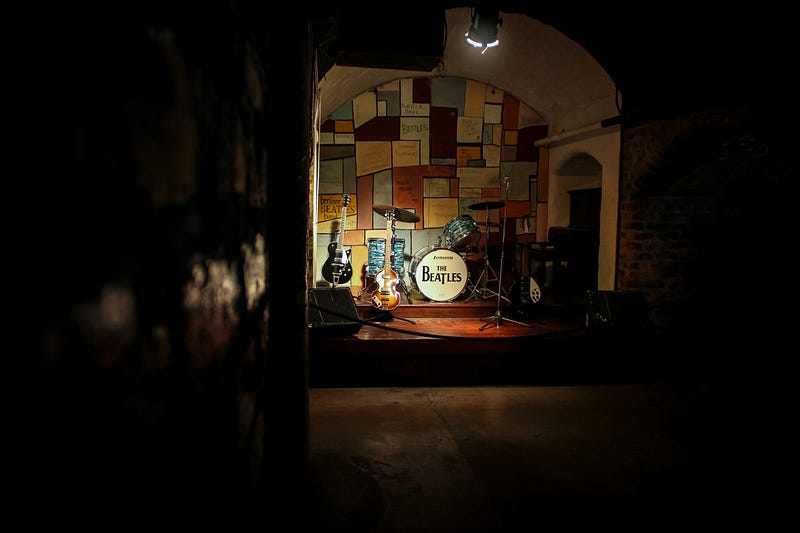
If you’re a fan of the Beatles, you probably have already heard that they released their last song. I know what you’re thinking, “isn’t half the band dead?” Yes, that is correct, but this is a piece of music that has been in production since 1977.
The Beatles Anthology project features rarities, outtakes, and live performances from their epochal career. “Now and Then” is what’s left from the venture started in the 90s. I encourage you to listen to it as you continue reading.
When I first heard that there was a new Beatles song coming out on November 3rd, I was filled with anticipation. Then, I realized that it was the 5th — the song already dropped! I raced over to my phone to hear it.
The shock of the moment left me foggy as I hit play. When the song started, I had a teary eye-ed revelation. I thought to myself “This is what the world needs, a new Beatles song to spread peace, love, and happiness.”
Questioning my eardrums, I realized that the mastering sounded incomplete. They are working with a 46 year old recording of John Lennon’s voice, so my impression of the song shifted from complete awe to wary concern. I abandoned listening on my phone and tried a speaker.
It sounded better, but I was still questioning the overall output. “Did they record in mono? What is going on?” I slapped on some headphones and noticed no difference.
Working with an Old Tape
The recording of John’s voice was given to Paul McCartney in 1994 by Yoko Ono. In 1995, Ringo, George, and Paul started working with the salvaged material. The project was ultimately abandoned because George Harrison said it was “fucking rubbish.”
I laughed out loud when I read this quote. My own feeling of vindication by Harrison’s remark was more profound than my first listen of the song. I knew I couldn’t be the only one questioning the track.
Eventually, the piece was picked back up by Paul and Ringo in 2022. Controversially, they used AI to help them complete the work. Contrary to what you might think, no material was created by AI, but it was used to splice and clean up the original recording.
This vocal isolation technology was discovered by Peter Jackson’s crew when they were working on the Beatles film Get Back. Essentially, machine learning was used to precisely separate John’s voice from all the static and background noise of his New York apartment — restoring the audio to its proper form. If anyone is expecting an entirely new Beatles album with AI rendering and deepfakes of John Lennon and George Harrison, it simply won’t happen — not until both Paul and Ringo die, and Disney buys the rights to their music from Sony to create a magical mystery tour of the meta-verse.
A Change of Heart: An Analysis
In all seriousness, there is a short film about the making of the track that I highly recommend. Whether it was through childhood nostalgia or convincing cinematography, the documentary changed my perception of the song. I found myself falling in love with the Beatles all over again.
Paul counts in to start the song, just as he did on “I Saw Her Standing There,” the first track on the Beatles’ first album, released in 1963. The lively “One, two, three, four!” that began their profound musical career is contrasted by a slower count-in, leading into a soft melancholy sound which one might argue reverberates the ups and downs of their 2,793 day reign with nostalgia.
Paul’s voice fades out when he makes it half way through the four-count. This suggests that the “Fab Four” is incomplete without John and George. They are — literally — half the band they used to be.
The song begins with a refrain from the solo demo, John’s voice emerging from the grave.
I know it’s true It’s all because of you And if I make it through It’s all because of you
These words take on a multitude of meanings. Amidst their differences and the difficulties along the way, Lennon acknowledges that his partner/lover and now, his bandmates (specifically Paul) give him the strength to live and create music. The first verse is sung in unison by John and Paul.
And now and then If we must start again Well, we will know for sure That I will love you
The original recording clouds the final line of the verse. Paul replaces John’s mumbled lyric with “will love you.” It reinforces that Lennon feels strongly towards the object of the song, the love interest, and will continue to love them as long as he can. Perhaps John couldn’t bring himself to say the last words with confidence or he was simply unsure of how to finish the verse.
Now and then I miss you Oh, now and then I want you to be there for me Always to return to me
This chorus is not only about a lover, but it can be seen as a reflection on the Beatles past. A time when the Beatles were on top. Presently, it can be directed toward the deceased members of the band.
“Think about me every now and then, old friend,” were the last words John said to Paul as he patted him on the back in 1976. Whether or not this parallel was deliberate, is pure speculation. The second verse is sang by only John.
I know it’s true It’s all because of you And if you go away I know you’ll never stay
These lyrics reveal a duality of confidence and fear that John has around his loved ones. He wants to believe that they can never stray too far, but worries if they’ll ever come back. There’s a poetic resonance with the production of this song that is found in this interpretation of John’s words here.
The bridge contains a slide guitar solo by McCartney. In the mini-doc they tell the viewer that this is a “tribute to George” and is played in his style. This section also includes vocal harmonies from “Because,” “Here, There and Everywhere,” and “Elenor Rigby.”
The song closes with another refrain by John and a final remark from Ringo, “Good one.”
Love Me Do to Now and Then
With only two songs on it, the vinyl now being sold serves as bookends to the Beatles discovery. “Love Me Do,” their first hit single, on side A, and “Now and Then” on side B. The record is a certainly a collectors item that holds great sentimental value.
One can’t help to think that Lennon and Harrison could be turning in their graves knowing that this will be the last mark The Beatles make. Metacritic ranked the song an 87 out of 100, garnering “universal acclaim.” As expected, there has been mixed reviews among critics.
“a poignant act of closure” — The Guardian
“the final masterpiece that the Beatles — and their fans — deserve” — The Rolling Stone
“the weakest of the posthumous singles” — Pitchfork
“Its existence matters more than its quality” — The New York Times
Of all the responses, I align most with the final quote. The fact that this song made it through production is an applaudable musical feat in and of itself. I’d love to hear any other views on the single, but if you still have reservations, consider this paraphrased quote from Paul McCartney in response to criticism of The White Album,
“It’s a bloody new Beatles song, shut up!”


