
Living Together On A Planet In Crisis
Environmental Philosopher Deborah Bird Rose On The Need For ‘More-than-Human’ Storytelling In A Time Of Crisis
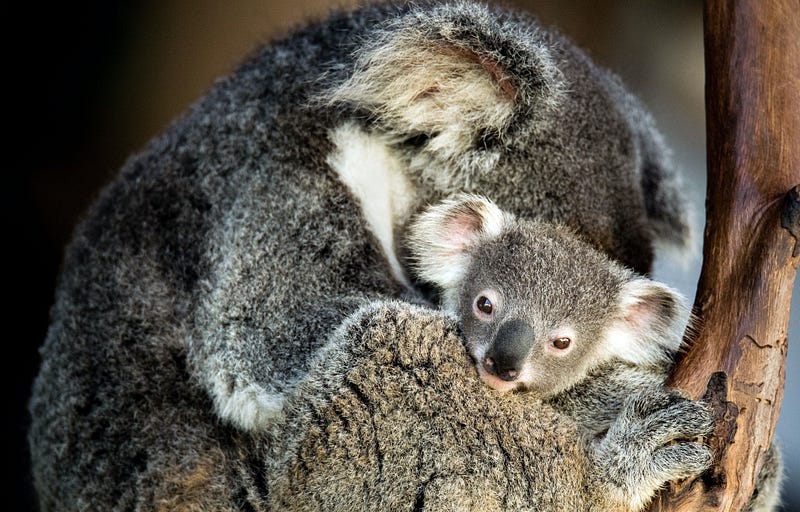
Deborah Bird Rose (1946–2018), was an adjunct professor in Environmental Humanities at the University of New South Wales, Australia. She was an anthropologist of Indigenous Australia, and a leading scholar in establishing the new fields of Environmental Humanities and Extinction Studies.
A key idea in Rose’s work is her notion of multispecies storytelling, the notion that meaning-making isn’t just a human capacity, but something all living organisms do, as we all interact and interpret the world around us through our multiple bodily senses, some shared, and some not.
Her work explores the ethical dimensions of how people and animals, from dingos to flying-foxes, become entangled together in healthy, but also ecologically damaging ‘multispecies communities.’
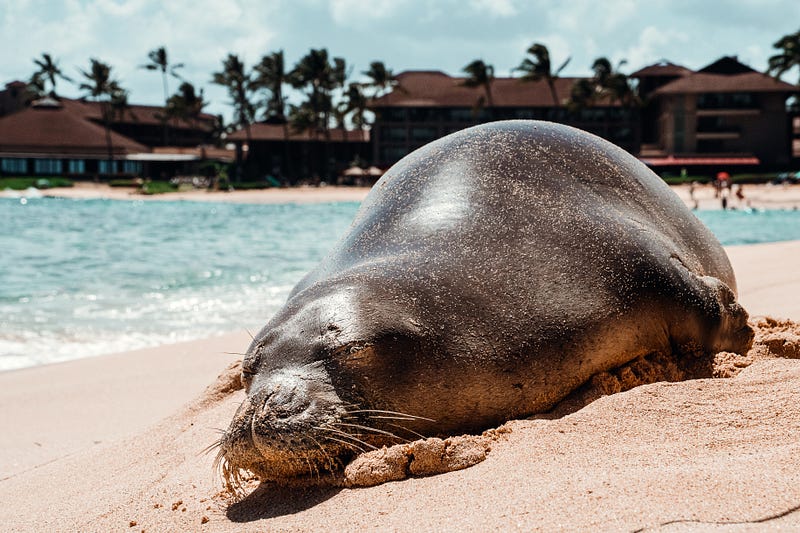
Writing about endangered Hawaiian monk seals and the volunteers that work on the beach to protect them when they sleep on the sand, Rose says:
“The more I work with multispecies communities, the more I realize that the big philosophical questions apply to all meaning-making creatures. As humans, we make our own kinds of meaning, and no doubt our meanings are not identical to those of others. But here on the beach, one could see multiple forms of meaning, expression, and creation”
Rethinking The Nature-Culture Dualism
At a deeper level, when it came to grappling with our environmental predicament, Rose rejected the standard division between the ‘social sciences’ and the ‘natural sciences.’ This is because she viewed this academic divide as reinforcing an artificial divide between human and nonhuman worlds.
As a consequence, scholars that she felt so desperately needed to be in conversation with one another were cut-off from opportunities for fruitful dialogue. Underlying this divide between the natural sciences and the social sciences and humanities, Rose felt, was our inheritance of an unhelpful aspect of a deeply rooted Western intellectual tradition that views humans/culture as cut off from nonhumans/nature. Rose writes,
“The nature-culture dualism works this way exactly: one side contains humans with their culture, their intelligence, their capacity for language, their values, and so on. Nature (environments, ecologies, nonhuman species, earth systems) is on the other side and, by definition, is deemed to be without intelligence, without its own integrity, and so on and on. The humanities/science divide reflects this boundary in one significant way: only in dualistic thought it can seem reasonable to suppose that humans can be understood without reference to nature and that nature can be understood without reference to humans.”
In the 1990s, Rose envisioned her work as part of an emerging field of ‘ecological humanities’ — which today is better known as the ‘environmental humanities.’
Her early research and advocacy involved working with Indigenous communities in Northern Australia to help reclaim their ancestral territory stolen through colonization. She has written extensively on Australian Indigenous views of natural landscapes, such as her books Nourishing Terrains: Australian Aboriginal Views of Landscape and Wilderness, published in 1996, and later, Reports from a Wild Country: Ethics for Decolonisation (2004). Both books delve into challenging questions about fostering healthy, sustainable, and just forms of human reconciliation with more-than-human places around the world. Especially in a time of growing socio-ecological breakdown.
Wild Dogs Dreaming
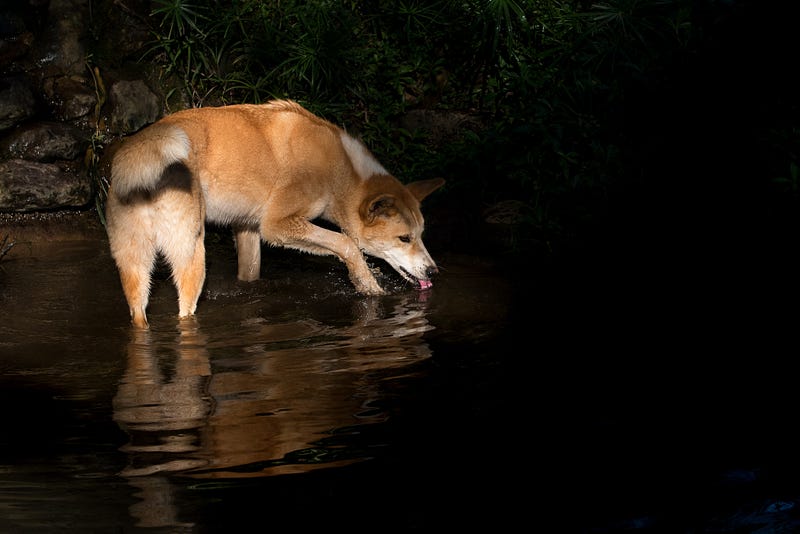
More recently, Deborah Bird Rose wrote several books drawing together her ethnographic research on Indigenous worldviews in Australia with her newer work on ‘multispecies ethics,’ especially when it comes to the damaging repercussions of wildlife extinction. For example, in Wild Dog Dreaming: Love and Extinction (2011), she writes:
“The Anthropocene is bringing us into a new era of solitude, one marked less by our fragmented vision of ourselves than by the actual loss of co-evolved life. As Earth others depart, never to return, we face a diminishing and impoverished world, and equally, we face new, agonizingly lonely, questions about the meaning of our existence.”
Next Steps
If Deborah Bird Rose sounds interesting to you, I highly recommend checking out “A Howling Lament,” a great piece by two of her colleagues in the environmental humanities — Thom van Dooren and Isabelle Stengers. There, they write about Rose’s life and work, and also her forthcoming book to be posthumously published, ‘Shimmer.’ In this book, Rose documents her exploring of the ‘multispecies ethics’ of flying-fox conservation efforts in Australia, which she had just finished researching and writing about at the time of her passing in 2018.
Today, her work continues on in the Extinction Studies Working Group, a collective of interdisciplinary scholars bringing their interdisciplinary expertise to bear on addressing the biodiversity extinction crisis.
In the video below, Deborah Bird Rose discusses her thinking behind her socio-ecological concept, nourishing terrains, and how this idea relates to fostering healthy connectivity between local ‘multispecies communities’ and the global ecosystem.


